

More news on this day
Weekend travel across the United States faced fresh disruption on April 11 as Phoenix Sky Harbor International Airport logged 163 delayed flights and two cancellations, creating bottlenecks for passengers and airlines at one of the country’s busiest desert hubs.
Get the latest news straight to your inbox!
Delays Ripple Across Major Carriers and Routes
Publicly available disruption trackers show that the 163 delays at Phoenix Sky Harbor on April 11 were spread across a broad mix of domestic and international services, affecting American Airlines, Southwest Airlines, JetBlue and several smaller carriers. The disruption involved both departures and arrivals, with some aircraft held at gates and others slowed in the broader national air traffic network.
Published coverage indicates that only two flights were canceled outright, but the scale of late departures meant that aircraft and crews slipped out of position for the rest of the day. This pattern left some passengers facing rolling delay notices rather than a single extended hold, complicating onward connections and hotel plans.
Routes linking Phoenix with Los Angeles, Chicago, New York, Dallas and San Francisco were among the most affected, according to flight-tracking dashboards referenced in industry reports. Those corridors form some of the highest-volume links in the U.S. system, so even moderate schedule slippage in Phoenix quickly translated into pressure on arrival banks at other large hubs.
The concentrated disruption marked Phoenix’s second consecutive day of elevated irregular operations, following reports on April 10 of multiple cancellations and delays tied to broader national congestion. The April 11 spike, however, appears to have been particularly acute in terms of the sheer number of delayed departures.
Operational Strains Behind the Phoenix Logjam
A review of airline and airport performance data suggests that several operational factors converged to create the April 11 backlog at Sky Harbor. Recent days have seen higher-than-usual traffic volumes across U.S. airports, fueled by spring travel demand, while airlines continue to manage tight schedules and aircraft utilization plans.
Industry analysis points to late inbound aircraft, crew duty-time constraints and periodic flow-control measures in the national airspace system as likely contributors to the Phoenix situation. When planes arrive late from other cities, the short turnaround windows that many carriers rely on can quickly evaporate, especially at hub airports where one late flight often feeds several later departures.
National disruption summaries for the same week highlight weather and air traffic control restrictions in other regions as additional background pressure. Even when Phoenix itself is not subject to a formal ground stop or visible weather hazard, knock-on effects from storms or congestion elsewhere can leave gates occupied longer than scheduled and force airlines to reshuffle aircraft assignments.
Recent statistics compiled for Phoenix operations earlier in the year show that, in normal conditions, the airport maintains a strong on-time performance profile, with most flights departing within a modest delay window. The spike on April 11 therefore stands out as an unusually intense but targeted period of irregular operations rather than a new baseline.
Passenger Experience: Long Lines and Tight Connections
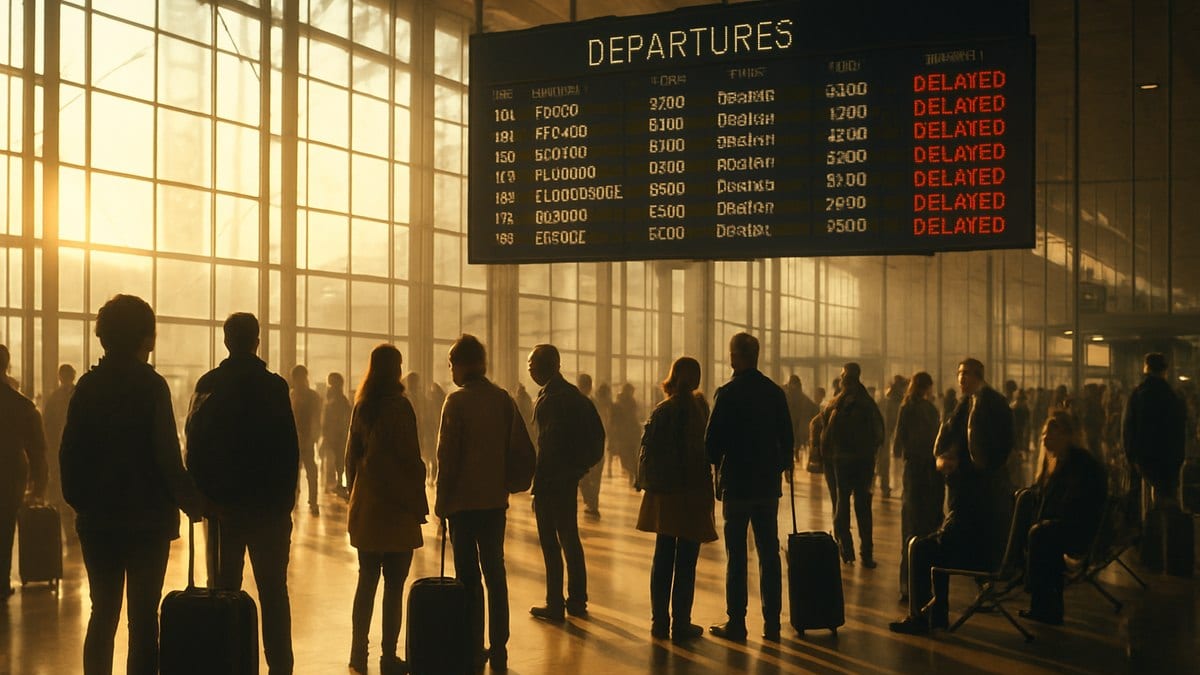
Travel reports and social media posts from the Phoenix area on April 11 describe crowded departure halls, long customer service queues and passengers camping out near gates as they waited for updated departure times. Some travelers arriving from regional airports faced extended holds on the tarmac while gates were freed, adding to a sense of uncertainty.
For connecting passengers, the biggest risk came from the cumulative effect of seemingly minor timetable changes. A 30 to 60 minute delay departing Phoenix often proved enough to break tight connection windows at onward hubs such as Chicago O’Hare, Los Angeles International and New York’s John F. Kennedy, where those flights were scheduled to feed late-afternoon and evening departures.
Consumer-advocacy guidance published around similar disruption clusters this month has emphasized the importance of monitoring airline apps, checking gate information boards frequently and, when possible, building longer layovers into itineraries through busy hubs. The Phoenix episode reinforced that advice, with travelers who had more generous connection times generally faring better than those on aggressive point-to-point schedules.
Families traveling with children and passengers on the last flights of the night appeared particularly vulnerable to disruption, given fewer alternative departures and the potential need for overnight stays. Some airlines responded by offering same-day rebooking where inventory allowed, but limited spare capacity meant many passengers simply had to wait out the delays.
How Phoenix Compares in a Year of Disruptions
While the 163 delays and two cancellations recorded at Phoenix on April 11 were significant, they occurred against a backdrop of widespread irregular operations across the United States in recent weeks. Other large hubs, including Chicago and New York, have logged their own days with hundreds of delayed flights tied to storms, staffing constraints and high travel demand.
Data compiled by travel-industry analysts for early April shows that Phoenix had already experienced smaller clusters of disruptions earlier in the week, with several dozen delays linked to national weather patterns and air traffic control capacity limits. However, the April 11 figures put Sky Harbor among the most affected U.S. airports for that particular day.
Compared with cancellation-heavy events triggered by major winter storms, the Phoenix episode skewed more toward delays than outright flight cuts. That distinction matters for both airlines and passengers: while cancellations often trigger complex rebooking cascades, large volumes of delays can still allow most travelers to reach their destinations on the same day, albeit hours later than planned.
Analysts note that the Phoenix disruption also underscores the vulnerability of Western hub airports that connect regional traffic from the Southwest and Mountain West to coastal cities. When such nodes falter, even temporarily, the effects can extend far beyond local passengers to those simply passing through en route to other regions.
What Travelers Can Learn from the April 11 Disruption
For travelers planning upcoming trips through Phoenix Sky Harbor, the events of April 11 provide several practical lessons. First, the episode highlights the value of booking itineraries with more resilient connection times, particularly when routing through busy hubs or during peak travel periods such as spring weekends and holidays.
Second, recent disruption guidance suggests making full use of digital tools, including airline mobile apps and airport status dashboards, to track real-time changes. During the April 11 delays, many updates appeared first through electronic channels, giving some passengers a head start in requesting alternative flights or adjusting ground transportation and hotel plans.
Third, travel-rights organizations emphasize that passengers affected by significant delays should review airline policies and, where applicable, regional consumer-protection rules to understand what forms of assistance may be available. These can include meal vouchers, hotel accommodations or refunds in certain circumstances, although coverage varies widely by carrier and route.
Finally, the Phoenix experience demonstrates how quickly a normal travel day can shift into a challenging one when multiple operational pressures align. While most journeys through Sky Harbor proceed without major incident, the April 11 disruption serves as a reminder that flexibility, preparation and up-to-date information remain critical tools for navigating the modern air travel system.