

More news on this day
Weekend travel plans in and out of Phoenix unraveled on April 11 as Phoenix Sky Harbor International Airport recorded 163 delayed flights and two cancellations, creating a cascade of disruptions across some of the busiest domestic routes in the United States.
Get the latest news straight to your inbox!
Spike in Delays at a Key Desert Hub
Publicly available flight-tracking data and industry coverage indicate that 163 flights linked to Phoenix Sky Harbor were delayed on April 11, with two departures canceled, affecting a mix of domestic routes and limited international services. The disruption hit during a busy spring weekend, when leisure travelers, business passengers and sports fans typically converge on one of the country’s largest air hubs.
Phoenix Sky Harbor, located just east of downtown Phoenix, is consistently ranked among the busiest airports in the United States by passenger volume. In normal operating conditions, the airport maintains a solid on time record, with a majority of flights departing within modest delay windows. The sudden spike in irregular operations on April 11 therefore stands out as an outlier compared with typical recent performance.
Reports from aviation data providers and travel news outlets describe the April 11 event as part of a broader pattern of elevated delays across the national network during the same period. Nationally, more than 3,000 flights were reported delayed on some recent days as weather systems, air traffic constraints and tight airline scheduling combined to strain operations, with Phoenix emerging as one of the more heavily affected hubs on this particular date.
At Sky Harbor, delays were concentrated among major U.S. carriers including American Airlines, Southwest Airlines and JetBlue, which operate dense schedules through Phoenix to larger coastal and Midwestern hubs. Even modest pushbacks of 30 to 90 minutes on departure created a knock on effect that rippled into evening bank operations and onward connections.
Passenger Experience: Long Lines and Missed Connections
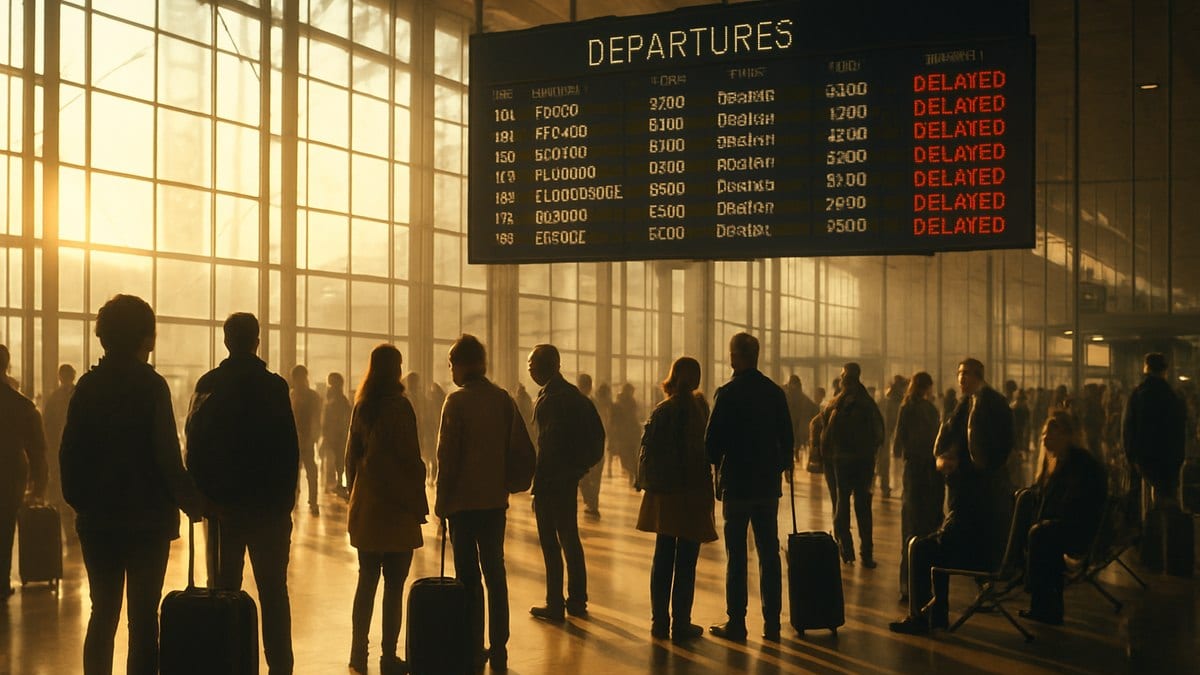
Travel accounts and social media posts from April 11 describe crowded departure halls, extended gate waits and long customer service queues throughout the day at Phoenix Sky Harbor. Some passengers reported sitting on aircraft already pushed back from the gate while crews waited for updated departure slots or for late arriving inbound aircraft to reach the terminal, prolonging the sense of uncertainty.
For connecting travelers, the biggest challenge appears to have been the cumulative impact of relatively short delays. A half hour pushback from Phoenix on routes bound for major hubs such as Chicago, Los Angeles or New York can easily erase already tight connection windows, especially in the late afternoon and evening when banks of flights are scheduled to converge.
Publicly available information suggests that, although the number of outright cancellations at Phoenix on April 11 remained limited compared with the volume of delays, missed onward flights effectively turned many short disruptions into overnight problems. Passengers who arrived too late for final departures of the day faced rebooking into April 12 and competing for limited remaining hotel capacity in the metro area.
Inside the terminals, images shared online show passengers clustered around departure boards, repeatedly refreshing airline apps and lining up at service desks in both Terminal 3 and Terminal 4. While security checkpoint wait times did not appear to be the primary driver of the disruption, the knock on effect of delayed departures kept concourses busier for longer periods than usual.
Operational Pressures Behind the Disruption
Available aviation dashboards for April 11 point to a mix of contributing factors rather than a single, airport specific failure. While the federal delay map for the afternoon did not show an extended, formal ground stop centered on Phoenix, data from flight trackers captured rolling gate holds, late inbound aircraft and crew availability challenges as key operational pinch points.
Industry analyses of recent delay patterns highlight how modern airline schedules, which are designed to maximize aircraft and crew utilization, leave limited margin when disturbances occur. Once early arriving flights into Phoenix run late, the aircraft they are meant to operate on outbound routes can quickly fall behind schedule, especially at peak times when there are few spare gates or backup crews.
Regional weather elsewhere in the United States also appears to have played a role. Travel trade coverage for the same weekend cites storms and low visibility conditions in several other parts of the country that slowed arrivals and departures, including flights feeding into and out of Phoenix. When inbound aircraft are held at their origin or slowed en route, downstream airports such as Sky Harbor can experience rolling delays even under largely favorable local weather conditions.
Recent federal discussions around air traffic capacity and ground delay programs for the summer season underscore how sensitive the system has become to localized disturbances. Phoenix, as a rapidly growing hub with extensive connections to Western destinations, is particularly exposed when regional disruptions overlap with already busy weekend travel patterns.
Impact on Major Routes and Airlines
According to published coverage from aviation and travel outlets, the April 11 disruption at Phoenix Sky Harbor chiefly affected high demand domestic corridors. Routes linking Phoenix with Los Angeles, San Francisco, Denver, Dallas, Chicago and multiple New York area airports saw elevated delay totals, reflecting the airport’s role as a connector between the Southwest and the rest of the country.
American Airlines, which operates a significant hub presence at Sky Harbor, experienced a notable share of the delayed departures, particularly on eastbound services timed to feed into late evening arrivals at major coastal airports. Southwest Airlines, another large operator at Phoenix with a focus city style network, also recorded multiple delayed flights as the schedule backed up across intrawest and transcontinental routes.
JetBlue and other smaller carriers serving Phoenix registered fewer total affected flights but still felt the impact on tightly timed services. For low frequency routes, even a single substantial delay can mean that disrupted passengers face a full day’s wait for the next available departure, amplifying the sense of chaos despite relatively small absolute numbers.
Travel industry reports note that Phoenix’s position as both an origin and connection point meant disruptions were felt far beyond Arizona. Passengers departing from cities such as Burbank, El Paso or Albuquerque on flights feeding into Phoenix could encounter delays that then cascaded into missed connections toward larger hubs, spreading the operational stress across multiple regions.
What Travelers Can Learn from the Phoenix Disruption
The April 11 events at Phoenix Sky Harbor highlight how quickly conditions can change for air travelers, even at airports that generally perform well on timeliness metrics. For passengers with upcoming trips through major hubs, experts commonly advise building in additional buffer time for connections, particularly on spring and summer weekends when storms, congestion and tight schedules frequently intersect.
Travel publications and advisory sites routinely recommend that flyers monitor their flight status closely through airline apps and sign up for text or push notifications. In situations like April 11 at Sky Harbor, early awareness of developing delays can create opportunities to adjust routing, request earlier connections or switch to alternative airports in the same metropolitan area when available.
For those departing from Phoenix itself, recent experiences suggest that arriving at the airport earlier than usual can provide more options if irregular operations are already underway. Extra time before departure can make it easier to resolve rebookings at ticket counters, clear security without additional stress and access alternative flights before they fill.
While Phoenix Sky Harbor’s strong overall on time record indicates that such intense days of disruption remain the exception rather than the rule, the wave of 163 delayed flights on April 11 serves as a reminder that the interconnected nature of modern air travel can rapidly turn a busy weekend into a test of patience for thousands of travelers.