

More news on this day
Weekend travel across the United States faced fresh disruption on April 11 as Phoenix Sky Harbor International Airport logged 163 delayed flights and a small number of cancellations, snarling connections through one of the country’s busiest desert hubs.
Get the latest news straight to your inbox!
Rolling Disruptions Hit a Major Southwest Hub
Publicly available flight-status dashboards and industry coverage indicate that Phoenix Sky Harbor’s operations came under significant strain on Saturday, with 163 flights reported delayed and at least two cancellations. The disruptions affected departures and arrivals across multiple terminals and time bands, rather than being confined to a single peak period.
The impact rippled across some of the largest domestic carriers, with American Airlines, Southwest Airlines and JetBlue among the airlines most visibly affected in published schedules. Delays were recorded on routes linking Phoenix to major U.S. hubs such as Los Angeles, Chicago, New York, Dallas and San Francisco, in addition to popular leisure destinations in Mexico and the Mountain West.
Federal aviation status pages did not show a prolonged, formal ground stop in place at Phoenix for much of the day. Instead, delay-mapping tools and carrier trackers pointed to a pattern of rolling gate holds, late inbound aircraft and tightened crew availability that combined to slow the flow of departures and arrivals through the afternoon.
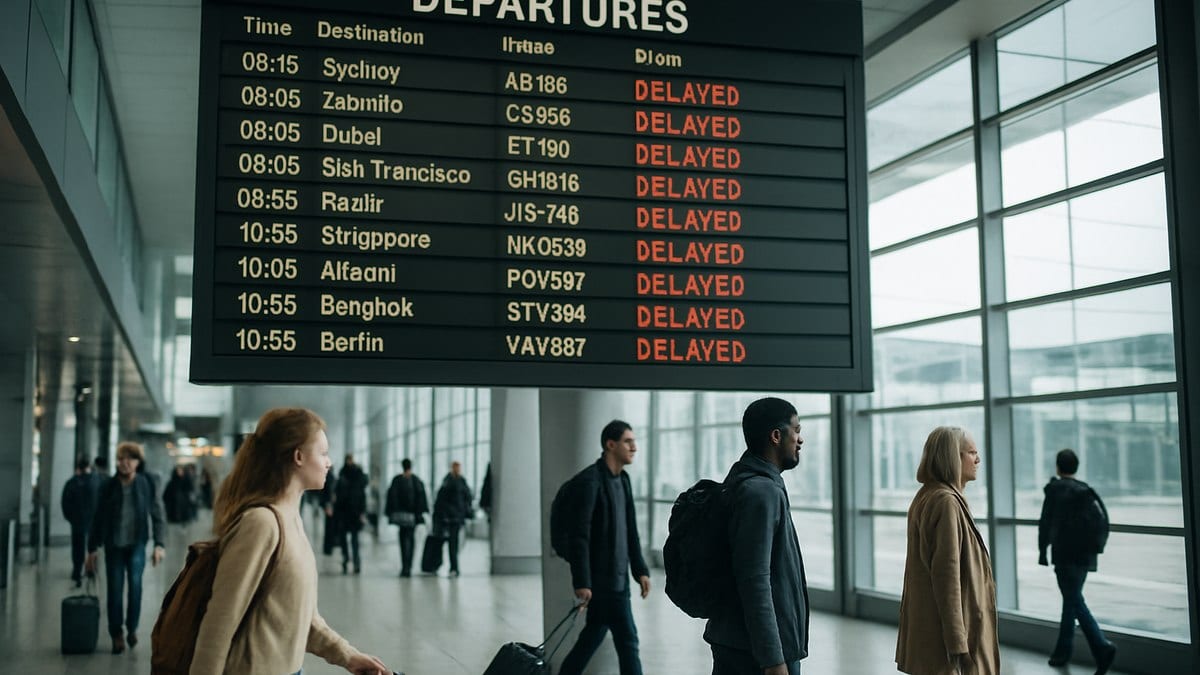
For passengers, the operational picture translated into longer waits at gates, missed onward connections and frequent schedule adjustments. Travel-industry reports described scenes of crowded concourses and departure boards populated with yellow and orange delay markers rather than routine on-time departures.
Weather, Congestion and Crew Availability Under Scrutiny
Early assessments from aviation analysts and travel outlets linked the day’s disruption to a mix of operational pressures rather than a single acute incident. Published coverage noted that no major local storm system or runway closure dominated the official data, suggesting that routine springtime congestion and network knock-on effects may have played an outsized role.
When aircraft and crews arrive late from other parts of the national network, Phoenix can quickly feel the strain, particularly on busy weekends when schedules run close to capacity. Industry briefings in recent months have highlighted how tight crew rotations and high aircraft utilization leave limited margin for recovery once delays begin to accumulate.
Additional pressure often emerges from transient weather patterns elsewhere in the United States, including storms over the Midwest and East Coast that can affect long-haul services into Arizona hours later. Even when skies above Phoenix remain relatively clear, delays on inbound legs are frequently reflected in outbound pushbacks, ultimately adding to the local disruption visible to departing travelers.
Operational planning documents for Phoenix Sky Harbor have also warned that high traffic volumes, ramp closures during lightning events and temporary airspace restrictions can trigger short-lived but consequential slowdowns. While Saturday’s data did not point to an extended shutdown of ground operations, the cumulative effect of multiple small constraints appeared significant.
Passengers Confront Missed Connections and Full Rebooking Queues
The wave of delays left many travelers facing the prospect of missed evening connections at downstream hubs or late arrivals at final destinations. Travel and tourism outlets reported that passengers attempting to rebook onto alternative flights encountered limited inventory, particularly on popular routes to coastal cities and major Midwest hubs.
With Phoenix serving as both an origin and a key connecting point for numerous domestic and international itineraries, even a few hours of irregular operations can cascade widely. Families heading out for spring weekend getaways, business travelers returning from conferences and sports fans traveling for events were among those caught in the schedule turbulence.
Observers noted that some airlines sought to ease congestion at ticket counters by steering customers toward mobile rebooking tools and automated alerts. Nonetheless, the high volume of delayed flights meant that many travelers still faced substantial waits before securing new departure times or confirming same-day standby options.
Airport services, from food outlets to charging stations, appeared to come under increased demand as passengers settled in for longer-than-expected stays in the terminals. Travel blogs and user reports highlighted the familiar pattern of crowded seating areas, long lines at concessions and an elevated reliance on airport Wi-Fi as departure times continued to slip.
Why Phoenix Sky Harbor Matters for the Wider Network
Phoenix Sky Harbor is consistently ranked among the busiest airports in the United States for passenger boardings, and it acts as a critical node in several airlines’ domestic networks. Its position in the Southwest makes it a favored connection point for traffic moving between the West Coast, the central United States and destinations in Mexico.
Transportation planning documents and aviation statistics show that the airport has seen sustained passenger growth over recent years, mirroring broader trends in U.S. air travel demand. That growth has brought significant investment in terminal upgrades, airfield improvements and transit links, but it has also increased the complexity of managing peak travel periods.
Irregular operations at such a hub can cause delays far beyond Arizona. When flights arriving late into Phoenix continue onward to cities such as Chicago, New York or Seattle, the knock-on effects can extend the disruption for hours or into the next operating day. For carriers, this translates into higher crew and equipment costs, while for travelers it often means disrupted work and leisure plans.
Industry analyses released in recent months have underscored that even modest percentages of delayed flights at busy hubs can affect tens of thousands of passengers over a single weekend. Saturday’s figure of 163 delayed services at Sky Harbor, while short of full-scale shutdown scenarios seen during severe weather events, still represented a substantial operational challenge for the airport and its airline partners.
What Travelers Can Do When Phoenix Delays Mount
Travel experts suggest that disruptions of the kind seen on April 11 highlight the value of proactive planning for anyone routing through Phoenix Sky Harbor. Publicly available guidance from airlines and airport-focused travel services stresses the importance of monitoring flight status frequently in the 24 hours before departure, particularly during busy travel seasons.
Passengers with critical connections are often advised to build in generous layover times when connecting through high-traffic hubs and to consider earlier departures when possible. For those already at the airport, real-time updates from airline apps and terminal information screens remain essential tools for tracking gate changes and revised boarding times.
Travel publications also emphasize basic preparedness measures when delays become likely. Having essential medications, chargers, snacks and travel documents readily accessible can make extended terminal waits more manageable. For longer disruptions, knowing the conditions of airline rebooking policies, meal vouchers and overnight accommodation arrangements can help travelers secure assistance more quickly.
While Saturday’s travel chaos at Phoenix Sky Harbor was concentrated on a single day, analysts note that similar patterns of rolling delays have periodically affected the airport in recent years. For many frequent flyers, that reality has turned contingency planning from a luxury into a routine part of navigating one of the United States’ most important desert gateways.