

More news on this day
Hundreds of passengers across the United Arab Emirates are facing severe disruption after a new wave of flight cancellations hit major hubs in Dubai, Abu Dhabi, Sharjah, Ras Al Khaimah and Al Maktoum International Airport, with services on flagship carriers Emirates, Etihad, Air Arabia and flydubai among those most heavily affected.
Get the latest news straight to your inbox!
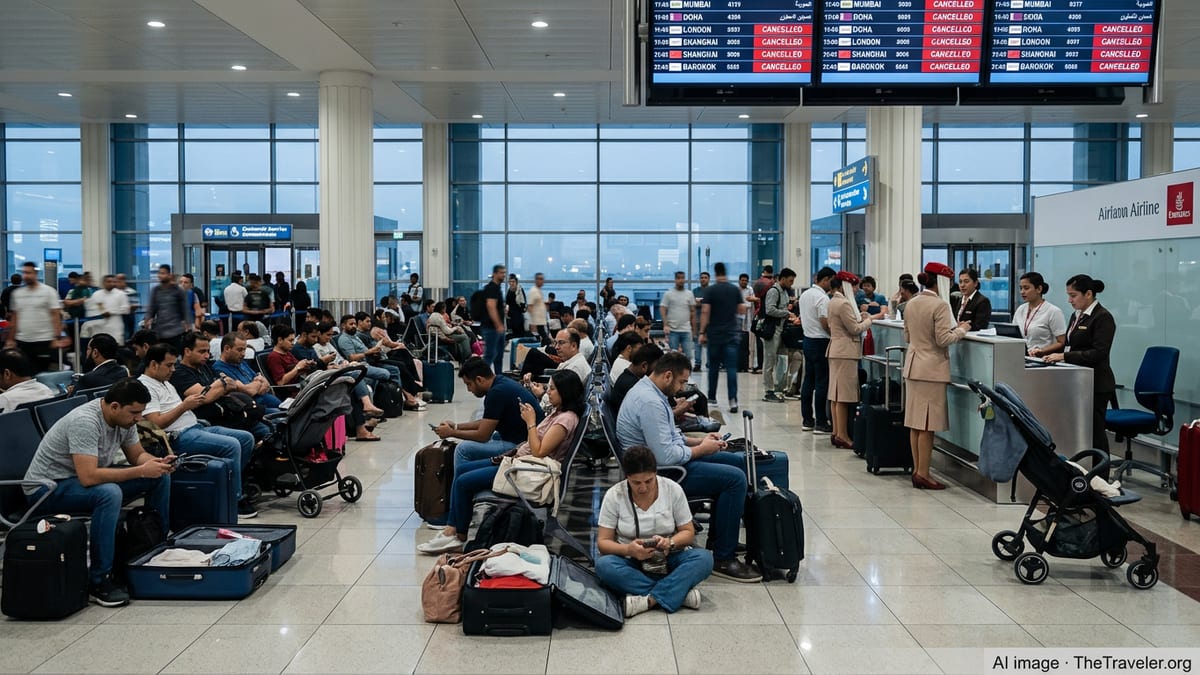
New Cancellations Deepen Turmoil at UAE Hubs
UAE airports already struggling to recover from sweeping regional airspace closures are now contending with a fresh round of cancellations that aviation data providers and airline advisories put in the hundreds. Recent tallies show more than 460 flights cancelled and over 300 delayed at Dubai International, Zayed International in Abu Dhabi and Sharjah alone, with additional disruptions reported at Al Maktoum International and Ras Al Khaimah.
Emirates, Etihad, Air Arabia and flydubai have all trimmed or temporarily suspended services on key routes as carriers work around constrained Gulf airspace and tightened security procedures. Emirates has axed a large share of its scheduled operations out of Dubai, while Etihad has restricted departures from Abu Dhabi to limited, pre-confirmed services. Low-cost operators Air Arabia and flydubai, normally linchpins of regional connectivity, are running reduced schedules from Sharjah, Abu Dhabi and Dubai.
Airport operators are urging travellers not to proceed to terminals unless they have received explicit confirmation that their flight is operating. Across the UAE, access to some departure halls has been restricted to ticketed passengers with verified departure notifications, as authorities try to prevent overcrowding and manage the knock-on effect of stranded travellers.
Global Routes to Mumbai, Doha, London and Shanghai Hit
The disruption is rippling far beyond the Gulf as international routes that rely on UAE hubs are curtailed or rerouted. Long-haul flights linking Dubai and Abu Dhabi with major cities such as London, Shanghai and Bangkok have seen outright cancellations or extended rerouting, adding hours to journeys and forcing last-minute aircraft swaps.
South Asian gateways are among the worst affected. Services between UAE airports and Indian metros such as Mumbai have faced repeated cancellations and rescheduling as carriers juggle limited slots and altered flight paths. Regional links to Doha and other Gulf capitals remain constrained, with several operators suspending or sharply reducing frequencies while airspace controls remain in place.
European and Asian travellers transiting the UAE on multi-leg itineraries are particularly exposed, with missed connections cascading through networks. Travel agencies report corporate travellers abandoning carefully planned trips as uncertainty over onward connections via Dubai or Abu Dhabi makes reliable scheduling difficult.
Passengers Confront Long Queues, Confusion and Limited Options
For passengers on the ground, the operational challenges have translated into long queues at check-in and rebooking counters, coupled with limited real-time information. At Dubai International and Abu Dhabi’s Zayed International, those arriving for cancelled departures have described waiting hours for guidance as airlines attempt to prioritise re-accommodation based on travel urgency, ticket class and available capacity on remaining flights.
Hotels around Dubai, Abu Dhabi and Sharjah are reporting a surge in last-minute bookings from stranded travellers, many of whom are being provided with short-term accommodation and meal vouchers where airline policies and local regulations require. Others are opting to purchase new tickets on alternative carriers or rerouted itineraries at considerable additional cost in order to meet critical business commitments or family obligations.
Travel advisers in the region say flexible ticketing rules introduced by major carriers have helped some passengers salvage plans, allowing changes to travel dates and destinations without additional fees. However, availability on alternative flights remains tight, especially on popular corridors to London, South Asia and Southeast Asia, making it difficult for many to secure timely alternatives.
Airlines Adjust Networks as Recovery Remains Uneven
Behind the scenes, UAE-based carriers are engaged in a complex logistical exercise to restore balance to aircraft and crew rotations thrown off by airspace restrictions and sudden airport closures. Emirates has begun gradually reinstating parts of its global network but continues to warn that services remain subject to short-notice changes as regional conditions evolve. Etihad is operating a limited schedule from Abu Dhabi, focusing on core routes and repatriation demand while reviewing further resumptions day by day.
Air Arabia and flydubai are likewise rebuilding their networks from Sharjah, Ras Al Khaimah and Dubai World Central with tightly managed timetables. Industry analysts note that while headline numbers point to hundreds of cancellations concentrated over several days, the operational impact extends further, with aircraft and crews still out of normal position and many rotations running off-pattern.
Neighbouring carriers in the wider Middle East and South Asia have also cut or diverted services into the UAE, compounding the disruption for travellers whose journeys depend on multi-airline connections. Aviation experts say that even as airspace partially reopens, airlines will need days to smooth out schedules and clear the backlog of displaced passengers.
What Travellers Need to Know Before Heading to the Airport
Authorities and airlines in the UAE are issuing clear guidance for anyone due to travel in the coming days. Passengers are being urged to monitor airline notifications closely and to use official channels and apps to verify flight status on the day of departure. Without a confirmed departure message, travellers are advised not to go to the airport, as walk-up rebooking options are limited and priority is being given to those with existing disrupted tickets.
Major airlines have activated temporary waiver policies for tickets issued before the latest escalation, allowing one-time changes of date or destination without change fees in many cases, subject to fare conditions and availability. Some carriers are also offering full refunds where flights have been cancelled outright, although processing times may be extended due to high demand.
Travel planners recommend that passengers with urgent travel needs consider building in generous connection times, avoiding tightly timed transfers through the Gulf, and keeping accommodation plans flexible. For leisure travellers whose trips are not time-sensitive, postponing journeys through the region until flight schedules stabilise may reduce the risk of extended delays and unplanned stopovers.