

More news on this day
Europe’s spring travel season is facing renewed turbulence as a fresh wave of disruption has left 79 flights delayed and nine cancelled across key hubs, highlighting how fragile the region’s aviation network remains under the combined strain of weather, strikes and staffing pressures.
Get the latest news straight to your inbox!
Delays Mount Across Key European Hubs
Operational data from flight monitoring platforms for early April 2026 indicate that dozens of services across Europe have been pushed off schedule, with at least 79 departures and arrivals reporting notable delays and nine flights cancelled outright in a single 24 hour window. The pattern fits into a wider spike in disruption, with several recent days seeing more than a thousand delayed flights and dozens of cancellations region wide.
Published coverage of the period from 9 to 10 April shows that major hubs in Germany, Portugal and France have absorbed the heaviest load, but knock on problems have quickly spread to the United Kingdom and other European Union states as aircraft and crew rotate through the network. Reports from aviation focused outlets describe passengers facing missed connections, mislaid luggage and lengthy queues at rebooking desks as operations struggle to recover from each new round of schedule slippage.
At the same time, analysis of Eurocontrol data released this week points to persistent structural congestion in Europe’s skies. Almost one in three flights now departs late on an average day, and reactionary delays caused by earlier disruptions continue to add minutes to subsequent sectors. For travelers, that means even short hold ups in the morning can cascade into widespread evening disruption that shows up as the 79 logged delays shaping today’s snapshot.
Industry analysts note that this spring’s travel volume has returned to, and in some cases surpassed, pre pandemic levels. Airlines have rebuilt capacity to chase strong leisure demand, particularly on sun routes into southern Europe, but airport staffing, air traffic control resources and ground handling operations have not always kept pace. The result is a system that operates close to its limits on busy days, leaving little margin when weather or labor disputes intervene.
Weather Systems Trigger Fresh Wave of Disruption
Weather has been a central factor behind the current bout of travel chaos. A sequence of Atlantic storm systems affecting western and northern Europe in late March and early April has brought strong winds, heavy rain and occasional snow to countries including the United Kingdom, Germany, France, Spain and the Nordic region. These conditions have forced airports to temporarily reduce runway movements, extend separation between aircraft and suspend some ground operations for safety reasons.
Reports from national meteorological agencies and regional media describe windstorms this season damaging infrastructure, toppling trees and producing crosswinds that make landings and takeoffs more challenging. In such situations, airlines sometimes choose to divert or cancel flights rather than attempt operations at the edge of aircraft and crew limits. Even when aircraft are able to operate, de icing delays, runway inspections and slower turnarounds can cumulatively generate the sort of medium length delays that have been recorded at scale in recent days.
The weather impact has not been limited to aviation. Road and rail travel have also been affected, particularly in parts of northern and central Europe where snow and freezing rain earlier in the year disrupted commuter and long distance services. With many travelers relying on multi modal itineraries that combine rail links and flights, any interruption to one leg of the journey can ripple through to missed departures elsewhere.
Early April coverage from travel news outlets notes that storms have coincided with a busy period for leisure travel, particularly around school holidays and late Easter getaways. That timing has amplified the real world impact of each cancelled or delayed flight, as families and tour groups find rebooking options limited on already full services.
Strikes and Staff Shortages Add to the Strain
Alongside adverse weather, industrial action and staffing constraints remain key drivers of Europe’s spring travel disruption. In France, a cabin crew strike at a major low cost carrier on Easter Monday affected airports including Paris Charles de Gaulle, Paris Orly, Nice, Nantes, Lyon and Bordeaux, with reports indicating broad schedule cuts and last minute timing changes. Travelers described packed terminals and long waits as airlines adjusted their operations.
Italy has seen its own challenges, with coordinated air and rail strikes at the end of February causing widespread disruption and setting the tone for a volatile spring. Publicly available information on that action shows that aviation walkouts were followed by rail stoppages, affecting both domestic routes and international connections used by tourists heading to and from major cities. Even after services officially resumed, residual delays and equipment displacement continued to complicate timetables.
Across the continent, air traffic control staffing remains a sensitive pressure point. Analysis from industry and consultancy reports over the past year highlights how shortages in key control centers can force capacity reductions and flow restrictions, particularly during peak travel hours. When combined with localized strikes at individual airports or handling companies, these constraints reduce the system’s resilience and increase the likelihood that a day’s tally will include several dozen delays and a cluster of cancellations.
Labor tensions are likely to remain a recurring feature. Many aviation workers are seeking improved pay and conditions after years of intense pressure, while airlines argue that cost discipline is essential in a sector still rebuilding its financial footing. This disconnect continues to generate strike threats and stoppages that often coincide with high demand periods, from Easter through the main summer holiday season.
Passenger Impact and Rights Under EU Rules
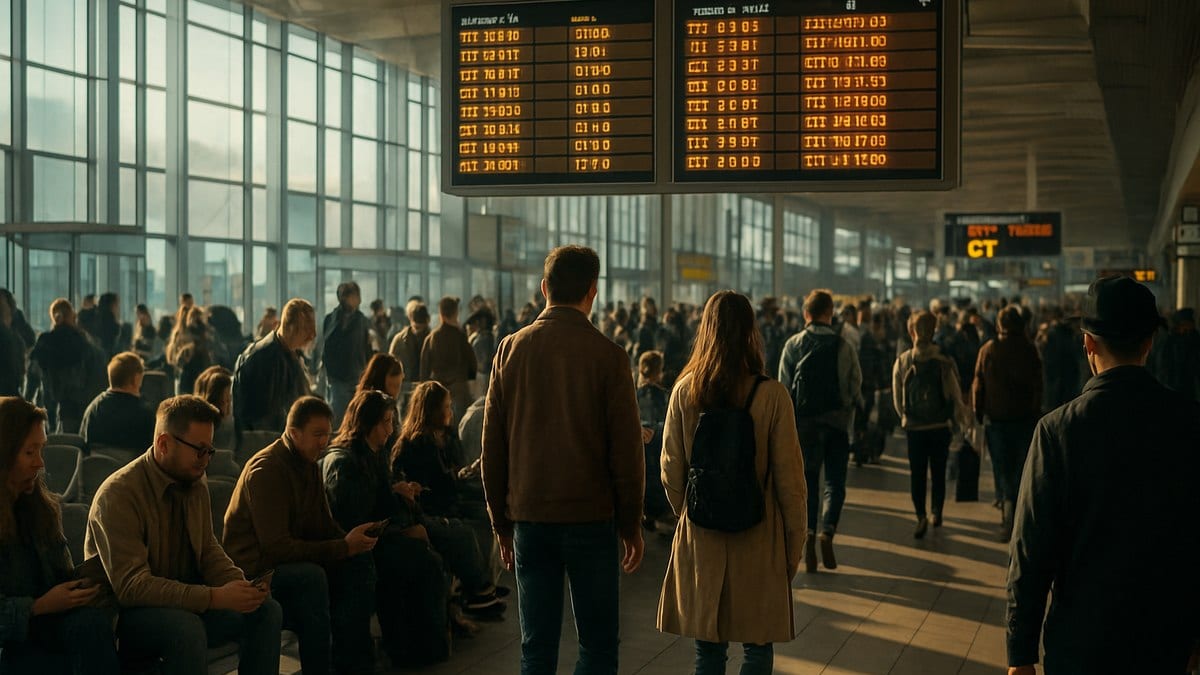
The immediate effect of the latest disruptions can be seen at airport departure boards and crowded waiting areas, but the consequences extend well beyond a few lost hours. With 79 flights delayed and nine cancelled in the most recent reporting window, thousands of travelers have been forced to rearrange hotel stays, ground transport and onward connections, often at short notice and with limited assistance.
Under current European Union rules, many affected passengers are entitled to care and, in some circumstances, financial compensation when flights are significantly delayed or cancelled. Regulation EC 261 sets out obligations for airlines to provide meals, refreshments, hotel accommodation and rerouting when journeys are heavily disrupted. Eligibility for cash payments depends on the length of delay, flight distance and whether the cause is considered within the carrier’s control.
Consumer advocacy groups frequently urge travelers to document delays with screenshots of boarding passes and departure boards, keep receipts for necessary expenses and submit claims promptly via airline channels. Data from passenger rights companies suggest that a substantial proportion of eligible travelers do not claim the compensation available to them, either because they are unaware of the rules or find the process confusing.
At the policy level, debate continues over possible changes to EU passenger rights. Proposals discussed in recent years would adjust the thresholds at which compensation becomes payable for delays, with industry bodies arguing that current rules impose significant costs in situations they consider beyond airline control, such as extreme weather or air traffic control strikes. For now, however, the existing framework remains in place, offering at least some protection to those caught up in this spring’s travel turmoil.
What Spring Travelers Can Expect Next
With Europe’s peak summer season still ahead, the current episode of travel chaos is likely a preview of further volatility rather than an isolated event. Forecasts from aviation trend reports suggest that traffic will continue to grow through 2026 as both leisure and business demand strengthen, particularly on cross border routes linking major European cities and Mediterranean destinations.
Airlines and airports are making incremental adjustments, including adding reserve crews, revising schedules to include more buffer time and investing in digital tools to speed rebooking. However, these measures may only partially offset the combined impact of overcrowded airspace, recurring industrial disputes and increasingly unpredictable weather patterns associated with climate change.
Travel experts recommend that passengers build greater flexibility into their plans during the spring shoulder season, when storms and late winter conditions can still disrupt operations. Booking earlier flights in the day, allowing longer connection windows and considering alternative airports or rail options where available can reduce the risk of being stranded by a late running service.
For now, the tally of 79 delays and nine cancellations serves as a snapshot of a wider trend. Europe’s aviation network is once again operating at full speed, but the past few weeks have underlined how quickly that momentum can falter when familiar stress factors converge, leaving travelers facing another season of uncertainty at the departure gate.