

More news on this day
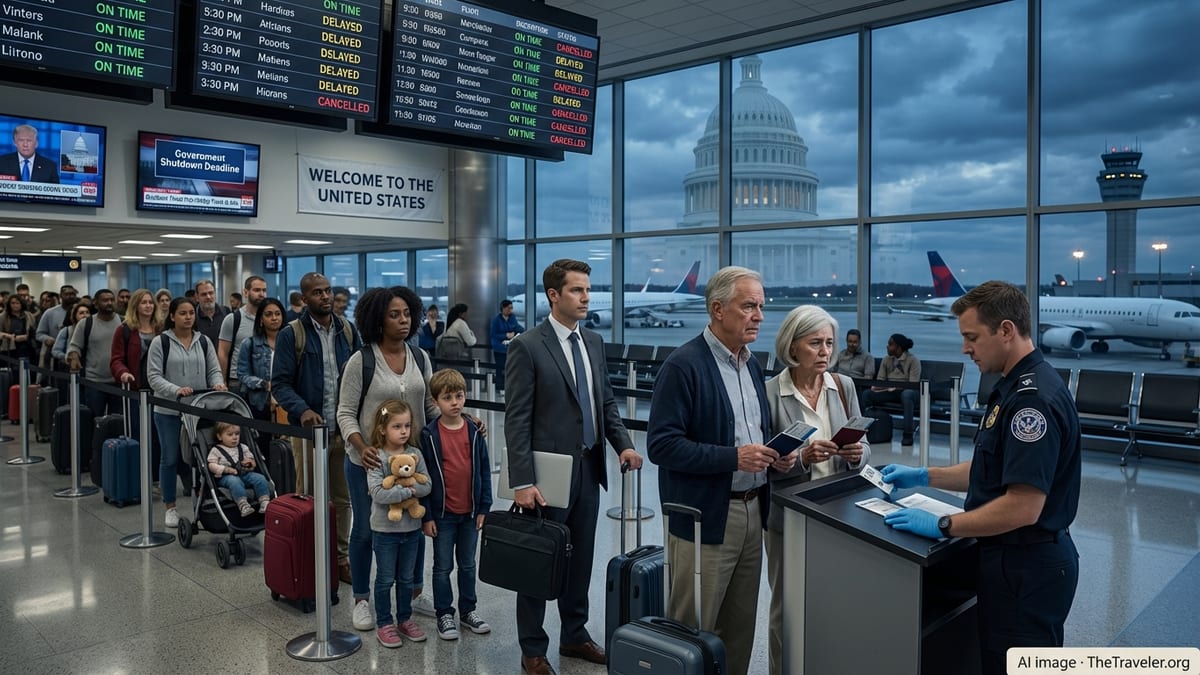
Major U.S. travel groups are urging Congress to avert another federal government shutdown, warning that even a short lapse in funding would ripple across airports, national parks and tourism-dependent communities at a time when the industry is already grappling with tight staffing and fragile traveler confidence.
With lawmakers again staring down funding deadlines and partisan disputes, industry leaders say the political brinkmanship is putting billions of dollars in economic activity and millions of trips at risk.
More News
- TSA Rolls Out $45 ConfirmID Fee for Travelers Without REAL ID at Security
- Flying Blue Launches February 25% Promo Rewards on Transatlantic and Regional Routes
- United Fast-Tracks Starlink Wi‑Fi Across Fleet, Free for MileagePlus Members
Industry Sounds Alarm on Mounting Shutdown Risks
In recent days, the U.S. Travel Association and a broad coalition of airlines, airports, hotel companies, destination marketing organizations and tourism bureaus have escalated their warnings to Capitol Hill. In formal letters and public statements, the groups argue that shutdowns and recurring threats of funding lapses have become one of the most avoidable drags on the U.S. travel economy.
Tourism Economics estimates that a shutdown of the type the country experienced in late 2025 costs the travel sector roughly 1 billion dollars in lost economic activity each week, as federal operations slow and travelers rethink or cancel trips. For the broader economy, U.S. Travel has pegged the impact of that 43 day lapse at more than 6 billion dollars in lost travel-related spending, with about 88,000 fewer trips taken each day.
While Congress has occasionally used short term continuing resolutions to sidestep immediate closures, travel advocates say the cycle of stopgap deals has created a climate of chronic uncertainty. That uncertainty, they argue, is undermining efforts to modernize aviation infrastructure, rebuild the federal travel workforce and restore reliable service at key gateways that were strained during and after the pandemic.
Aviation System Under Strain as Workers Face Unpaid Shifts
At the core of the industry’s concern is the aviation system, which depends heavily on federal employees who are classified as essential. Air traffic controllers, Transportation Security Administration officers and many Customs and Border Protection personnel must continue to report to work during a shutdown, but historically they have done so without a paycheck until funding is restored.
That dynamic, unions and analysts warn, compounds the staffing shortages that have dogged the Federal Aviation Administration in recent years. During the 2018 to 2019 shutdown, waves of sick calls among unpaid employees contributed to mounting delays and occasional ground stops at major hubs. More recently, controller shortfalls have already forced the FAA to cap or trim schedules at dozens of high traffic airports, leaving little room for disruption before delays cascade across the network.
A prolonged funding lapse, experts say, would also stall hiring and training for new controllers and safety inspectors, extending the timeline for tackling capacity constraints. Travel groups argue that forcing critical safety and security staff to work without pay is not only unfair to workers but undermines the resilience of the entire air travel system.
Holiday and Peak Travel Seasons in the Crosshairs
The latest warnings come as travelers look ahead to key fall and winter travel periods, including Thanksgiving and the end of year holidays. These windows routinely rank among the busiest of the year for domestic and international air travel, with tens of millions of passengers expected to pass through U.S. airports over a few compressed weeks.
In a recent communication to congressional leaders, U.S. Travel and nearly 500 allied organizations stressed that disruptions during these high volume periods would be particularly damaging. The association has cited polling indicating that roughly 60 percent of Americans would cancel or avoid air trips if a shutdown were to occur, either out of concern for delays and cancellations or in solidarity with unpaid federal workers.
Beyond airports, shutdowns have historically shuttered national parks, monuments and federally funded museums that serve as anchors for holiday travel. In gateway communities around parks and cultural sites, those closures can mean a sudden collapse in hotel occupancy, restaurant business and seasonal employment just when local businesses count on tourism revenue to carry them through the quieter months.
Local Destinations Brace for Fallout
The prospect of another shutdown has rattled local officials and tourism leaders from border cities to rural recreation hubs. In communities such as Laredo, Texas, where cross border trade and federal operations are central to the economy, mayors and business owners have urged Congress to appreciate how quickly even a short disruption can ripple through small businesses, logistics firms and hospitality employers.
In previous shutdowns, some gateway towns near national parks reported widespread hotel cancellations within days of closures, as tour operators rerouted itineraries and independent travelers opted for alternative destinations. For outfitters, guides and seasonal workers who rely on a narrow operating window, a multi week interruption can erase an entire year’s profit.
City convention and visitors bureaus are also watching closely. Large meetings and events scheduled months in advance could face snags if federal employees are barred from traveling, government venues are closed or travelers lose confidence in the reliability of air service. Destinations that have invested heavily in attracting international visitors say recurring shutdown headlines are making it harder to position the United States as a seamless, welcoming place to visit.
Policy Push: Pay Critical Workers and End Shutdown Showdowns
Travel groups are not just urging Congress to avert the next funding lapse; they are pressing for structural changes that would buffer the travel system from future standoffs. Chief among their priorities are bipartisan bills that would guarantee pay for air traffic controllers, key FAA staff and TSA officers during any future shutdown, drawing on dedicated aviation trust funds rather than annual appropriations.
Supporters of these measures argue that travelers and airlines pay into the system through ticket taxes and security fees with the expectation that those funds will support a safe and efficient network. Allowing those dollars to sit idle while essential workers go unpaid, they contend, is an avoidable policy choice rather than a budgetary inevitability.
Industry advocates are also calling for longer term funding agreements for agencies that underpin travel, including the FAA, Customs and Border Protection and the National Park Service. They say multi year stability would allow agencies to plan workforce expansion, technology upgrades and infrastructure improvements without the recurring threat of furloughs and program freezes.
Travelers Weigh Options Amid Uncertainty
For individual travelers, the specter of a shutdown poses difficult choices. Early in a funding lapse, many flights and services continue to operate close to normal, and some passengers may pass through airports without noticing immediate effects. But as paychecks are delayed and staffing strains grow, experts warn that the likelihood of longer security lines, scheduling bottlenecks and last minute disruptions increases.
Travel advisors and consumer advocates suggest that passengers with flexible plans may want to build extra time into connections, travel with carry on luggage where possible and monitor airline communications closely if a shutdown looms. Those planning trips to national parks or federally funded attractions may need to consider backup itineraries in case of closures, particularly during busy weekends or holidays.
Surveys indicate that, beyond the direct risk of delays, shutdown headlines erode broader confidence in the travel experience. That loss of confidence can be hard to quantify but has real consequences not just for airlines and hotels, but for rental car firms, restaurants, entertainment venues and retailers that rely on visitor spending.
Economic Stakes for a Rebounding Sector
The latest standoff comes at a delicate moment for the U.S. travel industry. Domestic travel volumes have largely recovered from the pandemic shock, but business and international inbound segments remain uneven in some markets. At the same time, airlines and airports are contending with higher operating costs, labor negotiations and the lingering effects of pilot and controller shortages.
U.S. Travel estimates that overall travel spending supports more than a trillion dollars in economic activity and millions of American jobs across urban centers, small towns and rural regions. Shutdown driven slowdowns in aviation, rail and park access can therefore have effects that reach far beyond the federal workforce, dampening tax revenues and local budgets at a time when many jurisdictions are still rebuilding reserves.
Industry leaders argue that, compared with other macroeconomic pressures, government shutdowns are among the most preventable sources of disruption. They say that continued brinkmanship risks squandering years of work to restore the nation’s reputation as a reliable, easily accessible destination for both leisure and business travel.
FAQ
Q1. How does a U.S. government shutdown disrupt air travel?
During a shutdown, most air traffic controllers, TSA officers and key Federal Aviation Administration staff are required to keep working but do not receive pay until funding is restored. Over time, that unpaid status can lead to morale issues, more sick calls and staffing shortages, which in turn produce longer security lines, more delays and a more fragile system overall.
Q2. Will my flight be canceled if there is a shutdown?
Flights generally continue to operate during a shutdown, especially in the early days, because essential safety and security personnel remain on the job. However, as staffing strains increase, airlines and the FAA may adjust schedules, and the risk of delays, cancellations and longer connections can grow, particularly at already busy airports.
Q3. What happens to national parks and museums during a shutdown?
Historically, many national parks, monuments and federally funded museums have closed or severely restricted access during shutdowns. Even when some outdoor areas remain technically open, visitor centers, restrooms, campgrounds and staffed services may shut down, and local gateway communities can see an immediate hit to tourism business.
Q4. How big is the economic impact of a shutdown on travel?
Industry analyses of the 2025 funding lapse suggest that the U.S. travel economy lost roughly 1 billion dollars in spending per week, with more than 6 billion dollars in cumulative losses over a 43 day period. Those figures reflect fewer trips, reduced government and business travel, and lower visitor spending at destinations nationwide.
Q5. Are airlines or the government responsible for shutdown related delays?
From a traveler’s perspective, it can be difficult to separate causes, since airlines control schedules while the federal government oversees air traffic control, security and many safety functions. Travel groups argue that shutdown related disruptions are fundamentally a policy failure, because they stem from lapses in government funding rather than weather or typical operational issues.
Q6. Can travelers get compensation for delays caused by a shutdown?
Compensation policies vary by airline and depend on the specific circumstances of a delay or cancellation. In general, airlines are less likely to provide compensation for disruptions they classify as outside their control, a category that can include shutdown driven air traffic restrictions. Travelers are encouraged to review carrier policies and consider travel insurance that covers trip interruption.
Q7. What are travel groups asking Congress to do?
Travel industry associations are urging Congress to avoid future shutdowns by passing full year funding bills on time and to adopt targeted reforms that shield critical aviation and border functions from political standoffs. They support bipartisan proposals that would ensure air traffic controllers, key FAA employees and TSA officers continue to be paid during any future lapse in appropriations.
Q8. How do shutdown threats affect travel even if funding is not cut off?
Repeated brinkmanship and last minute deals can unsettle both consumers and businesses, making travelers more hesitant to book trips and complicating long term planning for airlines, airports and destinations. Even when shutdowns are narrowly avoided, the surrounding uncertainty can contribute to softer demand and delayed investment in infrastructure and workforce expansion.
Q9. Should I change my travel plans if a shutdown deadline is approaching?
The answer depends on your risk tolerance and flexibility. Many experts suggest monitoring news from Congress, building extra time into airport arrivals, and having backup plans for visits to parks or federal facilities. Some travelers with nonessential trips may choose to postpone if a prolonged lapse seems likely, while others proceed but prepare for possible delays.
Q10. What long term solutions could reduce shutdown related travel disruption?
Policy options under discussion include guaranteeing pay for essential aviation and border security workers during funding lapses, creating more stable multi year funding streams for key agencies and reforming budget rules to make shutdowns less likely. Travel groups argue that these measures would not only protect workers but also enhance the reliability of the system that millions of travelers depend on every day.