

More news on this day
With Transportation Security Administration officers beginning to miss full paychecks during the ongoing Department of Homeland Security shutdown, travel industry leaders in Washington, D.C., are intensifying pressure on Congress to restore funding and protect the aviation workforce ahead of the busy spring travel season.
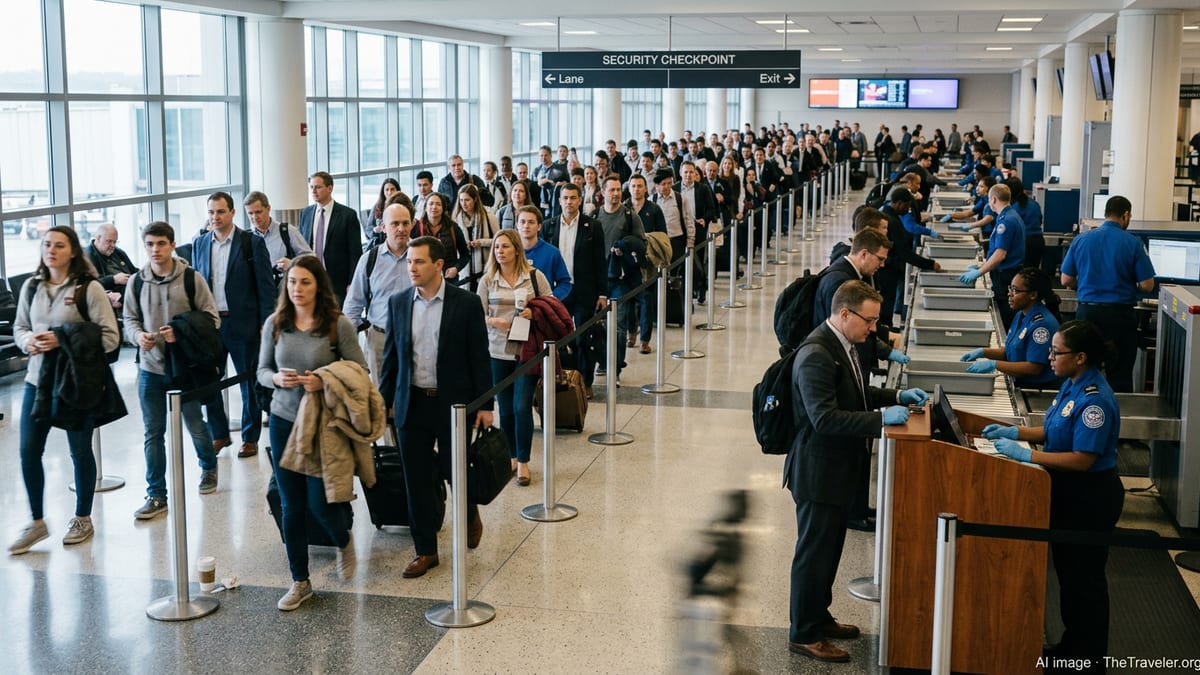
Mounting Pressure on Capitol Hill as Shutdown Deepens
In a series of coordinated appeals this week, major travel and aviation trade groups gathered in Washington to warn lawmakers that the partial shutdown of the Department of Homeland Security is tipping the aviation system toward a fresh period of disruption. The groups are urging Congress to pass immediate funding for DHS and to guarantee pay for essential airport security and air safety workers who have now worked weeks without a complete paycheck.
Industry executives argue that the political stalemate over immigration and border policy has spilled directly into the nation’s airports, where TSA officers and other security staff are legally required to remain on the job even as their pay is delayed. Leaders from the U.S. Travel Association and Airlines for America have framed the issue as both an economic threat and a basic question of fairness for federal employees who safeguard the traveling public.
Several leaders in the campaign have warned that Washington cannot expect TSA officers, many of whom earn relatively modest salaries, to absorb missed pay cycles indefinitely. They say the longer Congress allows the funding lapse to continue, the greater the risk that security lines will slow, absenteeism will rise and travel demand will be undercut just as families and students head to airports for spring breaks and early summer trips.
TSA Workforce Stretched as Paychecks Stop
At the heart of industry concerns is the roughly 64,000-strong TSA workforce, which screens nearly a billion passengers a year at airports nationwide. While those employees are deemed essential and must report to duty, many have now missed or are about to miss a full paycheck, forcing some to rely on savings, credit cards or second jobs to cover rent, food and child care.
Union representatives and airport managers report growing anxiety among screeners who fear that an extended period without pay will make it impossible to remain in their posts. In previous shutdowns, unscheduled absences rose sharply once missed paychecks began to hit household budgets, prompting longer lines and sporadic checkpoint closures at some of the country’s busiest hubs.
Supervisors at major gateway airports have been quietly reshuffling staff to cover the busiest checkpoints and peak-hour travel banks, but they acknowledge that such measures are temporary. If more officers begin calling in sick or leave TSA for more stable private-sector work, airports across the country could see delays ripple outward, affecting connecting flights and constraining already tight airline schedules.
Global Entry Pause and Security Program Disruptions
The shutdown’s effects extend beyond worker pay to some of the trusted-traveler and facilitation programs that frequent flyers rely on to move quickly through airports. Industry groups have sharply criticized the suspension of Global Entry, the U.S. Customs and Border Protection program that allows pre-approved, low-risk travelers to use expedited kiosks when entering the country. The pause has forced those travelers into standard immigration queues, lengthening waits at major international gateways.
There has also been confusion surrounding the status of TSA PreCheck, the fast-track screening program that allows vetted travelers to use dedicated lanes and keep on shoes and light jackets during inspections. DHS initially signaled that PreCheck would be curtailed alongside Global Entry, before backtracking in the face of pushback from industry groups and travelers and allowing the program to continue operating.
Travel executives say suspending programs that serve thoroughly vetted passengers is counterproductive at a time when security agencies are stretched thin. By pushing low-risk travelers back into standard lines, they argue, the shutdown magnifies congestion without improving safety and further erodes the customer experience that U.S. airports and airlines have been trying to rebuild after the pandemic years.
Economic Stakes for U.S. Travel and Tourism
Beyond the immediate operational strain, the shutdown is reviving worries about the long-term economic fallout of political brinkmanship around federal funding. The travel and tourism sector, which industry groups value at roughly $3 trillion in annual economic impact, is still working to stabilize after the shocks of the pandemic, staffing shortages and volatile demand patterns.
Business leaders point to earlier shutdowns in which cascading delays and canceled flights cost airlines and related businesses billions in lost revenue. They warn that as passengers see images of clogged checkpoints and hear stories of unpaid security workers, some may opt to postpone trips, avoid connecting through U.S. hubs or choose alternative destinations altogether.
Regional tourism boards and convention organizers are also voicing concern that prolonged uncertainty could deter international visitors as well as large corporate meetings and events, which typically book travel months in advance. For destinations that rely heavily on federal attractions and infrastructure, such as Washington, D.C., a slowdown in arrivals would be felt not only at airports but also in hotels, restaurants and cultural institutions.
Calls for Legislative Fixes to Protect Essential Workers
Amid the mounting pressure, travel industry coalitions have launched a high-profile messaging effort under banners such as "Pay Federal Aviation Workers" to push for both an immediate solution and structural change. Their demands center on two goals: ending the DHS funding lapse and passing legislation that would insulate essential aviation workers from future shutdown politics by guaranteeing their pay regardless of broader budget disputes.
Airport executives, union leaders and trade associations argue that while shutdowns have become a recurring feature of Washington budget standoffs, they should not be allowed to jeopardize aviation safety or punish front-line workers who are required to remain on duty. They stress that TSA officers, air traffic controllers and other security personnel are the backbone of a system that underpins commerce, tourism and national connectivity.
For now, TSA officers continue reporting to checkpoints, even as their paychecks stall and political negotiations drag on. But with passenger volumes building toward spring and summer peaks, industry leaders warn that Congress is running out of time to act before the system begins to show visible cracks. Their message from Washington, D.C., to lawmakers on both sides of the aisle is blunt: fund DHS, pay the people who keep airports safe and keep travel moving.