

More news on this day
Travelers moving through Detroit Metro Wayne County Airport on February 19 are facing another bruising day of disruptions, as Delta Air Lines and its regional partners Endeavor Air and SkyWest ground eight flights and delay well over 100 more, snarling connections to smaller Michigan communities as well as major hubs such as Boston, Burlington, Los Angeles and Greenville.
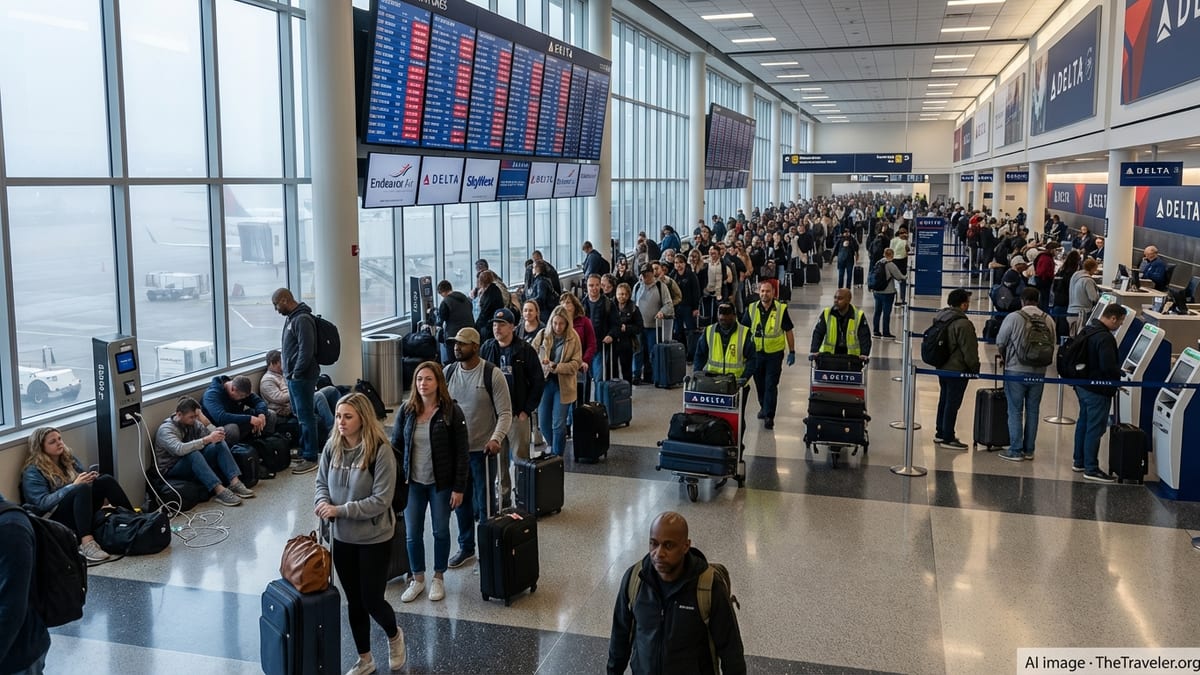
Detroit’s Foggy Morning Amplifies an Already Strained Network
Detroit woke up under a blanket of dense fog Thursday morning, with low visibility across Southeast Michigan contributing to a challenging operating environment at one of the Midwest’s largest air hubs. By midmorning, Detroit Metro Wayne County Airport was reporting a mounting tally of delayed departures and arrivals on Delta and its regional partners, adding fresh frustration to a winter season already marked by volatile weather and tight airline schedules.
While aviation authorities had not issued a formal ground stop for Detroit, air traffic control imposed spacing restrictions and slower arrival rates, forcing airlines to pad schedules and hold flights at the gate. That squeeze had an outsized effect on carriers that rely on Detroit as a connecting hub, particularly Delta’s mainline and Delta Connection operations flown by Endeavor Air and SkyWest.
For many travelers, the impact was immediate and personal. Early-morning departures pushed back by 30 to 90 minutes quickly cascaded into misconnected itineraries, missed meetings and rebooking scrambles at crowded customer-service counters. With the fog expected to linger into late morning, operations teams warned that knock-on delays could ripple into the afternoon peak.
The localized weather issues came as the wider U.S. system continued to battle periodic storms and chronic congestion at coastal hubs, leaving little slack in airline networks to absorb fresh disruptions out of Detroit.
Eight Cancellations, Over 100 Delays Hit Delta and Its Regional Partners
Airport operations data show that Delta Air Lines and its two primary regional affiliates at Detroit, Endeavor Air and SkyWest, have collectively canceled eight flights and delayed in excess of 100 on Thursday. The majority of the disruptions involve short-haul and medium-haul services, where tight turn times and high aircraft utilization leave little room to recover from even minor schedule shocks.
Delta’s mainline operation is bearing the brunt in terms of volume, with dozens of departures from Detroit posting departure times significantly behind schedule. Endeavor Air, the wholly owned regional subsidiary operating as Delta Connection, has logged a double-digit count of delayed flights as its 76-seater jets cycle through an increasingly compressed schedule. SkyWest, another key Delta Connection partner, is contending with both late arrivals into Detroit and outbound departures being held for connecting passengers.
The eight cancellations, while modest in absolute terms compared with nationwide totals on a busy travel day, are disproportionately painful because many affect routes with limited daily frequencies. In several cases, a scrubbed morning or midday departure effectively erases an entire travel option for passengers heading to smaller markets, forcing them onto long, multi-stop rebookings or to defer their trips altogether.
Airline representatives have cited a combination of weather-related constraints and broader operational challenges in explaining the day’s disruptions, noting that winter staffing levels, aircraft routing complexity and rolling delays from other hubs are all contributing factors.
Regional Lifelines to Alpena and Greenville Severely Disrupted
Among the hardest hit by Thursday’s turmoil are travelers relying on Detroit’s regional spokes, especially Alpena County Regional Airport in northern Michigan and Greenville in the U.S. Southeast. These communities depend heavily on Delta Connection flights for access to the national and international air network, often with just one or two daily frequencies linking them to Detroit.
In Alpena, a cancellation on the Detroit link can effectively close off same-day business and medical travel, as well as onward connections to major hubs like New York, Atlanta and Los Angeles. With Endeavor and SkyWest juggling aircraft rotations and crew duty limits, some Alpena-bound passengers have been offered lengthy ground transfers or overnight stays in Detroit after misconnecting from inbound flights.
Greenville, an important regional business and leisure gateway, is also feeling the strain from schedule volatility out of Detroit. Delays exceeding an hour on Detroit-originating services are spilling over into subsequent legs, forcing crews up against federally mandated duty-time limits. If a crew “times out” before a rescheduled departure can be executed, the result can be a last-minute cancellation even if weather has improved.
For smaller airports with limited amenities, the human toll is particularly visible: families waiting out delays with few dining or lounge options, travelers queueing at single staffed counters to rebook, and local tourism operators fielding a wave of last-minute cancellations from guests who simply cannot reach their destinations.
Major Routes to Boston, Burlington and Los Angeles Feel the Shockwaves
The reverberations from Detroit’s operational woes are not confined to smaller regional airports. Key trunk routes to Boston, Burlington in Vermont and Los Angeles are also experiencing disruption, highlighting Detroit’s role as a bridge between the Midwest and both coasts. As Detroit-originating flights leave late, downstream schedules into these high-demand markets quickly become unbalanced.
Boston Logan, a critical business and education hub, is seeing Detroit arrivals and departures bunch up into compressed time windows, increasing congestion at the gate and on taxiways. A delayed Detroit departure can force aircraft into later arrival slots in Boston’s already crowded airspace, which in turn lengthens turnaround times and jeopardizes on-time performance for the next leg in the aircraft’s sequence.
In Burlington, a smaller but strategically important gateway for New England leisure travel, delayed Detroit connections are straining an already seasonal schedule. Many of the passengers affected are skiing and outdoor enthusiasts traveling via Detroit from the Midwest and South. As flights slip deeper into the day, daylight arrival windows narrow, complicating ground transfers to resort areas and leading some passengers to shorten or cancel their trips.
On the West Coast, Detroit’s link to Los Angeles International is feeling the pinch from cascading delays across multiple time zones. Detroit-based aircraft destined for LAX are departing late and in some cases arriving behind schedule into the evening peak, tightening gate availability at one of the nation’s busiest airports. For connecting passengers in Los Angeles bound for transpacific or Latin American flights, the delay margin between flights is shrinking, raising the risk of missed long-haul departures.
Why Detroit Keeps Finding Itself at the Center of U.S. Travel Chaos
Detroit Metro Wayne County sits at a critical crossroads of the U.S. air network, with heavy north-south and east-west traffic converging on Delta’s extensive hub-and-spoke system. That strategic position brings clear benefits in terms of connectivity, but it also makes Detroit particularly sensitive to any imbalance in the broader aviation ecosystem, from weather to crew availability and aircraft maintenance needs.
Winter weather patterns in the Great Lakes region add another layer of vulnerability. Fog, low ceilings and lake-effect snow can each trigger delays even when runways remain open, as airlines are forced to increase spacing between arrivals, switch to instrument-only approaches and build extra time into deicing procedures. On a day like Thursday, when dense fog settles in across Southeast Michigan, Detroit’s complex schedule can quickly move from tight to untenable.
Operationally, Detroit’s role as a connecting hub means aircraft and crews are constantly flowing in from other airports already grappling with their own challenges. A late inbound from Boston or Los Angeles can instantly knock a Detroit departure off schedule, especially if that same aircraft is set to operate multiple additional legs before day’s end. Small delays compound, and what begins as a 20-minute slip in the morning can grow into multi-hour disruptions by the afternoon wave.
Industry analysts note that Detroit’s experience today mirrors patterns seen across U.S. hubs this winter: lean staffing, high aircraft utilization and schedule complexity, combined with recurring weather disruptions, leave little margin for error. When any one factor tips out of balance, entire hub operations can wobble, with passengers bearing the immediate cost.
Passengers Grapple With Long Lines, Missed Connections and Limited Options
Inside Detroit Metro’s terminals, the human impact of Thursday’s disruptions is evident long before passengers reach the gate. Security lanes are coping with surges of travelers who were advised by text and app alerts to arrive earlier than usual, while check-in counters for Delta and its partner airlines are ringed by serpentine queues of customers trying to salvage their itineraries.
For many, the most painful consequences come in the form of missed connections. Detroit’s schedules are built around tightly timed banks of arrivals and departures designed to maximize the number of one-stop itineraries. When an inbound flight from a city like Greenville or Alpena arrives late, those carefully planned connection windows can vanish, leaving passengers stranded as their onward flights to Boston, Burlington or Los Angeles push back without them.
Rebooking is further complicated by high load factors on many routes. With cabins already close to full, finding alternate seats on later departures can mean long layovers or even overnight stays. Families traveling together are frequently split across different flights, while business travelers find themselves scrambling to rework meeting calendars or switch to virtual participation.
Customer-service teams are leaning heavily on digital tools to help manage the surge, encouraging passengers to use airline apps and kiosks to accept new itineraries, hotel vouchers or meal credits. Still, the scenes playing out at Detroit highlight the limits of self-service solutions when weather and network complexity collide on a busy travel day.
Airlines Adjust Schedules and Crews to Contain the Damage
Behind the scenes, operations centers for Delta, Endeavor and SkyWest are working to recalibrate Thursday’s schedule in real time. Dispatchers and crew schedulers are studying updated weather forecasts and air traffic control restrictions, while maintenance teams assess which aircraft can be turned around fastest without compromising safety checks.
On routes where multiple daily frequencies exist, airlines are consolidating lightly booked flights and prioritizing departures with the highest concentration of connecting passengers. That strategy can help protect more passengers from cancellations, but it inevitably leads to some flights being cut altogether, especially in thinner markets such as Alpena and certain Greenville services.
Crew management is another delicate balancing act. Federal duty-time regulations cap the number of hours pilots and flight attendants may work in a given day and over longer time frames. As delays pile up, schedules that were legal and well-structured at the start of the day can suddenly push crews beyond their allowable limits, forcing last-minute substitutions or cancellations when relief crews are not immediately available at Detroit.
Airlines are also leaning on their regional partners’ flexibility, rerouting aircraft between Detroit and other hubs where conditions are more favorable. However, that strategy has limits, especially when weather-related constraints affect large portions of the Midwest simultaneously. For passengers, the immediate outcome remains the same: long waits, rebooked flights and uncertain arrival times at their final destinations.
What Travelers Through Detroit Can Do Today
For travelers with itineraries touching Detroit on Thursday, preparation and flexibility are proving essential. Airlines are urging passengers to monitor their flight status frequently through mobile apps and airport displays, as gate changes and revised departure times are becoming commonplace. Many carriers are also allowing same-day confirmed or standby changes without additional fees on affected routes, offering a lifeline to those able to adjust departure times.
Passengers already at the airport are being encouraged to stay close to their departure gates once they clear security, as boarding times may be compressed when gaps briefly open in air traffic control flow. Keeping carry-on luggage organized and travel documents at hand can also speed the boarding process when a delayed flight is suddenly cleared for departure and ground crews move quickly to push back.
For those yet to travel, considering alternative routings can sometimes mitigate the worst of the disruptions. Some Detroit-bound passengers are rebooking through other hubs with more favorable weather conditions, such as Atlanta or Minneapolis, even if that adds an extra flight segment. Others are taking advantage of relaxed change policies to shift their trips by a day, avoiding the most heavily impacted departure banks.
Still, for countless travelers trying to reach or pass through Detroit today, the reality is that patience may be the most important asset. With dense fog, tight schedules and an already stressed national air network, airlines and passengers alike have limited options beyond waiting for conditions and operations to stabilize.