

More news on this day
Travelers passing through New York’s LaGuardia Airport on February 17 are facing a fresh wave of disruption, with 92 flight delays and 10 cancellations tied to Delta Air Lines, American Airlines and United Airlines, rippling across key domestic routes linking New York with Boston, Chicago, Miami and several other major US cities.
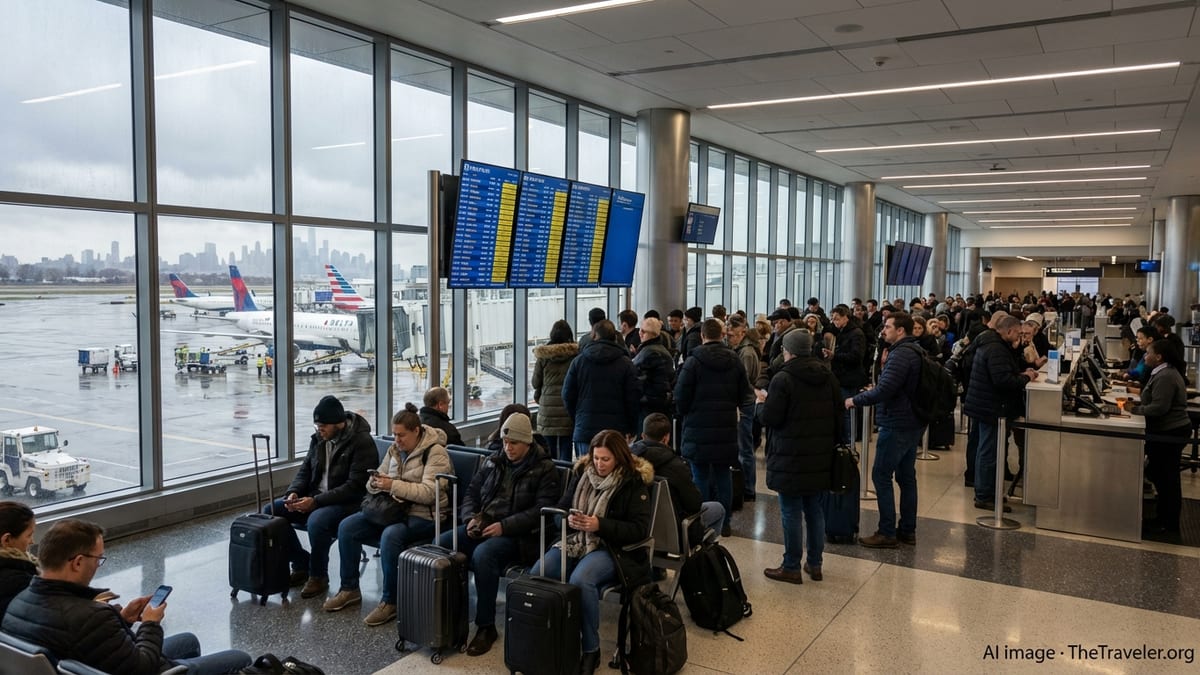
LaGuardia Becomes Fresh Flashpoint in Ongoing US Flight Disruptions
The concentrated disruption at LaGuardia comes as the United States endures yet another difficult travel day, with thousands of delays and hundreds of cancellations reported nationwide across major hubs including New York, Chicago, Miami, Boston and Orlando. While the LaGuardia figures are modest compared with mass weather events seen in January, they are significant enough to snarl tight business and leisure itineraries along the busy Northeast and East Coast corridors.
Operational data from airline and airport tracking platforms on February 17 show LaGuardia sitting within a broader pattern of strain on the US aviation system, which has been tested repeatedly in recent weeks by winter storms, residual staffing challenges and congestion at overburdened hubs. Even on days without a single dramatic weather trigger, modest schedule disruptions at one airport now tend to cascade quickly across airline networks.
At LaGuardia specifically, the 92 delayed flights and 10 cancellations linked to Delta, American and United underscore how sensitive New York’s slot-controlled airport remains to even short-lived operational hiccups. With little slack in runway capacity and very high utilization of gates during peak periods, the airport often has limited room to absorb irregular operations without passengers feeling the impact.
The result on February 17 has been scattered queues at check-in and security, full departure lounges and rolling gate changes, as carriers work to resequence aircraft and crews while preserving their most critical banked connections to other major US cities.
Delta, American and United Shoulder the Brunt of Schedule Strain
The three largest network carriers at LaGuardia, Delta Air Lines, American Airlines and United Airlines, are bearing most of the schedule disruption, reflecting both their market share at the airport and the design of their national route networks. Collectively responsible for the 92 delayed and 10 canceled flights, the carriers are juggling repositioning of aircraft and crew availability while trying to minimize knock-on impacts at other hubs.
Delta’s New York operation has already been under pressure this winter after a series of weather-related events, including the widespread impacts of Winter Storm Fern in late January. In that context, the airline has been emphasizing schedule resilience, but the delays at LaGuardia show that even well-capitalized carriers remain exposed when multiple busy airports experience strain on the same day.
American Airlines, which anchors a substantial share of LaGuardia’s domestic business traffic, has been working to stabilize its operations after earlier nationwide disruption linked to storms and infrastructure bottlenecks. The carrier’s LaGuardia cancellations and late departures on February 17 have primarily affected short- and medium-haul routes where aircraft typically turn several times a day, making each delay more likely to ripple into subsequent flights.
United Airlines, while a smaller player at LaGuardia than at Newark Liberty, still maintains a web of key business and leisure connections from the Queens airport. United’s delayed and canceled services on February 17 highlight how disruption in one New York airport can intertwine with operations across the wider metropolitan system, especially when carriers are also managing challenging conditions at Chicago O’Hare and other Midwest hubs.
New York, Boston, Chicago and Miami See Knock-On Effects
The immediate impact of LaGuardia’s 92 delays and 10 cancellations is being felt most acutely on routes connecting New York with Boston, Chicago and Miami, which are among the busiest and most commercially important city pairs in the US. Short-haul shuttles between LaGuardia and Boston Logan have experienced rolling delays, squeezing frequent business travelers who often rely on tight turnarounds for day trips.
In Chicago, where O’Hare is already managing a high volume of nationwide delays and a modest number of cancellations, late-arriving and re-timed flights from LaGuardia are contributing to congestion in already-busy mid-afternoon and evening departure banks. Even a handful of delayed flights between New York and Chicago can complicate gate assignments, push back departure slots and put additional pressure on crew scheduling.
Miami and other Florida destinations are also feeling the effects, particularly among passengers returning from long holiday weekends or winter escapes. Carriers are juggling strong seasonal demand with reduced slack in their fleets after weeks of weather-related maintenance and schedule reshuffles. When an aircraft leaves LaGuardia late for Miami, it often affects a subsequent flight back north, compounding passenger frustration and tightening available seat capacity later in the day.
Beyond these headline markets, secondary and tertiary destinations across the US are absorbing quieter but still meaningful impacts. Travelers bound for mid-sized cities in the Midwest, Southeast and Mountain West, who rely on single daily frequencies via LaGuardia, are among the most vulnerable to single-flight cancellations, as same-day rebooking options can be limited or nonexistent.
Weather, Congestion and a Stressed National Network
The issues at LaGuardia on February 17 cannot be viewed in isolation. Across the US, flight-tracking data shows more than three thousand delays and close to two hundred cancellations logged for the day, with New York, Chicago, Miami, Boston, Atlanta and several other major hubs reporting significant operational strain. Even where weather has not been severe, low clouds, intermittent rain and gusty winds have periodically slowed arrival and departure rates.
February’s disruptions follow a brutal January for US air travel, when major winter systems swept from the South into the Northeast and forced airlines to cancel tens of thousands of flights nationwide. Airports such as LaGuardia, Boston Logan and Chicago O’Hare were especially hard-hit, at times seeing well over 80 percent of their schedules scrubbed on peak storm days. Those events left airlines with a backlog of displaced crews and maintenance tasks that are still working their way through the system.
Compounding the challenge is the underlying congestion at coastal and hub airports that are already operating close to capacity under normal conditions. At LaGuardia, carefully calibrated arrival and departure slots mean that when an early bank of flights is delayed by weather or traffic management initiatives, it can take many hours for operations to return to timetable. Airlines can sometimes compress turnaround times or swap aircraft, but there are limits to how much recovery is possible without compromising safety.
Industry analysts note that the pattern seen on February 17, where moderate national disruption coincides with localized pain points like LaGuardia, is likely to remain a feature of US air travel for the rest of the winter. With storms still in the forecast and airlines striving to fly aggressive schedules to meet strong demand, the system has little margin for error.
Passengers Face Long Lines, Misconnections and Limited Alternatives
For passengers on the ground at LaGuardia, the statistics translate into familiar scenes at concourses and gate areas. On February 17, travelers have reported long queues at airline service desks, crowded seating areas and frequent public-address announcements about gate changes, rolling delays and limited standby availability on later flights.
Business travelers shuttling between New York, Boston and Chicago are among the most affected, as even short delays can cause missed meetings or force last-minute changes to overnight plans. Many have turned to video conferencing as a backup when it becomes clear that an evening return flight will not depart on time, but for industries that still depend on physical presence, irregular operations remain a serious headache.
Leisure travelers and families, particularly those heading to or from warm-weather destinations such as Miami, face a different set of challenges. Full loads mean that rebooking options are often constrained, and a single cancellation can strand passengers for many hours or push them into overnight stays. Hotel prices near the airport and in central New York tend to spike when weather and operational issues coincide, adding financial strain to an already stressful experience.
The timing of some of the delays has also created complications for international connections. Passengers landing at LaGuardia and transferring across New York to long-haul flights from John F. Kennedy International Airport have had to scramble, with some forced to rebook complex itineraries if their inbound flights arrived too late to make minimum connection times.
Airlines Roll Out Waivers and Operational Recovery Plans
In response to the day’s disruption, Delta, American and United have been using a familiar set of tools to steady their operations and reassure customers. These include limited change-fee waivers for affected routes, flexible rebooking within a defined travel window and the prioritization of high-demand trunk routes between key business and leisure markets for on-time recovery.
Operationally, carriers are focusing on maintaining the integrity of their hub structures. That often means protecting key connecting banks at large hubs like Atlanta, Chicago O’Hare and Miami while accepting some rolling delays on point-to-point services. In practice, this can leave smaller markets more exposed to cancellations or downgraded aircraft types, but airlines argue that it is necessary to protect the greatest number of passengers overall.
Ground handling teams at LaGuardia and other affected airports are also playing a crucial role in the recovery effort. Quick aircraft turnarounds, expedited de-icing when necessary and close coordination with air traffic control can help shave minutes from turnaround times and reduce the risk that a minor delay will grow into a major one as the day progresses.
Nevertheless, with aircraft utilization high and spare capacity limited, there is only so much that carriers can do on the day of disruption itself. Many of the structural pressures, such as tight staffing in key technical roles and the lingering effects of earlier storms, will take weeks rather than hours to resolve.
What Travelers Through LaGuardia and Other Hubs Can Do Today
For passengers scheduled to travel through LaGuardia and other affected airports on February 17, the most important guidance remains to stay informed and flexible. Airlines are updating flight status information frequently as they attempt to resequence operations, meaning that departure boards and mobile apps can change quickly.
Experts consistently advise passengers to build extra time into their plans when flying from congestion-prone hubs like LaGuardia, particularly in winter. Early-morning departures are often less vulnerable to cumulative delays than afternoon and evening services, and nonstop itineraries reduce exposure to misconnecting at intermediate hubs when irregular operations strike.
Travelers who find their flights significantly delayed or canceled also have established rights in the United States, including the option of cash refunds when carriers cancel a flight outright or make substantial schedule changes. While policies vary by airline, passengers affected by the LaGuardia disruptions on February 17 are being encouraged by consumer advocates to review carrier commitments carefully and to keep receipts for meals, ground transport and hotels in case goodwill compensation is later offered.
In the longer term, some frequent flyers are reassessing how often they rely on tight same-day turnarounds, especially on critical business days. The recurring pattern of winter turbulence in the US aviation system has prompted a shift among some corporate travel planners toward earlier departures, more flexible tickets and backup remote participation options.
A Testing Ground for Resilience in a Volatile Winter
The difficulties at LaGuardia on February 17 add another data point to what has already been a demanding season for US airlines and airports. Each episode of disruption, whether sparked by heavy snow, thunderstorms, technology outages or moderate congestion, is testing the resilience measures that carriers and regulators have introduced since the pandemic.
For Delta, American and United, days like this are an unwelcome reminder that even after major investments in technology, staffing and recovery playbooks, the complex web of US air travel remains vulnerable when multiple stressors converge. Yet they also offer a chance to refine contingency plans, improve passenger communications and adjust schedules ahead of the busier spring and summer seasons.
For travelers, LaGuardia’s latest bout of travel turmoil reinforces a message that has been repeated often this winter: flexibility, preparation and close attention to evolving conditions are now indispensable parts of flying through the country’s busiest hubs. While the numbers at LaGuardia on February 17 fall far short of the mass shutdowns seen during January’s most severe storms, they are another sign that even on seemingly ordinary days, the margin between smooth operations and widespread disruption can be narrow.
As airlines work through the evening to clear backlogs and reset aircraft and crew rotations, passengers at LaGuardia and connected airports from Boston and Chicago to Miami will be hoping the worst of the day’s turbulence remains confined to the departure boards, rather than spilling into the days ahead.