

More news on this day
Escalating conflict involving Iran, Israel and allied states has triggered sweeping travel warnings for 33 countries and disrupted key air corridors across the Middle East, sharply curbing international tourism and forcing airlines worldwide to cancel or reroute thousands of flights.
Get the latest news straight to your inbox!
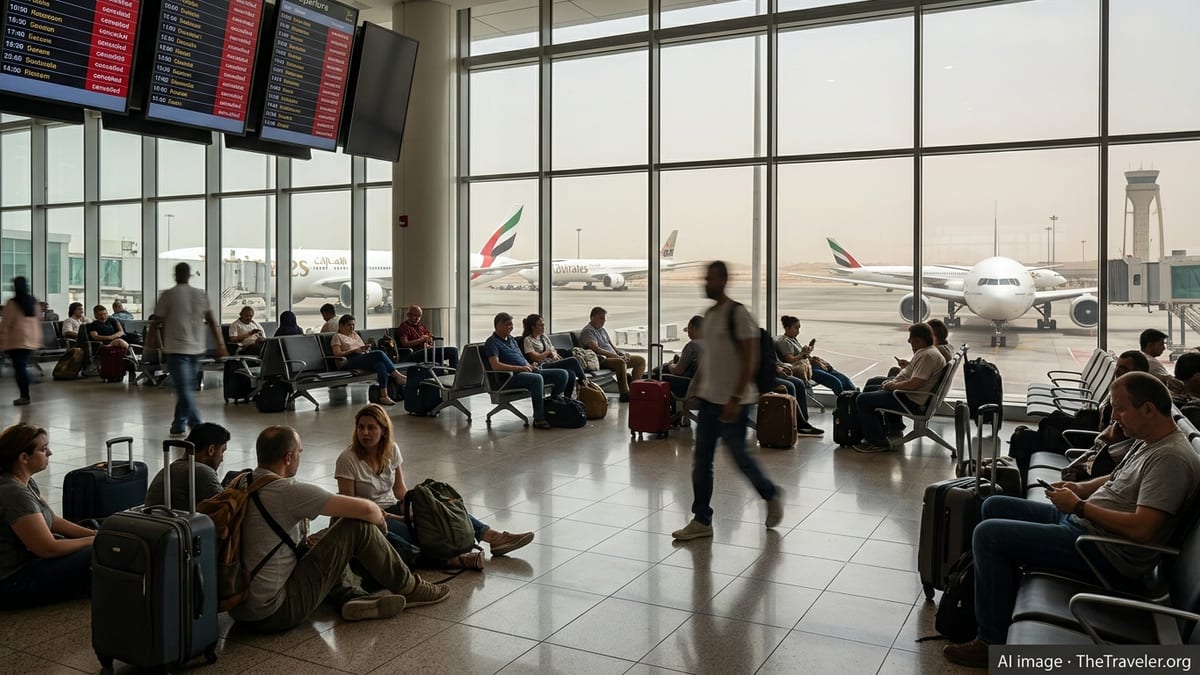
Escalating Conflict Triggers Global Travel Warnings
Government advisories issued since late February 2026 show a rapid tightening of travel guidance across the Middle East and neighboring regions, with at least 33 countries now subject to some form of heightened warning, partial evacuation order or security alert. Publicly available advisories from the United States, European governments and regional authorities point to a common concern over missile and drone strikes, airspace closures and the risk of further escalation.
Reports indicate that the United States has raised alerts across much of the Middle East and parts of South Asia, ordering the departure of non essential personnel from several diplomatic missions and calling on its citizens to leave multiple countries while commercial options remain available. European foreign ministries have likewise strengthened warnings for destinations including Iran, Iraq, Israel, Lebanon, Syria and Gulf states, often advising against non essential travel or recommending that visitors depart as soon as practical.
Updated guidance emphasizes that the risk is not confined to active conflict zones. Governments note the potential for rapid deterioration in countries that serve as transit hubs or host foreign military facilities, highlighting the possibility of sudden airspace closures that could leave travelers stranded or significantly delay repatriation.
Regional travel advice is being revised almost daily as the situation evolves, with some countries moving from partial caution to full “do not travel” classifications and others imposing new restrictions on overflight, airport access or cross border movement.
Airspace Closures Snarl Global Flight Operations
The sharpest immediate impact of the crisis has been felt in global aviation. After coordinated strikes on Iran on February 28, airspace across Iran and several neighboring states was temporarily shut or heavily restricted, according to aviation trackers and industry bulletins. Qatar’s airspace remains closed, while Iran and parts of Iraq and Syria have been routinely listed as no fly or high risk zones for civilian aircraft.
Major Gulf hubs that normally connect Europe and Africa with Asia have experienced significant disruption. Dubai International Airport, one of the world’s busiest for international passengers, has seen waves of cancellations and diversions, with Emirates and other carriers suspending services for extended periods as the United Arab Emirates briefly closed or restricted its airspace. Similar constraints have been reported in Saudi Arabia, Kuwait and Bahrain at different points in the crisis, forcing airlines to reconfigure networks in real time.
Industry data compiled since the start of March indicate that thousands of flights across the wider Middle East have been cancelled or rerouted, with knock on effects spreading to Europe, North America and Asia as aircraft and crew are displaced from normal rotations. Carriers in India, Europe and the Gulf have issued rolling advisories suspending routes to affected destinations or extending earlier cancellations.
Flight planning experts note that even where airspace technically remains open, elevated risk classifications and higher insurance costs are prompting many airlines to avoid traditional corridors over the Gulf and northern Middle East. Long haul services between Europe and Asia are increasingly routed via Central Asia, the Caucasus or southern Indian Ocean tracks, adding flying time, fuel burn and operational expense.
Tourism Flows Collapse Across Affected Regions
The combined effect of travel warnings and aviation disruption has been a sudden contraction in leisure travel to and through the Middle East. Tour operators report widespread cancellations for spring and early summer departures to destinations such as the United Arab Emirates, Oman, Jordan and Egypt, even in areas far from direct hostilities, as holidaymakers react to evolving safety guidance and limited air connectivity.
In the Gulf, cruise lines and resort operators have been forced to rework itineraries or mount ad hoc repatriation efforts. Recent reports describe large scale operations to fly stranded cruise passengers home from Dubai on specially arranged services after regular commercial flights were halted. Hotel occupancy in transit focused cities has swung from near full capacity with stranded travelers to sharp declines as new arrivals dry up.
Traditional cultural and religious tourism has also been hit. Pilgrimage routes that normally rely on multi leg itineraries via Middle Eastern hubs face uncertainty due to overflight bans and reduced capacity. Travel agencies in Europe and Asia are offering rebooking to alternate destinations or deferred travel dates, but many customers are opting for full refunds rather than shifting plans into an uncertain future.
Industry analysts suggest that even if hostilities ease in the coming weeks, perceptions of instability may suppress tourism demand to the broader region well into the peak summer season. The experience of sudden airspace closures and mass flight cancellations is expected to leave a lasting imprint on traveler behavior and insurance underwriting.
Airlines Confront Operational and Financial Strain
For airlines, the crisis presents an intricate mix of safety, regulatory and commercial challenges. Carriers based in the Gulf and wider Middle East, which rely heavily on sixth freedom traffic connecting continents via regional hubs, have seen a core part of their business model disrupted. Schedule reductions, rerouting and the grounding of widebody aircraft are now common across the region, according to airline statements and schedules filed with global reservation systems.
International airlines outside the region are wrestling with longer flight times and higher costs on routes that formerly transited Middle Eastern airspace. Detours around closed or high risk zones are adding hours to some Europe Asia services, altering crew duty patterns and increasing fuel consumption at a time when energy markets are already jittery due to concerns over the Strait of Hormuz and Red Sea shipping corridors.
Logistics and cargo operations are also feeling the pressure. Supply chain advisories circulated in early March highlight how airfreight capacity through Gulf hubs has been sharply reduced at the same time that ocean carriers contend with diversions around the Red Sea. Shippers moving high value or time sensitive goods between Asia, Europe and North America are facing higher rates and longer transit times, with knock on effects for sectors ranging from pharmaceuticals to high tech manufacturing.
Financially, the combination of lost passenger revenue and increased operating costs is expected to weigh heavily on airline earnings in the first half of 2026. Analysts warn that weaker or highly exposed carriers may require state support or accelerated restructuring if disruptions persist or expand.
Travelers Navigate Uncertain Landscape
For individual travelers, the patchwork of advisories and rapidly shifting airline schedules has created a complex decision making environment. Guidance from governments and consular services generally urges people already in affected countries to leave while commercial flights are still available, but warns against heading to airports without confirmed bookings due to the risk of congestion and additional cancellations.
Insurance coverage has emerged as a critical consideration. Many policies distinguish between routine travel disruptions and those linked to declared conflict or formal government warnings, leaving some travelers uncertain about their eligibility for refunds or alternative arrangements. Industry commentators are encouraging travelers to scrutinize policy language on war, terrorism and government intervention clauses before booking future trips involving transit through the region.
Airlines and airports are advising passengers to monitor booking channels closely for real time updates and to allow for significant flexibility around travel dates and routes. Some carriers are offering waivers for change fees or fare differences on impacted itineraries, particularly for journeys involving hubs in the Gulf, Levant or Iran’s immediate neighbors.
With no clear timeline for resolution of the conflict, observers expect that the map of viable long haul routes may continue to evolve week by week. For now, the intersection of heightened security risks, extensive travel warnings and constrained airspace has reshaped global flight operations, underscoring the central role of the Middle East in international tourism and airline networks.