

More news on this day
From long-planned summer holidays to spur-of-the-moment city breaks, travelers are increasingly waiting until the last possible moment to lock in their trips, a shift in booking behavior that is rippling through every corner of the travel industry.
Get the latest news straight to your inbox!
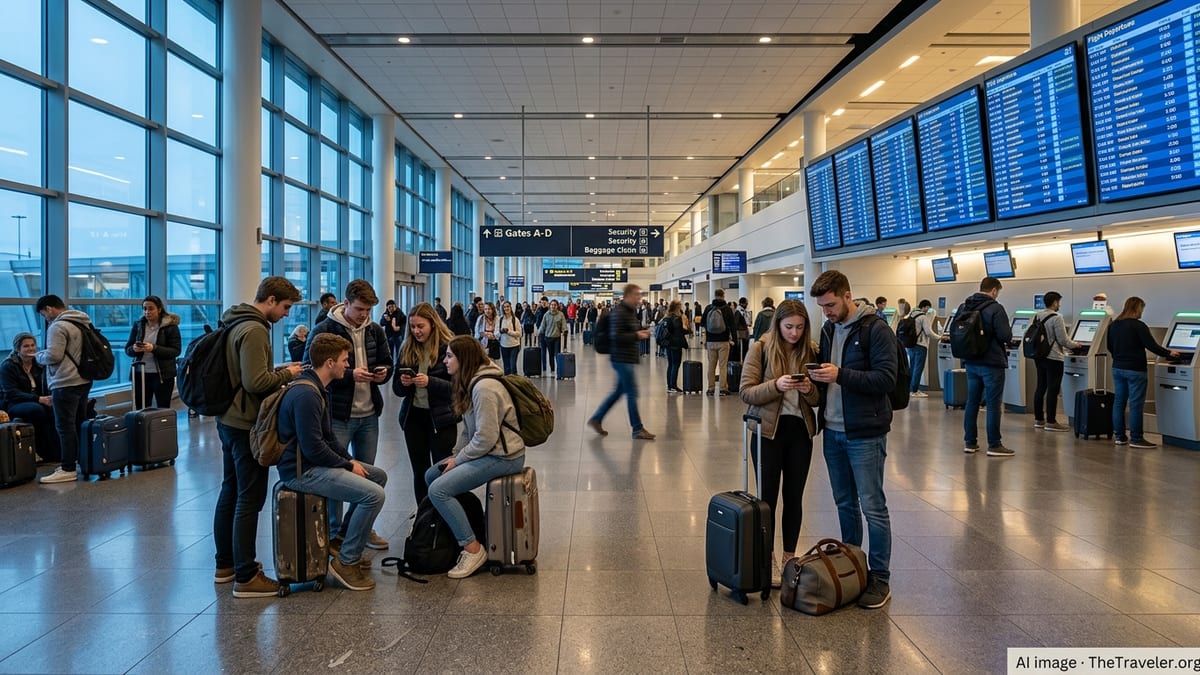
A Global Shift Toward Shorter Booking Windows
Across air, hotel and experience providers, publicly available data shows a steady contraction in how far ahead many leisure travelers commit to a trip. Industry analyses of millions of reservations indicate that same-week and last-minute stays are taking a larger share of overall bookings, particularly in urban and resort markets that attract flexible workers and younger holidaymakers. While some segments, such as corporate travel, still show longer lead times, the overall pattern points to travelers feeling more comfortable making decisions closer to departure.
Several travel trend reports for 2024 and 2025 highlight how economic uncertainty, volatile airfares and changing work patterns are pushing consumers to delay purchases. Travelers increasingly weigh personal schedules, health considerations and destination conditions up until the final weeks or even days before travel. This has produced noticeable shifts in demand curves that once followed predictable seasonal patterns.
The move to later booking is not uniform across all regions or price points, but analysts note that it is most pronounced in mid-market leisure travel, city breaks and short-haul flights. Here, competition among airlines and hotels, plus the availability of digital tools that surface real-time deals, makes it easier for travelers to wait and compare before committing.
Gen Z, Millennials And The Culture Of Spontaneity
Younger travelers are at the center of the trend. Surveys of Gen Z and millennial consumers in North America and Europe show that a large majority have booked a trip at the last minute, and many say they are comfortable confirming travel less than a week in advance. Research from online travel brands and loyalty platforms suggests that this cohort is especially responsive to flash sales, time-limited promotions and social media driven inspiration that can trigger near-instant booking decisions.
Reports indicate that for some Gen Z travelers, hesitation to book early is tied to budget concerns as much as spontaneity. With living costs and student debt weighing heavily, many prefer to monitor prices and only commit once they find what they perceive as a fair deal. Others say they delay because they are waiting to see if friends can join, if remote work schedules allow them to extend a stay, or if a better destination trend emerges online.
This mindset is also linked to the rise of blended or “bleisure” travel, in which workers tack personal days onto business trips. Remote and hybrid employees may wait until a work trip is confirmed before booking side excursions or additional nights, compressing booking windows even further. For travel companies, that makes younger travelers both highly valuable and harder to predict.
How Airlines And Hotels Are Rewriting Revenue Playbooks
Later booking behavior is pushing airlines and hoteliers to rely more heavily on dynamic pricing, sophisticated forecasting tools and flexible inventory strategies. Revenue managers increasingly describe a “compressed booking curve,” where a large share of seats and rooms are sold in the final weeks before travel instead of gradually over several months. This requires constant recalibration of fares and rates as demand materializes more suddenly.
Hotel and rental accommodation data providers report that in many destinations, same-week or last-minute reservations now account for a substantial portion of total stays. In response, some operators are holding back inventory to capture higher-yield late demand, while others offer discounted advance-purchase rates to encourage earlier commitments. Overbooking models are also evolving as properties try to protect themselves against no-shows while avoiding guest displacement.
Airlines face similar challenges. Where carriers once relied on early bookings to signal how a route would perform, they now often see a modest trickle of early sales followed by a surge closer to departure. This has prompted adjustments to fare classes, loyalty promotions and schedule planning. Some carriers are experimenting with more flexible change policies or credit-based products aimed at travelers who want the option to delay firming up dates.
Flexible Policies, Fintech And AI Tools Encourage Waiting
Policy and product changes introduced during the pandemic era are also reinforcing the tendency to book later. Many airlines, hotels and tour operators relaxed change and cancellation penalties in 2020 and, while some restrictions have returned, a more flexible baseline remains compared with pre-pandemic norms. Publicly available booking terms show more fare types with free date changes, credit vouchers and partial refunds, giving travelers confidence that they can adjust plans if circumstances change.
At the same time, the growing use of installment-based payment options and “buy now, pay later” services for travel purchases allows customers to secure trips without paying the full cost upfront. Financial and consumer reports note that these products are particularly popular among younger travelers who may have limited savings but strong desire to travel. This financial flexibility can make it easier to wait for late-breaking deals, then move quickly once a price looks attractive.
Technology is reinforcing the pattern in other ways. Travel search platforms now highlight last-minute offers, track fare volatility and use artificial intelligence to recommend whether to book now or wait. These tools are training consumers to think of booking as an optimized, data-driven decision that can often be improved by holding out a little longer, especially outside peak holiday periods.
Tour Operators And Destinations Adapt To A New Normal
Traditional tour operators and destination marketing organizations are also feeling the impact of shortened booking windows. Multi-day tours and small-group experiences that once filled months in advance are seeing more late inquiries, prompting operators to adjust cut-off dates, staffing plans and cancellation rules. Some companies are creating “fast-packaged” trips designed to be booked on short notice, with guaranteed departures and simplified logistics to appeal to spontaneous travelers.
Destination managers report that fluctuating demand patterns complicate efforts to balance visitor flows, particularly in urban centers and popular nature sites. When more travelers decide on a trip just weeks or days ahead, it becomes harder to anticipate peak crowding or to steer visitors toward lesser-known areas through long-term campaigns. In response, some tourism boards are investing in real-time marketing, short-booking season promotions and data partnerships that give them a clearer picture of near-term arrivals.
For now, industry research suggests that the trend toward later booking is likely to persist, shaped by economic conditions, workplace flexibility and evolving consumer expectations. Travel providers are racing to adapt, treating the last-minute window not as an exception but as a central feature of modern demand. As they do, everything from pricing strategies to product design is being reshaped around travelers who are no longer in a hurry to decide where to go, right up until the moment they actually do.