

More news on this day
Antarctica, once the preserve of scientists and hardened explorers, is drawing record numbers of high-end travelers as Silversea Cruises expands its ultra-luxury expeditions and helps redefine what polar exploration looks like in 2026.
Get the latest news straight to your inbox!
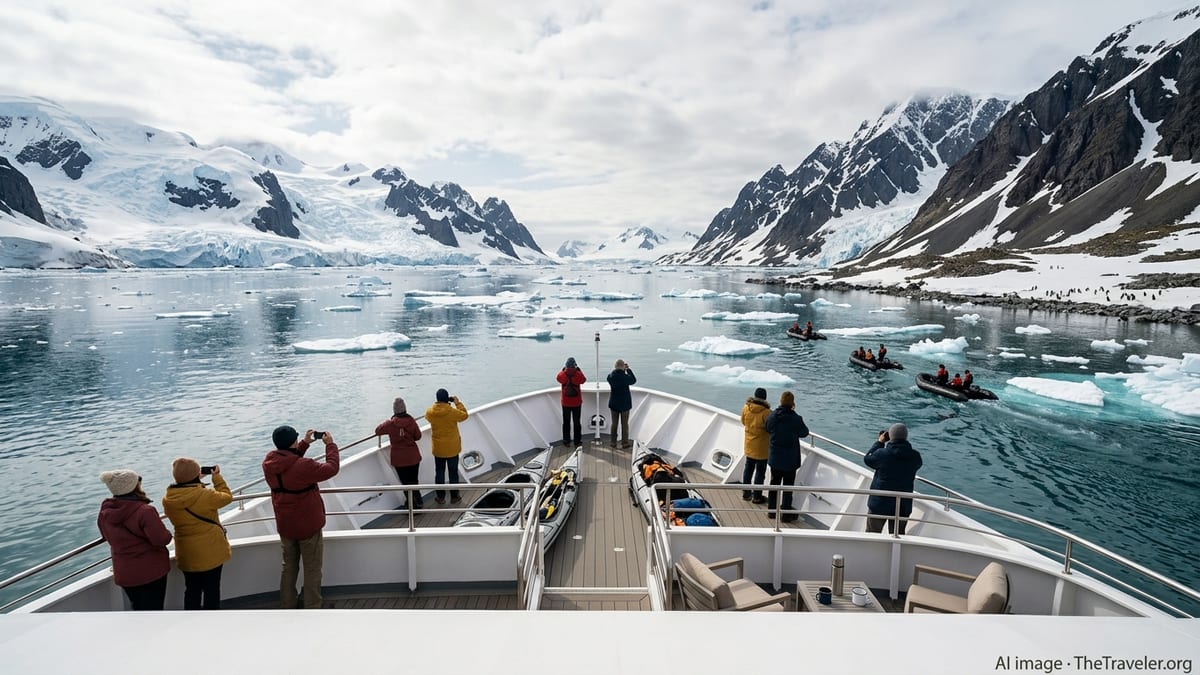
Record Visitor Numbers at the End of the Earth
Recent data from industry reports and non-governmental organizations show that tourism to Antarctica has climbed to unprecedented levels, with more than 120,000 visitors traveling south in the 2023 to 2024 season and strong demand continuing into 2024 to 2025. While this is still a small fraction of global tourism, the rise is striking for a place that was largely inaccessible to leisure travelers just a generation ago.
The International Association of Antarctica Tour Operators, the main industry body in the region, reports that ship-based tourism remains the dominant way to reach the continent, with hundreds of voyages now scheduled each austral summer. Analysts note that travelers from the United States continue to represent a large share of visitors, while markets such as China and Europe are adding to the surge in demand for polar itineraries.
Forecasts cited in recent coverage suggest that if current trends continue, annual visitor numbers could approach several hundred thousand over the next decade. The figures are fueling a debate about how to balance a growing appetite for once-in-a-lifetime experiences with the environmental limits of one of the planet’s most fragile ecosystems.
Within this expanding market, Silversea has positioned itself at the upper end of the spectrum, catering to travelers willing to pay premium fares for small-ship access, higher staff-to-guest ratios and a level of comfort once unthinkable at the edge of the Southern Ocean.
Silversea Builds a Three-Ship Polar Presence
Silversea’s recent Antarctic seasons have centered on a trio of expedition vessels: Silver Endeavour, Silver Cloud and Silver Wind. According to published schedules and trade coverage, the line has been operating dozens of voyages each austral summer, ranging from shorter Antarctic Peninsula journeys to longer expeditions that add the Falkland Islands and South Georgia.
Reports indicate that the cruise line’s 2024 to 2025 program featured itineraries of roughly six to twenty-two days, with departures from southern Chile and Argentina designed to connect efficiently with international flights. Silver Endeavour, acquired and refitted as an ultra-luxury ice-class vessel, has become the flagship for these polar operations, while the older but heavily upgraded Silver Cloud and Silver Wind continue to offer classic expedition experiences with enhanced comforts.
Industry observers note that Silversea’s capacity in Antarctica has grown in step with the wider expedition cruise sector, which has seen a wave of new ships enter service in recent years. The company’s focus, however, remains on limiting guest numbers per voyage compared with conventional cruise ships, aiming to preserve shore access opportunities and maintain an intimate feel on board.
At the operational level, filings and public environmental documents show that Silversea has detailed logistical plans for its Antarctic activities, covering everything from fuel management and waste handling to ice navigation and emergency preparedness. These materials underline how complex modern polar tourism has become, even as it is marketed to guests as seamless adventure.
Redefining Polar Exploration as Ultra-Luxury
Silversea’s strategy in Antarctica revolves around reframing polar exploration as an ultra-luxury experience without abandoning the expedition ethos. On board, suites, fine dining and personalized service echo the standards of high-end ocean cruising, while the daily rhythm is built around Zodiac landings, wildlife encounters and lectures delivered by expedition teams.
Travel reports describe a model in which guests can spend mornings stepping onto penguin-filled beaches or cruising beneath glacier-clad cliffs, then return to lounges and observation decks designed for comfort and panoramic views. Ice-strengthened hulls, advanced navigation systems and stabilizers aim to make crossings such as the Drake Passage more manageable for travelers who might once have been deterred by the region’s notorious seas.
Silversea has also invested heavily in specialist expedition staff, including naturalists, historians and photographers who lead shore activities and onboard briefings. Publicly available itineraries highlight options such as sea kayaking, citizen science projects and extended Zodiac cruises, designed to give guests varied perspectives on the Antarctic landscape while remaining within strict landing and wildlife-distance rules.
This combination of comfort and immersion has helped attract a clientele accustomed to luxury travel elsewhere but new to expedition cruising. Industry watchers say the blend of soft adventure, service and scientific interpretation is a key factor in the growing appeal of Antarctica among affluent travelers.
Fly-Cruise Options and New Routes Shorten the Journey
One of the most notable shifts in recent years has been the rise of fly-cruise options that bypass part of the long sea journey from South America. Public itineraries offered by Silversea feature programs in which guests fly from cities such as Punta Arenas to King George Island in the South Shetland Islands, joining their ship directly in Antarctic waters rather than sailing both ways across the Drake Passage.
This model reduces travel time by several days, making Antarctica more accessible to time-pressed travelers and those concerned about rough seas. It also allows cruise lines to schedule more intensive itineraries within a fixed vacation window, concentrating on landings and excursions instead of lengthy open-ocean transits.
Beyond the fly-cruise concept, Silversea has expanded routes that link the Antarctic Peninsula with sub-Antarctic destinations known for spectacular wildlife. Voyages including the Falkland Islands and South Georgia appeal to enthusiasts interested in vast penguin colonies, seal rookeries and historical sites connected with early polar exploration.
Industry analysts note that these itinerary innovations are part of a broader trend across the expedition sector, as operators compete to offer new combinations of destinations and activities while still respecting environmental and regulatory constraints imposed by the Antarctic Treaty System and associated bodies.
Luxury Meets Environmental Responsibility in a Fragile Region
The rapid growth of Antarctic tourism has intensified scrutiny of its environmental footprint, and luxury operators are under particular pressure to demonstrate responsible practices. Public guidance from the International Association of Antarctica Tour Operators emphasizes strict rules on waste disposal, wildlife interactions and ship size limits for landings, all intended to reduce disturbance in sensitive coastal zones.
Silversea, as a member of this framework, is expected to follow these guidelines, coordinating landings with other operators to avoid overcrowding and limiting the number of visitors ashore at any one time. Company materials and environmental assessments outline biosecurity measures such as boot-washing, vacuuming of clothing and mandatory briefings designed to prevent the introduction of non-native species.
At the same time, the broader expedition cruise industry is exploring technology and operational changes intended to lower emissions and improve efficiency. Across the sector, there is growing attention to cleaner fuels, optimized itineraries and shore power readiness where infrastructure exists, although the remoteness of Antarctica continues to present practical challenges.
Environmental organizations and scientific groups remain cautious, pointing out that even well-managed visitation adds pressure to ecosystems already stressed by climate change. Yet some conservation advocates argue that carefully regulated tourism, paired with strong educational components, can help build a global constituency for Antarctic protection. In this tension between access and preservation, Silversea’s high-profile presence illustrates how luxury travel is now woven into the evolving story of the world’s southernmost continent.