

More news on this day
Antarctica, once the preserve of scientists and hardened explorers, is drawing record numbers of leisure travelers, and ultra-luxury cruise line Silversea is rapidly reshaping how visitors experience the planet’s southernmost continent.
Get the latest news straight to your inbox!
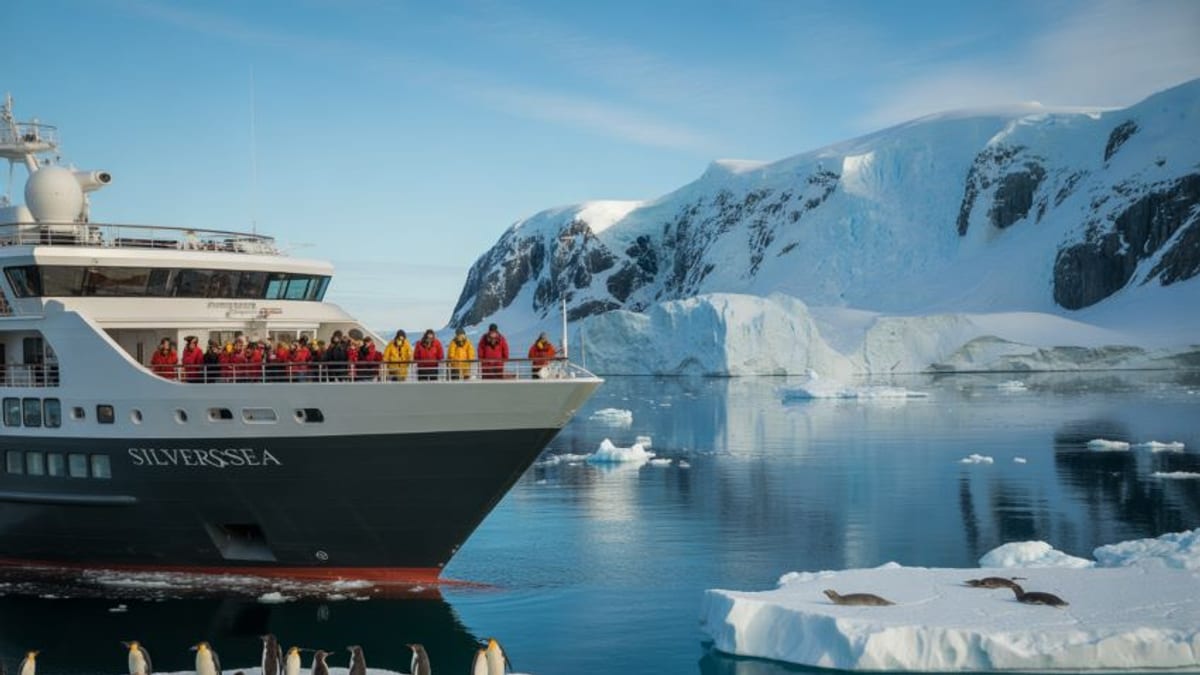
Image by International Cruise News: Latest Cruise Line & Cruise Ship News
Antarctica Visitor Numbers Hit New Highs
Recent analyses of International Association of Antarctica Tour Operators data indicate that tourist numbers to Antarctica have climbed sharply in the past few seasons, rising from just over 100,000 visitors in 2022–2023 to more than 120,000 in 2023–2024. Preliminary tallies for the 2024–2025 austral summer suggest that total arrivals, including cruise passengers and fly-in guests, again exceeded 115,000. The trend places Antarctica among the fastest-growing niche destinations in global tourism, even as overall international travel continues to recover and expand.
This surge reflects a broader boom in expedition cruising and polar tourism. Industry market reports describe double-digit annual growth in the polar segment, with Antarctica capturing a significant share of demand. The number of ships purpose-built or refitted for ice navigation has increased substantially over the past five years, creating more berths and a wider range of itineraries. Analysts note that capacity, rather than consumer interest, is now the main constraint on how quickly Antarctic visitor numbers can grow.
Demographic patterns are also shifting. Studies of recent seasons point to a client base dominated by affluent travelers in their 50s and 60s, but with a rising share of younger, experience-focused guests willing to pay a premium for remote adventure. The United States remains the leading source market, with strong growth from Europe and emerging demand from Asia-Pacific high-net-worth travelers.
Silversea Builds a Flagship Polar Fleet
Within this booming landscape, Silversea has moved aggressively to position itself at the top end of Antarctic cruising. The company now deploys a dedicated expedition fleet that includes the ultra-luxury Silver Endeavour alongside classic ice-strengthened vessels such as Silver Cloud and Silver Wind. Publicly available specifications show that Silver Endeavour carries a high ice classification and advanced navigation systems designed for operation in challenging polar conditions, while still offering suites with balconies, multiple dining venues, and an expansive spa.
Corporate voyage calendars and environmental filings for the 2024–2025 and 2025–2026 seasons indicate that Silversea is committing a substantial portion of its expedition capacity to Antarctic waters. Sailings typically operate from Chilean and Argentine gateway ports, with itineraries that range from focused Antarctic Peninsula journeys to longer expeditions that add the Falkland Islands and South Georgia. Many departures are scheduled in rapid succession between November and March, underscoring the company’s confidence in sustained demand.
Silversea has also retired or reassigned older hardware as part of a broader fleet renewal. Former expedition vessel Silver Explorer, which helped pioneer the brand’s early polar program, has left the fleet, while newer ships have been upgraded for enhanced comfort and efficiency. Refits on Silver Endeavour, for example, have replaced helicopter facilities with additional guest suites and medical and crew spaces, signaling a long-term commitment to expedition cruising rather than short-lived novelty offerings.
Fly-Cruise Itineraries Redefine Access to the Ice
One of the clearest ways Silversea is reshaping Antarctic tourism is through the expansion of fly-cruise programs. These itineraries typically use charter flights from South America to airlift passengers directly to a staging point near the Antarctic Peninsula or to ports close to the Drake Passage, allowing travelers to shorten or bypass the often-rough sea crossing. Industry coverage describes these products as among the first ultra-luxury fly-cruise options in the region, aimed at time-poor travelers who want an intensive but shorter polar experience.
Season brochures and independent travel agency materials for 2024–2025 and 2025–2026 show six- to ten-day fly-cruise schedules aboard Silver Endeavour, marketed as offering more time amid the ice and less in transit. By condensing voyage lengths compared with traditional two- to three-week journeys, these options open Antarctica to travelers who might otherwise be deterred by time away from work or long days at sea. The model also enables higher ship utilization, as vessels can rotate more frequently through key landing zones.
While fly-cruise products have existed in the Antarctic market for several years, Silversea’s approach pairs them with a fully all-inclusive ultra-luxury format, bundling charter flights, pre-cruise hotel stays, excursions, and onboard services into a single fare. Market observers note that this packaging, combined with the brand’s emphasis on small-ship expedition operations, positions Silversea at the top of a competitive field that includes both traditional expedition operators and larger cruise brands entering the polar space.
Immersive Experiences Meet Environmental Scrutiny
As Silversea and its competitors expand, the on-the-ice experience is becoming more structured and more varied. Expedition programs on Silversea’s Antarctic voyages typically include Zodiac cruises among icebergs, shore landings to view penguin colonies, guided hikes, and optional activities such as kayaking or cold-water plunges. Many itineraries incorporate onboard lectures by guides with backgrounds in glaciology, wildlife biology, or polar history, part of a push across the sector to frame tourism as both experiential and educational.
At the same time, scientists and policy researchers are raising concerns about the cumulative impact of tourism on Antarctica’s fragile ecosystems. Recent academic and media reports highlight potential risks including wildlife disturbance, the introduction of non-native species via clothing and equipment, and carbon emissions associated with long-haul flights and ship operations. Some commentators describe the rapid increase in visitor numbers as a form of overtourism in an environment that has limited capacity to absorb human presence.
Silversea is part of the International Association of Antarctica Tour Operators, whose operators adhere to detailed guidelines on ship size, landing protocols, and wildlife interactions. These voluntary measures limit the number of people ashore at any given time, regulate paths and distances around nesting areas, and require stringent biosecurity procedures such as gear cleaning and passenger briefings. Publicly available information from IAATO and environmental impact assessments shows that Silversea aligns its operations with these rules, emphasizing small-group shore visits and controlled access to sensitive sites.
Critics argue, however, that even well-managed tourism brings unavoidable disturbance and that projected growth to several hundred thousand visitors per year across all operators could undermine conservation goals. Debate is intensifying within scientific and policy circles over whether governance frameworks should move from industry self-regulation toward stricter binding limits on visitor numbers, types of activities, or ship deployments.
Market Outlook: A Race to Shape the Polar Future
Forecasts for the coming decade suggest that demand for Antarctic travel will continue to increase, particularly in the luxury and expedition segments. Market research indicates that high-net-worth travelers are seeking destinations perceived as remote, pristine, and climate-relevant, and Antarctica fits squarely within this narrative. Projections cited in polar tourism studies point to the possibility of annual visitor numbers reaching several hundred thousand by the early 2030s if vessel orders, booking trends, and economic conditions remain favorable.
For Silversea, this environment creates both opportunity and risk. The company is positioned to capture a larger share of high-yield guests as it refines its polar fleet and expands itineraries, but it must navigate rising scrutiny of cruise emissions and environmental footprints. Any tightening of international rules on Antarctic tourism, changes in port access, or shifts in traveler sentiment around carbon-intensive travel could affect deployment plans and pricing strategies.
Industry observers note that the next few seasons will be a critical test of how far ultra-luxury operators can push growth while maintaining social and environmental legitimacy. Silversea’s blend of high-comfort ships, fly-cruise logistics, and small-group expedition programming is emerging as an influential template, one that competitors are already emulating. As more travelers look south for what is marketed as a once-in-a-lifetime journey, the way brands like Silversea choose to interpret and manage polar exploration may help define what visiting Antarctica looks like for years to come.