

More news on this day
Hundreds of travelers at Orlando International Airport faced extended waits and last-minute itinerary changes today as 155 flights across major U.S. and international carriers were delayed, disrupting one of the nation’s busiest tourist gateways.
Get the latest news straight to your inbox!
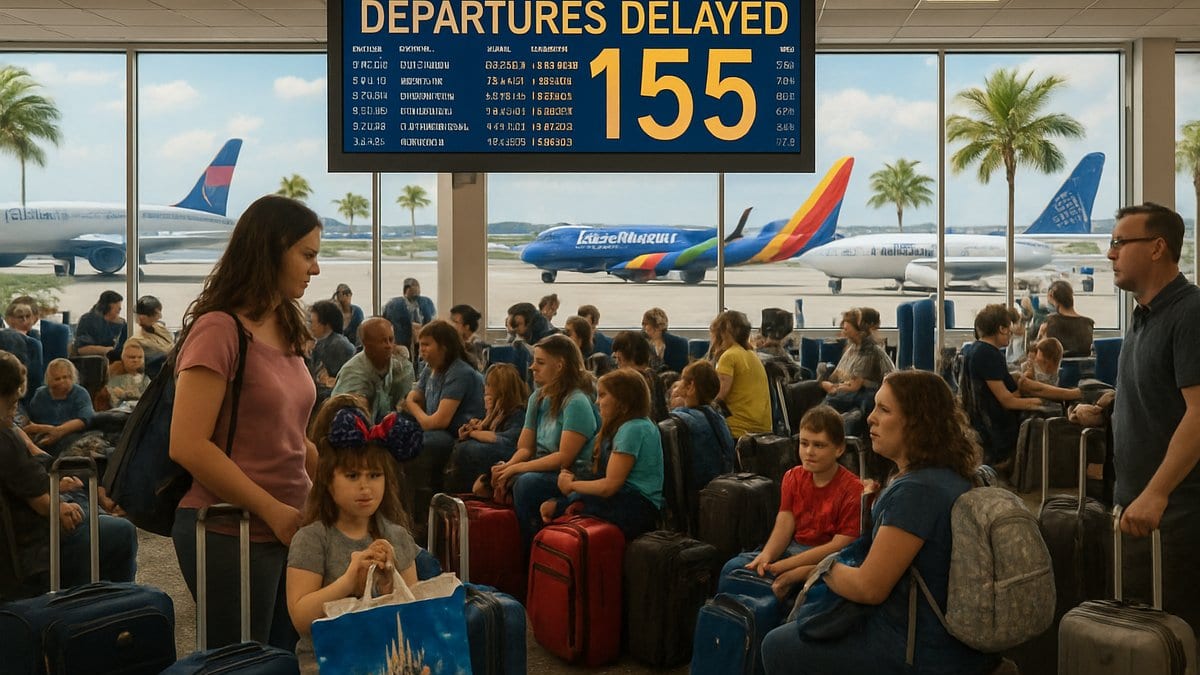
Image by Nomad Lawyer
Widespread Disruptions Across Major Carriers
Orlando International Airport experienced a sharp spike in operational disruptions as leading airlines including Spirit, JetBlue, Southwest, American, Delta and United logged 155 delayed flights and at least two cancellations on routes connecting Orlando with major hubs such as New York, Boston, Chicago, Toronto, London and Cancun. Publicly available flight-tracking data and industry coverage indicate that the delays affected a broad mix of domestic and international services, snarling schedules well into the day.
Reports indicate that the disruption did not stem from a single incident, but from a combination of volume-related strain and knock-on effects from wider network issues. Orlando is among the United States’ busiest leisure airports and has been handling elevated passenger numbers during the spring travel period, magnifying the impact of any schedule irregularities.
Travel and aviation outlets describe a patchwork of delay times ranging from minor schedule slippages to hold-ups exceeding an hour, particularly on flights bound for major East Coast and cross-border markets. For passengers with onward connections, even shorter delays at Orlando created ripples through their itineraries, pushing some into overnight stays or rebookings on later flights.
The situation adds to a pattern of periodic disruptions seen at large U.S. hubs in recent months, where dense flight schedules and heavy demand have left little room to absorb operational hiccups without visible effects for travelers.
Terminal Congestion and Passenger Frustration
With dozens of departures pushed back, crowds quickly built in gate areas and concourses throughout the airport. Images and descriptions shared via news reports and social media posts depict packed seating zones, long lines at customer service desks and lengthening queues at food outlets as passengers waited for updated departure times.
Publicly available information shows that travelers reported difficulty securing clear, timely updates as airlines repeatedly revised estimated departure times. For some, rolling changes to boarding announcements created uncertainty about whether to remain at the gate, move to customer service counters or seek alternative travel arrangements.
Families returning from theme-park vacations, international visitors connecting onward to Europe and Latin America, and business travelers heading to major financial centers were among those affected. With Orlando serving as a key origin and transfer point for both leisure and corporate traffic, the disruption cut across traveler categories and budgets.
Airport services also came under pressure. Increased demand for food, charging outlets and seating heightened tensions in already busy concourses, particularly during peak departure banks. Travelers arriving at the airport based on original departure times frequently encountered crowds that had been building for hours.
Weather, Network Strain and Seasonal Demand
While specific flight-by-flight causes varied, the pattern at Orlando appeared consistent with the broader environment facing U.S. aviation this season, where a mix of unstable weather, high demand and tight airline schedules has produced episodic surges in delays. National data from recent months has highlighted how storms or congestion in one region can cascade into widespread knock-on issues at airports that are otherwise experiencing manageable local conditions.
Analyses by travel-industry outlets have frequently noted that Orlando ranks among the airports with elevated delay percentages, in part because it serves as a major connecting point for low-cost and full-service carriers alike. When major hubs in the Northeast or Midwest encounter weather advisories or ground stops, aircraft and crews arriving into Orlando can be held up, leading to late turnarounds and departure pushes.
Today’s 155 delays at Orlando fit into a larger national picture of strain, with recent reporting documenting episodes in which thousands of flights across the United States have been delayed or cancelled on a single day due to severe weather and operational constraints. In such circumstances, busy leisure gateways like Orlando often feel the impact as airlines juggle aircraft rotations and crew availability.
Industry observers point out that high spring travel volumes leave carriers and airports with limited flexibility. When planes are scheduled tightly and load factors are high, it becomes more difficult to rebook displaced passengers quickly or to insert recovery aircraft into the network, prolonging the effects of a disruption.
Impact on Connections and International Itineraries
Travel-industry coverage notes that the disruption at Orlando has been particularly challenging for passengers with connections, including those traveling onward to international destinations. Missed links to transatlantic and Latin American flights have required reissuance of tickets, extended layovers and in some cases overnight stays at hotels near Orlando or at onward hub airports.
International travelers have also faced complications related to customs and border procedures when itineraries were restructured. According to publicly available guidance, passengers missing onward flights may need new clearances or revised routing, adding time and uncertainty to an already stressful situation.
For travelers on tightly timed vacations, even modest schedule changes can translate into lost nights at resorts or missed cruise departures. Orlando’s role as a gateway to cruise ports and coastal destinations has heightened the stakes for passengers trying to coordinate air arrivals with ship boarding windows and ground transfers.
Airlines have been encouraging passengers, through their public channels, to monitor mobile apps and flight-status tools closely when disruptions occur and to make use of self-service rebooking options where available. However, on busy days, digital channels and airport help desks alike can become saturated as thousands of passengers seek assistance at once.
What Travelers Can Do During Prolonged Delays
Consumer travel advocates and industry guides recommend that passengers transiting major hubs such as Orlando build buffer time into itineraries, particularly when connecting to cruises or international flights. Recent disruptions in the wider U.S. aviation system have underscored the risks of tight connections during peak travel periods.
Experts also suggest that travelers enable flight-status alerts through airline apps and sign up for text or email notifications, which often provide the earliest indicators of schedule changes. Keeping boarding passes, confirmation numbers and receipts organized can help streamline rebooking or claims processes if delays extend for many hours.
For those already stranded at the airport, publicly available advice points to several practical steps: seeking confirmation in writing of any revised itineraries, checking whether travel waivers have been issued that allow fee-free changes, and documenting expenses that may be relevant for later reimbursement requests under airline policies or travel insurance coverage.
Although today’s disruption at Orlando International Airport has been notable in scale, it reflects a broader pattern of volatility across U.S. air travel in recent seasons. For passengers, the experience serves as a reminder that flexibility, preparation and real-time information remain crucial tools when navigating one of the country’s busiest and most delay-prone gateways.