

More news on this day
Orlando International Airport is facing a fresh wave of disruption as 155 flights are reported delayed across major airlines, leaving travelers stranded and schedules in disarray at one of the nation’s busiest hubs.
Get the latest news straight to your inbox!
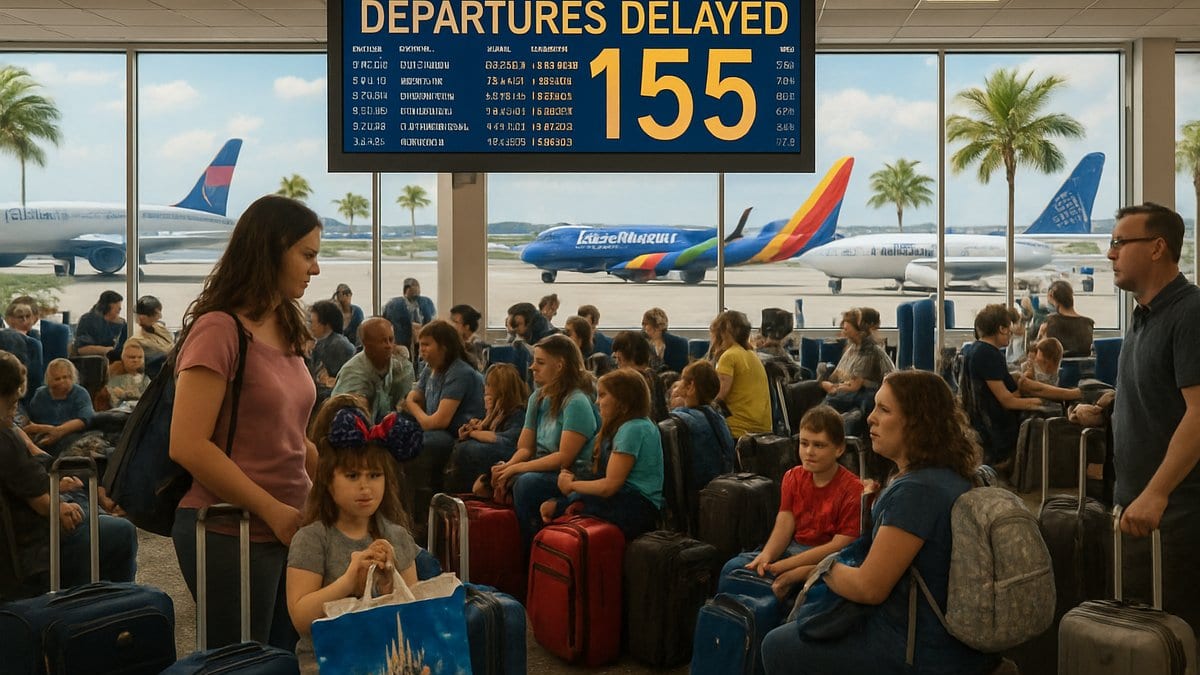
Image by Nomad Lawyer
Major Airlines Hit as Delays Mount
Publicly available flight tracking data and industry coverage indicate that carriers including Spirit, JetBlue, Southwest, American, Delta and United are among the airlines most affected by the latest disruption at Orlando International Airport. The delays span a broad mix of domestic and international routes, affecting flights to and from New York, Boston, Chicago, Toronto, London, Cancun and other high demand destinations.
The tally of 155 delayed flights represents a significant share of the airport’s daily schedule, given that Orlando International typically handles more than 1,000 operations a day across over 40 airlines. The slowdown is large enough to create visible congestion in terminal areas and at the gates, particularly during peak departure banks when multiple major carriers are scheduled to push back at similar times.
While some flights are experiencing relatively short hold times, others are reported to be delayed by several hours, forcing passengers to wait in crowded gate areas or search for alternative itineraries. The uneven nature of the disruption, with some departures operating close to schedule while others stall, is contributing to confusion among travelers trying to understand the extent of the operational issues.
According to published coverage, the delays have not been confined to a single airline or alliance, which suggests a mix of contributing factors rather than an isolated carrier specific technical issue. This pattern is consistent with broader strain in the U.S. aviation system, where weather, staffing and aircraft rotations can interact to create bottlenecks at busy hubs like Orlando.
Ripple Effects Across U.S. and International Routes
The concentration of delays at Orlando International Airport is having a knock on effect on multiple routes across North America and beyond. Disruptions on flights linking Orlando with major cities such as New York, Boston and Chicago are reported to be feeding into onward delays at other airports, as late arriving aircraft struggle to be turned around in time for subsequent departures.
International services are also affected. Coverage of the current situation notes delays on flights connecting Orlando with Toronto, London and popular leisure destinations such as Cancun. These routes are particularly important for both inbound tourism to central Florida and outbound vacation travel, meaning schedule disruptions can have an outsized impact on holiday plans and connecting itineraries.
Recent reporting on wider U.S. aviation performance shows that Orlando has been a recurring hot spot during periods of system wide stress, appearing prominently in national tallies of delayed flights during previous weather and congestion events. That pattern appears to be repeating, with today’s 155 delays at Orlando contributing to a broader picture of uneven reliability across the national network.
Analysts note that once delays at a large hub cross a certain threshold, they tend to propagate outward as aircraft and crews miss their assigned time slots at other airports. Even when no formal ground stop is in place, the practical effect for travelers can resemble a rolling slowdown that stretches from one part of the country to another.
Passenger Experience: Long Lines and Limited Options
For travelers on the ground, the numbers translate into long waits at security checkpoints, check in counters and boarding gates. Social media posts and firsthand accounts circulating online describe families camped out near charging stations, lines forming at food outlets and passengers clustered around departure boards as they refresh flight status updates.
With major airlines affected simultaneously, options for same day rebooking are limited, particularly for those traveling on popular leisure routes or without flexible tickets. Some passengers are being routed through alternative hubs, adding connections and longer travel times to journeys that were originally nonstop.
Orlando International’s role as a gateway to central Florida’s theme parks and cruise terminals adds another layer of complexity. Travel planning in this market often involves tight coordination between arrival times, hotel check ins and onward ground transport. When flights slip by several hours, the impact can cascade across vacation itineraries, shuttle bookings and even park reservations.
Travel industry observers point out that delays of this magnitude can also strain airport facilities, from seating capacity in gate areas to baggage handling operations. Prolonged waits and rapidly shifting departure times increase the likelihood of missed bags, crowded car rental counters and heavy demand for last minute airport area hotel rooms.
Operational Pressures Behind the Disruptions
Although detailed cause of delay data for each individual flight is not yet fully compiled, publicly accessible aviation dashboards and recent industry reporting highlight several recurring pressures that can contribute to a day of concentrated disruption at a hub like Orlando. These include localized thunderstorms, congestion in the broader Florida airspace, and ongoing constraints related to air traffic control staffing in the region.
Earlier episodes involving Orlando and other major U.S. airports have shown how weather in one part of the system can trigger delays far beyond the immediate storm zone. When aircraft and crews are held on the ground or slowed en route, knock on effects can persist for hours, or even into the following day, as airlines work to reposition aircraft and rebalance schedules.
In addition, the strong rebound in leisure travel to Florida in recent seasons has left little slack in airline schedules. Flights are often operating near full capacity, leaving fewer empty seats to absorb passengers from disrupted services. When a cluster of delays hits on a busy travel day, this lack of spare capacity can prolong the recovery period.
Industry data from previous months also indicate that some carriers have been operating with tight crew scheduling windows, which can amplify the impact of even short disruptions. Once pilots or flight attendants reach duty time limits because of extended ground holds, airlines may be forced to cancel or further delay flights while replacement crews are arranged.
What Travelers Can Do Amid Continuing Uncertainty
With 155 delayed flights already recorded and further schedule adjustments possible, travel experts recommend that passengers flying through Orlando remain proactive. Publicly available advisories consistently urge travelers to monitor their airline’s mobile app or website for real time departure and gate information, rather than relying solely on fixed departure times printed on boarding passes.
Same day travelers are also encouraged to arrive at the airport earlier than usual, particularly during morning and late afternoon peaks, to allow extra time for security screening and potential last minute gate changes. For those with flexible plans, voluntarily accepting earlier or later departures, where available, may offer a better chance of avoiding the most congested time periods.
Travel insurance with coverage for delays and missed connections can provide some financial protection, although terms and eligibility vary by policy. Passengers are advised to retain receipts for meals, ground transport and lodging in case reimbursement options become available through airlines or third party insurers in connection with extended disruptions.
While operations at Orlando International Airport typically normalize once weather systems pass and schedules are reset, the current wave of 155 delays underscores how quickly a key hub can become strained. For the thousands of travelers affected, the experience is a reminder that even in peak travel seasons, flexibility and real time information remain essential tools for navigating an increasingly crowded aviation network.