

More news on this day
As hours long security queues sweep through major U.S. airports amid an ongoing Department of Homeland Security shutdown, a niche workaround is emerging: some travelers are paying line sitters to hold their place at Transportation Security Administration checkpoints.
Get the latest news straight to your inbox!
Staffing Strains Drive Record Wait Times
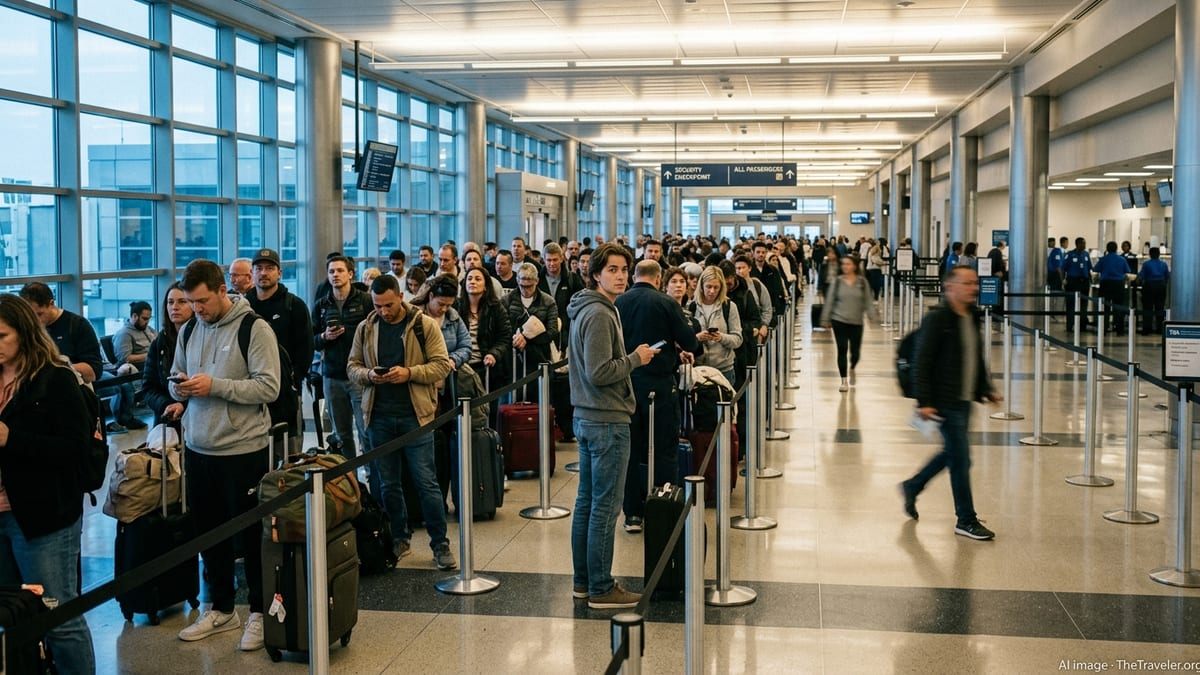
The latest wave of interest in paid line sitters follows weeks of mounting disruption at security checkpoints. A partial shutdown affecting the Department of Homeland Security since mid February has left Transportation Security Administration officers working without pay, contributing to higher absenteeism and thinner staffing at some airports. Publicly available data and local coverage indicate that wait times at standard TSA lanes have stretched well beyond 90 minutes during peak periods at major hubs including Houston Hobby, Atlanta Hartsfield Jackson and airports serving Washington, D.C.
Airports and airlines have urged passengers to arrive three or more hours before departure, particularly for early morning bank flights and weekend spring break peaks. Reports from Atlanta, Houston and New Orleans describe security lines snaking through ticketing halls and in some cases reaching terminal doors. While not every airport has been equally affected, aviation analysts note that even a modest drop in screening capacity can cascade across the network once passenger volumes surge for school holidays, Passover and Easter travel.
These conditions have revived long standing questions about the resilience of airport security during federal funding disputes. Research on aviation delays in the post pandemic era has highlighted how security related bottlenecks can now be a more visible contributor to missed departures, especially at large connecting hubs. With TSA already processing record passenger volumes before the shutdown, the current staffing squeeze is magnifying a problem that had been building for several seasons.
Gig Workers Step In to Hold Spots in Line
Into this environment, a small ecosystem of paid line sitters is taking shape around airports. Some workers advertise informally on local social media groups or general purpose gig platforms, while others operate as part of existing concierge and errand running services. In most arrangements, a local contractor arrives at the terminal well ahead of the traveler, joins the public security queue and holds the spot until the paying passenger reaches the checkpoint area.
Because TSA procedures require that the person being screened be present with their own identification, line sitters typically peel off before the travel document check and reunite with their client just short of the podium. In some cases, they coordinate via messaging apps to signal when the client should enter the terminal and where to meet. Fees vary widely by market, but listings reviewed by travel industry observers show rates commonly ranging from flat fees for the first hour to higher charges when waits extend toward two or three hours.
The practice remains relatively niche compared with more established ways of skipping lines, but it appears to be gaining visibility whenever news of multihour waits dominates headlines. Line sitting has long existed on Capitol Hill and at popular restaurants or product launches; airport security is becoming a new frontier as travelers weigh the cost of a missed flight against the price of outsourcing part of the wait.
Legal and Ethical Gray Areas at the Checkpoint
As line sitters move from sidewalks to security queues, questions around policy and fairness are following close behind. TSA publishes detailed rules for identification, prohibited items and screening procedures, but publicly available guidance focuses less on how passengers arrange themselves in line before reaching an officer. Most airports allow families to merge or separate near the front as long as each person undergoes the full screening process, and line sitting typically exploits the same informal flexibility.
Equity concerns are harder to dismiss. Critics argue that paid line holding effectively creates an unofficial fast lane for those who can afford extra fees, while travelers who arrive early but cannot pay wait behind. Others counter that line sitters still endure the full wait somewhere in the queue, so total congestion is unchanged, and that the service simply redistributes who experiences the inconvenience. Airport customer advocates also note that the practice is less transparent than formal programs such as TSA PreCheck or CLEAR, which apply consistent rules to all eligible passengers.
Some airports have experimented with digital queue management that could blunt demand for paid line sitters. Systems such as virtual reservation lines, used at a handful of U.S. terminals, allow travelers to book a time slot for entering security at no cost. Where such tools are available and well publicized, reports suggest they can smooth peaks and shorten visible queues, although their reach remains limited compared with nationwide trusted traveler programs.
Contrast With Official Fast Track Programs
The rise of informal line holding is unfolding alongside brisk demand for official ways to cut security waits. Enrollment figures for TSA PreCheck and airline linked expedited screening options have risen steadily over the past two years, and the suspension or curtailment of some programs during the current shutdown has drawn fresh attention. Guidance from travel advisers increasingly urges passengers to combine trusted traveler status with careful flight timing to reduce the risk of being trapped in hours long lines.
Unlike paid line sitting, which depends on individual arrangements at each terminal, these programs are standardized across airports and subject to government oversight. They generally require background checks, enrollment fees and in person interviews, but in return they promise shorter lines, simplified screening procedures and more predictable processing times. While not immune to disruption during severe staffing shortages, data from recent weeks suggest that dedicated lanes for vetted travelers have often moved faster than standard checkpoints even in the most affected cities.
Some airports and airlines are also promoting scheduled security access tools that fall between ad hoc line sitting and formal federal programs. These systems let travelers reserve a time window for entering the screening area, effectively turning part of the physical queue into a digital one. Where implemented, they can reduce the temptation to pay someone to stand in line, although they require robust communication and passenger education to deliver consistent benefits.
What It Signals About Traveler Frustration
The willingness of some passengers to hire strangers to stand in line underscores how fragile many feel air travel has become during peak seasons. Spring break, holiday weekends and major storm events have repeatedly produced images of crowded concourses in recent years, but the combination of a federal funding lapse and record demand has sharpened the sense of vulnerability. For travelers juggling nonrefundable tickets, tight connections and limited vacation days, the idea of outsourcing a three hour wait can start to look like an acceptable trade.
Consumer behavior experts point out that services which save time at stress points often flourish when public systems appear overloaded, whether that means tolled express lanes on congested highways or premium boarding options on busy flights. Paid line sitting at TSA checkpoints may remain a small scale, informal workaround, but its emergence highlights a broader distrust in the reliability of security operations during political standoffs.
Unless Congress restores full funding and agencies can rebuild staffing levels, analysts expect security lines to remain unpredictable through at least the end of the spring travel period. In that environment, passengers are likely to keep exploring every available tool, from long established trusted traveler programs to new gig economy fixes, in an effort to reach the gate on time.