

More news on this day
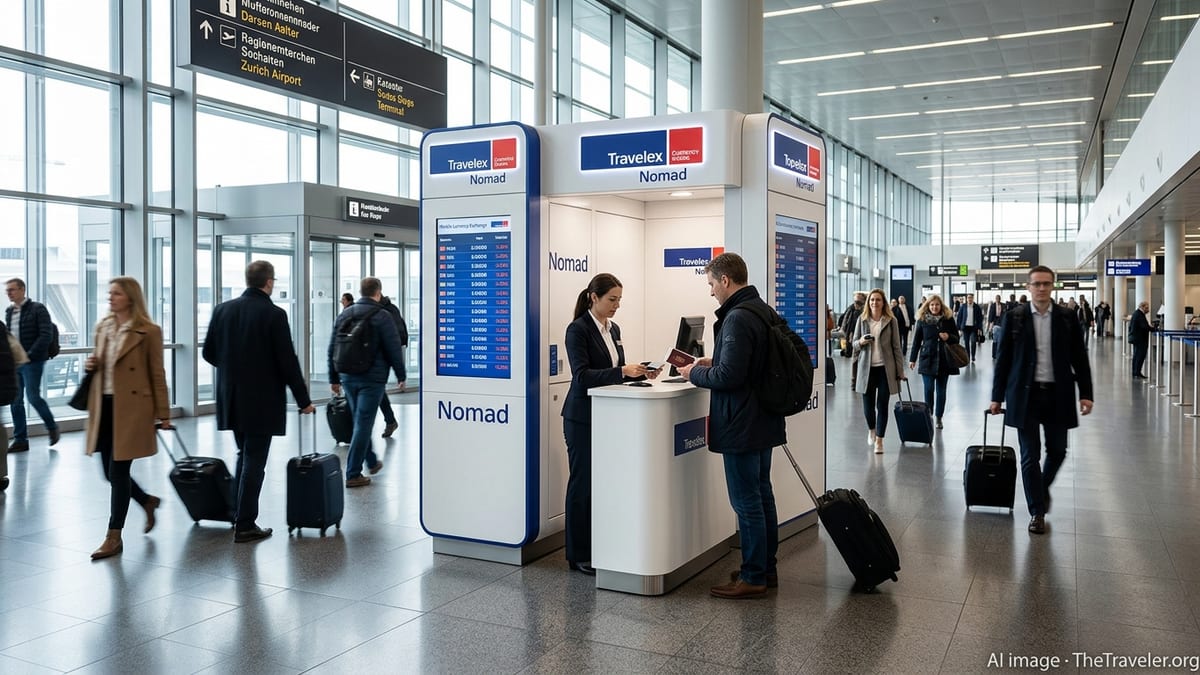
Travelex has introduced its new Nomad mobile foreign exchange store at Zurich Airport, positioning the Swiss hub at the forefront of a growing shift toward flexible, technology-driven travel retail formats.
Get the latest news straight to your inbox!
A Mobile FX Concept Tailored to Today’s Passenger
The Nomad mobile store is designed as a compact, self-contained foreign exchange unit that can be relocated within the terminal to match passenger flows. Publicly available company information indicates that the concept builds on Travelex’s recent investment in mobile and on-the-move kiosks at airports in the Middle East and the United Arab Emirates, where flexible retail footprints have been used to capture demand in high-traffic zones.
At Zurich Airport, the Nomad unit is configured as a dual-sided counter, allowing travelers to be served from either side and easing congestion at peak times. The design focuses on quick transactions for popular currencies, with the aim of shortening queues compared with traditional, fixed-location bureaux. The mobile format also enables airport commercial teams to fine-tune placement around security, arrivals or key transfer corridors as passenger patterns evolve through the day.
Industry coverage of Travelex’s wider network shows that Zurich has already been a focus for expanded ATM infrastructure and improved access to cash services. The introduction of a mobile store adds a new layer to this strategy, giving travelers an additional physical touchpoint at an airport where international transfer and premium long-haul traffic remain important drivers of spend.
Blending Physical Service with Digital Convenience
The Nomad concept at Zurich Airport aligns with a broader digitalization push within the currency exchange sector. Travelex has in recent years introduced click-and-collect services, self-service kiosks and hybrid ATM models at major European hubs, combining online pre-ordering with contactless cash collection in terminal. Reports indicate that these services have been rolled out at airports such as London Heathrow, Birmingham and Manchester, where travelers increasingly expect to manage parts of the transaction before they fly.
In Zurich, the mobile store is expected to complement these digital capabilities rather than replace them. Travelers who pre-order online can be directed to the Nomad location when it offers the most convenient pickup point, while walk-up customers benefit from face-to-face service. The unit’s technology-ready design supports integration with dynamic rate displays, digital signage and potentially future tools such as mobile check-in for existing orders.
By pairing a flexible retail footprint with digital pre-booking options, the Nomad store reflects a wider shift in travel retail toward “phygital” models, where online planning and in-person service converge. For Zurich Airport, this approach supports the goal of keeping dwell time productive, enabling passengers to complete essential transactions quickly while maintaining time for shopping, dining or making connections.
Reinforcing Zurich’s Position as a Premium Hub
Zurich Airport has steadily expanded its retail and service offering in recent years, with new concepts spanning confectionery, fashion, electronics and financial services. Industry reports on the airport’s retail mix highlight an emphasis on premium brands and experiential formats, aimed at reflecting Switzerland’s positioning in global tourism and business travel.
The arrival of the Nomad mobile store fits within this strategy by enhancing core travel services without sacrificing space for other retail categories. Because the unit can be repositioned, it frees the airport from committing long term to a single high-value frontage, and instead allows commercial planners to adjust currency exchange visibility around evolving passenger hotspots. This is particularly relevant as airlines add or adjust long-haul routes and as connecting traffic patterns shift between Schengen and non-Schengen zones.
The presence of a mobile foreign exchange unit also supports the needs of travelers arriving from markets where cash remains more prevalent or where card acceptance can still be patchy. While Switzerland itself is a highly digital payments market, the mix of onward destinations served from Zurich means that many passengers continue to seek physical currency ahead of their next leg. The Nomad store provides a visible, easily accessed point of service for this group, reinforcing the airport’s reputation for operational efficiency and traveler support.
Part of a Global Push into Flexible Travel Retail
The deployment of the Nomad mobile store in Zurich comes against the backdrop of an international expansion program for Travelex. Publicly available corporate announcements point to more than 75 new bureaux, kiosks and ATMs opened worldwide in recent years, along with a particular focus on mobile and on-the-move units in regions such as the Middle East and the Gulf. Airports in Abu Dhabi, Dubai and Doha have all seen the introduction of compact, relocatable kiosks and counters tailored to high-density passenger areas.
This global rollout reflects a broader recalibration in airport retail, where operators and brands are prioritizing agility and data-driven placement. Rather than relying solely on large, fixed stores negotiated years in advance, partners are experimenting with smaller, modular units that can be tested, moved or scaled with less friction. The Nomad concept sits within this trend, giving Travelex and Zurich Airport a shared tool to respond more quickly to changes in flight schedules, terminal refurbishments or shifting passenger behavior.
From a commercial standpoint, mobile formats can help optimize revenue per square meter by activating previously underutilized spaces or supporting temporary campaigns during peak holiday seasons. For Travelex, the format also offers a lower-risk way to enter or deepen presence at an airport, allowing performance to be closely monitored before any larger investment in traditional bricks-and-mortar outlets.
Implications for the Future of Airport Foreign Exchange
The launch of the Nomad mobile store at Zurich Airport points to how foreign exchange providers are rethinking their role in the wider travel ecosystem. With more passengers relying on cards, e-wallets and even multi-currency apps, physical cash services must compete on convenience, visibility and integration with digital tools. A mobile, digitally enabled unit offers one way to make cash exchange feel more aligned with contemporary travel habits.
For airports, concepts like Nomad suggest that essential services do not have to be confined to traditional, fixed counters or tucked-away corners of terminal buildings. By treating foreign exchange as a flexible, data-guided retail category, hubs such as Zurich can experiment with locations that minimize friction for passengers while supporting broader commercial strategies.
Observers of the travel retail sector will be watching how quickly similar mobile formats spread to other European airports, particularly those with significant long-haul and transfer traffic. If the Nomad store at Zurich demonstrates strong uptake and operational resilience, it is likely to become a model for future airport foreign exchange, where mobility, modularity and digital integration are central features rather than afterthoughts.