

More news on this day
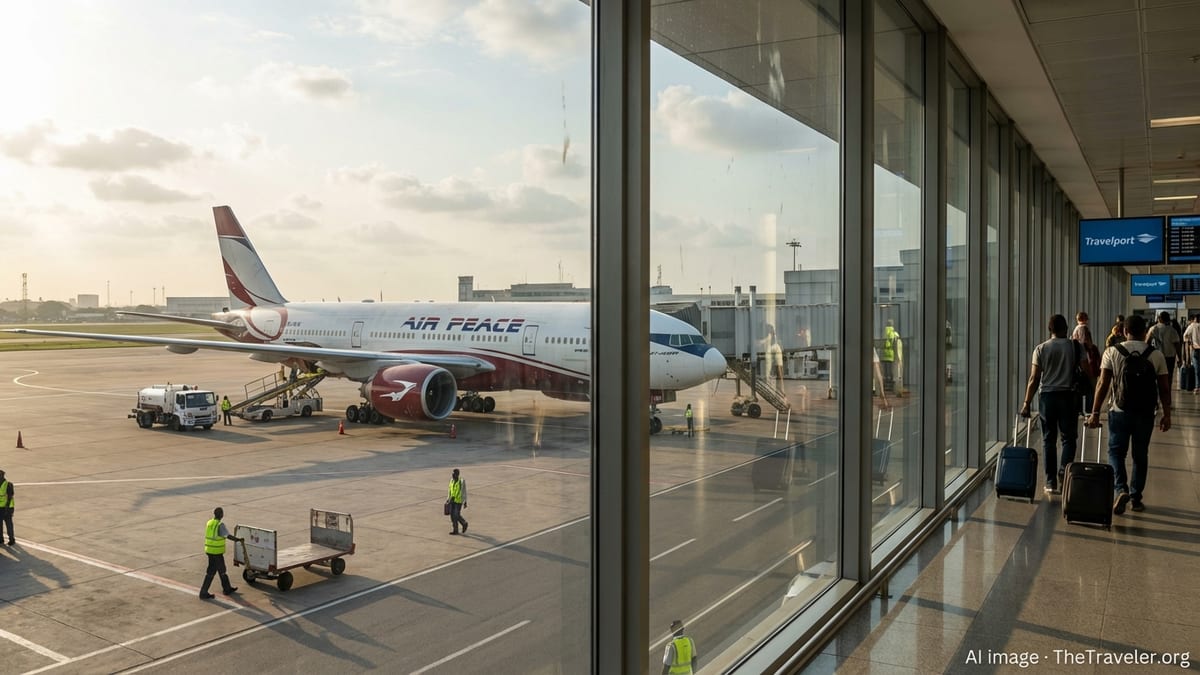
Global travel technology company Travelport has signed a new distribution partnership with Nigerian carrier Air Peace, a move positioned as a catalyst for modern, retail-focused airline distribution across Africa’s rapidly expanding aviation market.
A Strategic Tie-Up in a Fast-Growing Market
Travelport’s agreement with Air Peace brings together one of Africa’s fastest-growing carriers and a major global distribution platform at a time when demand for intra-African and long-haul travel is rising. Air Peace, headquartered in Lagos, has rapidly expanded its network within Nigeria, across West and Central Africa, and to intercontinental destinations, while Travelport connects thousands of travel agencies and corporate buyers worldwide to airline content.
The partnership is framed as a bid to unlock more efficient, retail-style distribution for African aviation. By placing Air Peace’s full range of fares and ancillaries into Travelport’s marketplace, the collaboration aims to give travel agencies richer content and more flexibility in how they search, compare, and sell the airline’s offerings to both leisure and business travelers.
The timing is notable. African aviation is recovering and expanding, with new long-haul routes, regional business travel, and a growing middle class fuelling passenger growth. For carriers such as Air Peace, visibility in global booking systems and access to cutting-edge retailing tools are increasingly seen as essential to compete with larger international airlines serving the continent.
While financial terms were not disclosed, both sides describe the deal as multi-year and transformational, signalling a shared commitment to investing in technology that can scale with Air Peace’s ambitions and the broader African market.
From Legacy GDS to Modern Airline Retailing
The Travelport and Air Peace partnership is part of a broader industry shift away from legacy, schedule-and-price driven distribution toward modern airline retailing powered by IATA’s New Distribution Capability, known as NDC. Under this new model, airlines can push richer product information, dynamic pricing, bundled ancillaries, and personalized offers into agency channels in near real time.
Travelport has been repositioning its platform around this concept, integrating both traditional fares and NDC content into a single marketplace that travel sellers can access using familiar workflows. Recent agreements with other carriers have demonstrated how the technology provider is using tools such as AI-driven content curation and modern merchandising displays to help agencies navigate a mix of fare types and offer structures more easily.
For Air Peace, tapping into this ecosystem is expected to mean far more than simply publishing fares. The airline will be able to showcase seat selection, baggage options, priority services, and other ancillaries in a more compelling way, allowing agents to construct trips that reflect individual traveler needs rather than relying solely on base economy or business class prices.
The shift is especially significant in Africa, where many airlines are seeking to leapfrog directly into digital-first retailing. Partnerships with technology providers such as Travelport are emerging as a way to bypass the cost and complexity of building in-house distribution infrastructures while still keeping control over how products are presented and sold.
Boosting Reach for Nigeria’s Largest Private Airline
Air Peace has grown into Nigeria’s largest private airline by fleet and route network, serving domestic hubs such as Lagos, Abuja, and Port Harcourt along with regional capitals and an expanding list of long-haul destinations. Yet, like many African carriers, its ability to fully monetize this network has depended heavily on how effectively its content reaches travel agencies at home and abroad.
By distributing through Travelport’s platform, Air Peace stands to increase its visibility with hundreds of thousands of travel professionals who book flights for corporate accounts, tour operators, and independent travelers around the world. Agents connected to Travelport will gain access to the airline’s fares and services in their standard booking environment, which can be a decisive factor when comparing options for clients unfamiliar with newer African carriers.
Industry observers note that improved distribution could also support Air Peace’s strategy to position Lagos as a competitive hub for West Africa. Stronger global booking connectivity may help the airline attract more transit passengers connecting between regional African cities and long-haul destinations in the Middle East, Europe, and beyond, especially as interline and codeshare partnerships mature across the continent.
The carrier’s recent focus on leadership development and customer experience, including executive retreats and service training, suggests that improved distribution will be coupled with a push to raise product standards on the ground and in the air. Aligning this service upgrade with modern retailing tools could make Air Peace a more formidable competitor in the years ahead.
Implications for African Travel Agencies and Corporate Buyers
A key test of the Travelport and Air Peace partnership will be its impact on Africa’s travel trade. Many agencies across the continent, particularly small and mid-sized firms, still rely on traditional global distribution systems for most of their flight bookings. Integrating richer airline content and NDC-style offers into familiar platforms can help these businesses modernize without overhauling their technology from scratch.
Travelport has been investing in features that make complex airline content easier to manage, including tools that normalize data from multiple sources and present it in unified displays. For agencies booking Air Peace through the platform, this should translate into clearer fare comparisons, more transparent ancillary pricing, and the ability to service bookings efficiently when itineraries need to be changed.
Corporate travel buyers, who demand both cost control and duty-of-care visibility, are also likely to watch the rollout closely. If the partnership succeeds in surfacing Air Peace’s content in corporate booking tools with the same richness and manageability as that of larger global carriers, it could encourage more multinationals and regional firms to include the Nigerian airline in their preferred programs.
In a market where offline ticketing, fragmented content, and manual processes remain common, such improvements in transparency and control could mark a meaningful step toward professionalizing travel procurement across West and Central Africa.
Signaling a New Era for African Airline Distribution
Beyond the immediate commercial benefits, the Travelport and Air Peace deal carries symbolic weight in the evolution of African aviation. It underscores how technology partnerships are becoming central to airline strategy, on par with fleet renewal or network expansion, as carriers seek to compete in a digital marketplace shaped by evolving traveler expectations.
Other recent agreements between major technology providers and airlines in Europe, the Middle East, and North America have already shown how NDC-enabled distribution can reshape retailing, from dynamic bundling of services to more personalized offers delivered through agents and online platforms. Bringing African carriers into this ecosystem is seen by many analysts as essential if the continent is to capture more value from its projected passenger growth.
For now, Travelport and Air Peace are presenting their partnership as a foundation on which further innovations can be built. As systems integration progresses and agencies begin to adopt new workflows, the collaboration will be closely watched as a bellwether for how quickly African airline distribution can converge with global best practices.
The announcement adds to a growing list of technology-driven alliances involving African airlines and signals that distribution, once a largely back-office function, is moving to the center of strategic conversations about the future of air travel on the continent.