

More news on this day
The global travel industry is undergoing a decisive shift as the most valuable part of the customer journey moves from the booking engine to the dreaming phase, with new data showing that inspiration ecosystems built around social media, visual discovery and generative AI are now powerful predictors of tourism growth.
Get the latest news straight to your inbox!
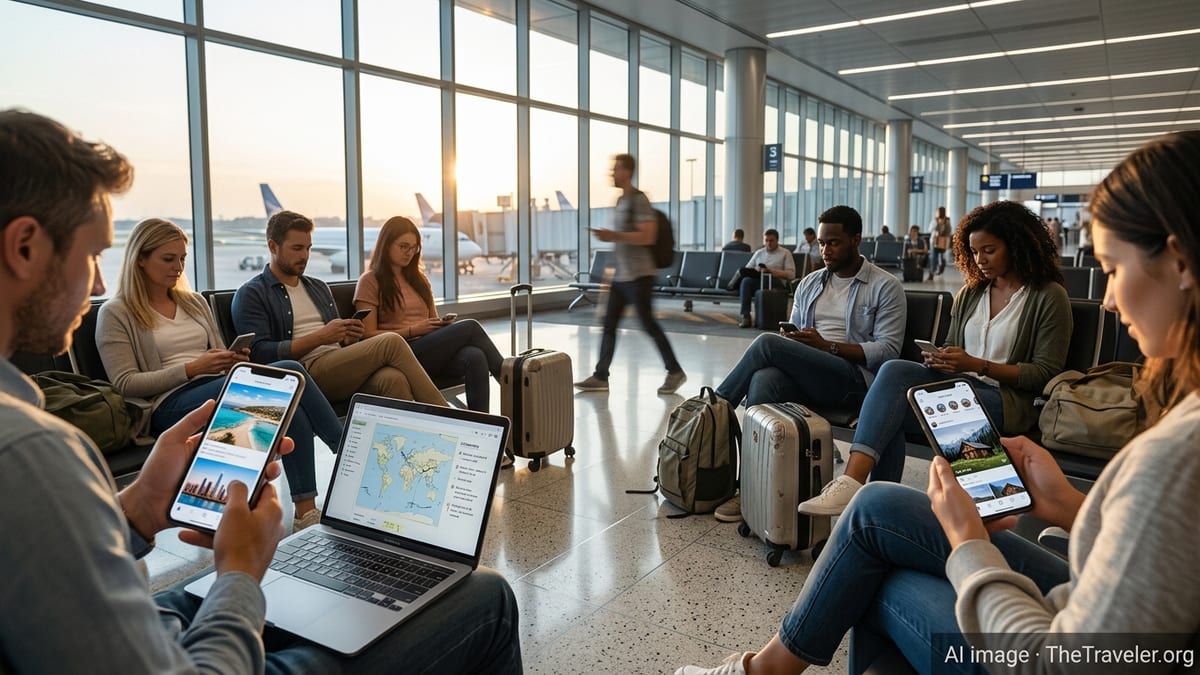
From Transactional Funnels to Inspiration-Led Journeys
Recent research from major platforms and consultancies indicates that the traditional linear booking funnel is fragmenting as travelers spend more time in an open-ended discovery phase before committing to a trip. Reports describe a pattern in which searches, saved content and wishlists are rising faster than firm reservations, suggesting that the emotional build-up to a journey now carries independent commercial value for destinations and brands.
Studies such as Expedia Group’s latest Traveler Value Index and other global traveler intelligence reports highlight that leisure travel intent remains strong, with a high share of consumers planning trips in the coming year, yet many are delaying firm bookings while they browse and compare. Publicly available information shows that this “always-on dreaming” period is stretching across months, with consumers repeatedly returning to the same short list of destinations, experiences and stays before making a final decision.
Industry analysts note that this shift is reshaping how success is measured. Instead of focusing only on conversion rates or average daily rate, tourism organizations are paying closer attention to indicators like search volume growth, content saves, time spent exploring destination guides and engagement with inspirational media. These upper-funnel signals are increasingly seen as early markers of future visitation and spend.
Social Media Feeds Become Global Itinerary Engines
Social platforms have moved from background influence to central trip design tools, particularly for younger travelers. According to recent studies referenced by Expedia Group and other travel research providers, well over half of global travelers now look to social media for ideas on where to go, with some surveys indicating that more than 60 percent use feeds as a primary source of inspiration. Separate research from marketing and technology firms finds that TikTok, Instagram and Pinterest are especially dominant among Gen Z and younger millennials.
Survey data summarized in 2025 traveler trend reports suggests that around two thirds of Gen Z travelers look first to social media for trip ideas, and that creator recommendations are directly linked to booking decisions for a substantial share of respondents. A number of hospitality and tourism insights papers point to a growing share of social commerce revenue tied to travel purchases, underscoring how quickly a short-form video or creator-led itinerary can turn dreaming into real demand for specific neighborhoods, hotels and small businesses.
This dynamic is also altering destination discovery. Instead of starting with a country or famous city, many travelers now begin with a niche experience or aesthetic they have seen online, from mountain cabins with panoramic windows to neighborhood food markets or live music venues. Once that mood is set, they work backwards to identify where in the world that scene can be found, driving interest in secondary cities, rural regions and previously under-the-radar coastal areas that align with the vibe seen on their screens.
Generative AI Turns Vague Dreams Into Concrete Plans
Alongside social media, generative AI tools are emerging as the connective tissue between inspiration and booking. Recent technology and travel commerce reports describe how travelers are increasingly turning to conversational assistants to turn loosely defined ideas into structured itineraries. One industry analysis cited survey results showing that roughly one in five travelers used generative AI tools in late 2024 to arrange at least part of a trip, with usage even higher among frequent flyers and luxury guests.
Official announcements from large travel platforms outline how AI is being embedded into search and discovery, allowing users to type natural language prompts such as “a quiet place with a view and a hot tub within three hours of a major airport” and receive curated suggestions that match the mood rather than just fixed filters. Academic research on narrative-driven and geoculturally grounded itinerary planning also reflects this trend, with prototypes that generate story-like travel scripts designed to heighten emotional engagement before departure.
For tourism boards and private-sector brands, this advances the importance of having rich, accurate and emotionally resonant content that AI systems can surface and remix. The more a destination is photographed, described and tagged in public data, the more likely it is to appear in AI-generated travel ideas, effectively tying long-term content strategies directly to the dreaming phase of future visitors.
New Metrics and Revenue Streams in the Dreaming Economy
The rise of inspiration-led travel is pushing companies to rethink where value is created along the journey. Marketing and data firms now talk about the “dreaming economy,” in which time spent planning, saving posts and curating lists represents a monetizable stage in itself, rather than just a prelude to a booking. Recent trend reports from travel media and advertising platforms highlight that visually compelling content significantly influences destination choice, prompting increased investment in high-quality photography, video and creator partnerships.
Publicly available summaries of traveler segmentation research show that intent-based audiences built around interests such as live music, wellness, nature or food are gaining traction. These segments often begin as loosely organized communities following the same creators or hashtags, but over time they translate into measurable visitation for cities that consistently align with the experiences being shared. Event tourism, literary tourism and nature-focused retreats are among the categories benefiting most from this shift.
Monetization strategies are also broadening. Some online agencies and startups are experimenting with shoppable inspiration, where a social post, interactive map or AI-generated itinerary contains embedded options to reserve accommodation, experiences and transport in a single flow. Others are developing subscription-style products that offer continuous inspiration, exclusive trip ideas and early access to deals, effectively turning the dreaming phase into an ongoing relationship rather than a one-off campaign window.
Destinations Race to Align Brand, Story and Search
Destination marketing organizations are responding by repositioning themselves as curators of stories rather than solely promoters of specific businesses or attractions. Recent reports from tourism strategy consultancies indicate that many cities and regions are refreshing their brand narratives to better match what travelers are already sharing online, emphasizing authenticity, local culture and distinctive atmospheres over generic slogans.
In practical terms, this means investing in creator programs, neighborhood-level storytelling and data partnerships that track how destination-related content performs across platforms. Research summaries from media and technology partners describe growing use of search and social listening tools to identify emerging micro-trends, from interest in lesser-known wine regions to seasonal nature phenomena, and then rapidly packaging those stories into campaigns that can circulate during the dreaming phase.
As competition for attention intensifies, destinations that successfully align their search visibility, visual identity and on-the-ground experience are better positioned to convert inspiration into sustained tourism growth. Industry observers note that the winners in this new landscape are likely to be those that view every image, itinerary and AI-generated suggestion as part of a long, looping conversation with travelers, one that begins months or even years before a booking and continues long after a trip concludes.