

More news on this day
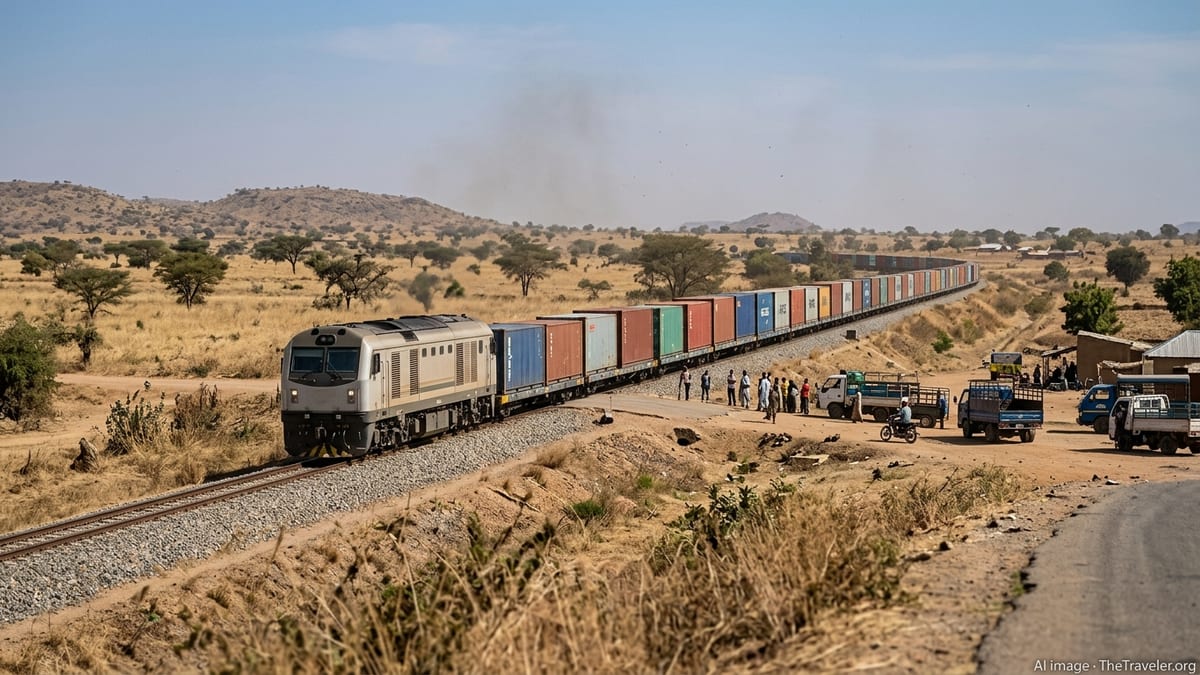
Nigeria’s quest to modernise its cargo backbone has taken a decisive step forward as Traxport Rail Services secures a landmark freight rail operating licence, positioning the private operator at the centre of a broader push to shift goods off congested highways and onto upgraded tracks linking Lagos with the country’s northern economic heartlands.
Get the latest news straight to your inbox!
A New Private Player on Nigeria’s Strategic Rail Corridor
The new licence grants Traxport Rail Services authority to run dedicated freight operations along key national corridors, with a core focus on the 1,500‑kilometre Lagos–Kano narrow‑gauge route that connects Nigeria’s busiest seaport to major industrial and agricultural hubs inland. Publicly available corporate information describes Traxport as a specialist freight operator designed to “move Nigeria’s economy faster, safer and more efficiently” by reviving long underused rail assets on this corridor.
This approval comes as Nigerian policymakers seek to attract private capital into rail operations while the government retains ownership of track infrastructure. Earlier initiative notes and sector studies have highlighted Traxport as a special purpose vehicle created to obtain long‑term operating rights for freight services, reflecting a gradual shift from a state‑dominated railway model to one in which multiple operators can compete for cargo volumes.
For shippers, the licence is expected to open alternatives to the heavily trafficked road network between Lagos, Kaduna, Kano and other inland cities. Industry reports indicate that this corridor handles a high share of imported consumer goods, cement, fuel and agricultural produce, yet currently relies on long‑haul trucking that is vulnerable to gridlock, insecurity and volatile diesel prices.
Analysts following Nigeria’s logistics market note that even modest gains in rail’s share of long‑distance freight could have outsized impacts on delivery times and transport costs. The formal entry of a dedicated private operator with a national concession is seen as a test case for how quickly those gains can be realised in practice.
Investment Momentum and International Technical Partnerships
Traxport’s rail licence is backed by a growing pool of private investment and foreign technical support. In mid‑2025, Nigerian business media reported that DeWiz Engineering Services, part of the CET Group, acquired an equity stake in Traxport as part of a strategic, long‑term partnership aimed at building a modern freight network between Lagos and Kano powered primarily by liquefied natural gas. The CET Group is also developing gas infrastructure projects, an alignment that observers say could help secure reliable fuel supply for the new trains.
Soon after, Traxport announced a Technical Support and Investment Agreement with Belgian rail operations company Vecturis. According to published coverage, Vecturis brings more than three decades of experience running and rehabilitating freight networks in complex markets across Africa and beyond, including projects in the Democratic Republic of Congo, Mozambique, Cameroon and Madagascar. The Belgian firm previously held a role in a proposed concession for Nigeria’s narrow‑gauge system under a General Electric‑led consortium, giving it familiarity with the country’s rail geography and regulatory environment.
Sector analysts say this mix of domestic equity and international operating expertise is crucial for a corridor that must handle everything from bulk commodities and fuel to time‑sensitive container traffic. The agreements with DeWiz and Vecturis suggest Traxport will be able to pair local market knowledge with global best practice in maintenance regimes, safety systems and scheduling.
Infrastructure observers also highlight that these partnerships could accelerate technology transfer into Nigeria’s rail workforce. Vecturis and similar operators typically deploy digital tools for asset monitoring, crew management and traffic control, systems that remain limited across much of West Africa’s legacy rail estate.
From Trucks to Tracks: Economic and Environmental Stakes
Nigeria’s freight market has long been dominated by road haulage, a pattern shaped by decades of underinvestment in rail. Studies of the Lagos–Kano axis describe chronic congestion, high accident rates and heavy wear on federal highways, all of which raise logistics costs for manufacturers and exporters. By contrast, long‑distance rail can move bulk cargo in higher volumes with lower fuel consumption per tonne‑kilometre.
Reports on Traxport’s business model emphasise a climate‑conscious approach centred on LNG‑powered locomotives and, over time, the movement of liquefied natural gas and compressed natural gas products themselves. Business newspapers in Nigeria have framed this as a decisive shift away from diesel‑based trucking, with potential reductions in emissions and a lower risk of fuel theft and road‑side pilferage along key routes.
Economic planners view the potential spillovers as significant. More reliable freight rail between Lagos and Kano could help northern farmers move grains, livestock and cash crops to coastal markets more efficiently, while manufacturers in and around Lagos gain more predictable access to inputs from inland suppliers. Logistics consultants point to further gains in port efficiency if containers can be evacuated by train directly from coastal terminals instead of relying solely on truck fleets.
Tourism and travel are also indirectly affected. Fewer heavy trucks on the highways leading out of Lagos and across central Nigeria can improve road safety and shorten journey times for intercity buses and private motorists, including domestic tourists exploring destinations in the southwest and north of the country.
Capacity Upgrades, Service Offerings and Operational Challenges
Traxport’s published materials describe a service portfolio that spans industrial freight, agricultural cargo and containerised logistics, with trains designed to link fulfilment centres, factories and inland depots. The company positions itself as a “one‑stop” rail freight provider offering predictable timetables, transparent pricing and support for customers that have historically depended on flexible but fragmented trucking arrangements.
Delivering on this promise will require substantial investment in rolling stock, sidings and terminal facilities. Industry updates linked to the Vecturis partnership indicate plans to introduce modern locomotives and wagons adapted to Nigeria’s narrow‑gauge infrastructure, as well as upgraded loading equipment and yard management systems at key nodes along the corridor. Observers expect that over time, operations could expand beyond the flagship Lagos–Kano line to additional branches that serve mineral, cement and agricultural clusters.
However, the transition from a largely road‑bound freight system is unlikely to be seamless. Analysts note that shippers may initially be cautious about shifting high‑value cargo to rail until service reliability, security and transit times are proven. Integration with port operations, customs procedures and last‑mile trucking will also be critical if rail is to offer true door‑to‑door solutions competitive with existing arrangements.
There are also technical and institutional constraints. Much of Nigeria’s legacy rail network remains narrow‑gauge, limiting speed and capacity compared with standard‑gauge lines now being built elsewhere in the country. Coordination between the Nigerian Railway Corporation, regulators and private operators such as Traxport will need to ensure safe joint use of tracks, fair access regimes and coherent long‑term maintenance planning.
A Test Case for Nigeria’s Rail Liberalisation Ambitions
For policymakers in Abuja and state capitals, Traxport’s licence is emerging as an early test of efforts to open the rail sector to private freight operators without relinquishing public ownership of strategic assets. Previous attempts at full‑scale concessions struggled to gain traction, but the current model of targeted operating rights, backed by private finance and specialist operators, is seen by some analysts as a more pragmatic approach.
Development partners and infrastructure researchers have long argued that Nigeria’s economic diversification goals depend on lower logistics costs and better integration between ports, industrial zones and the country’s vast interior. As such, the performance of Traxport’s operations over the next few years is likely to be watched closely by investors considering similar ventures in other corridors or neighbouring countries.
If the new freight services succeed in consistently moving large volumes of cargo off the roads and onto rail at competitive prices, the experience could inform future contracts, regulatory reforms and investment programmes. Conversely, persistent bottlenecks or reliability issues would underline the scale of the challenge in upgrading legacy railways while traffic continues to grow.
For travellers and the wider public, the work may initially be most visible in the form of longer container trains and fuel tankers crossing central Nigeria, rather than new passenger services. Yet the broader objective remains clear: a rail‑centred freight system that helps decongest highways, lowers business costs and underpins more sustainable growth across Africa’s largest economy.