

More news on this day
New York City and New Jersey moved to all but freeze mobility across the region on Sunday night, issuing sweeping and largely unprecedented travel bans as a fast-intensifying blizzard pummels the Northeast, grounding thousands of flights, crippling mass transit and leaving millions of residents effectively sheltering in place.
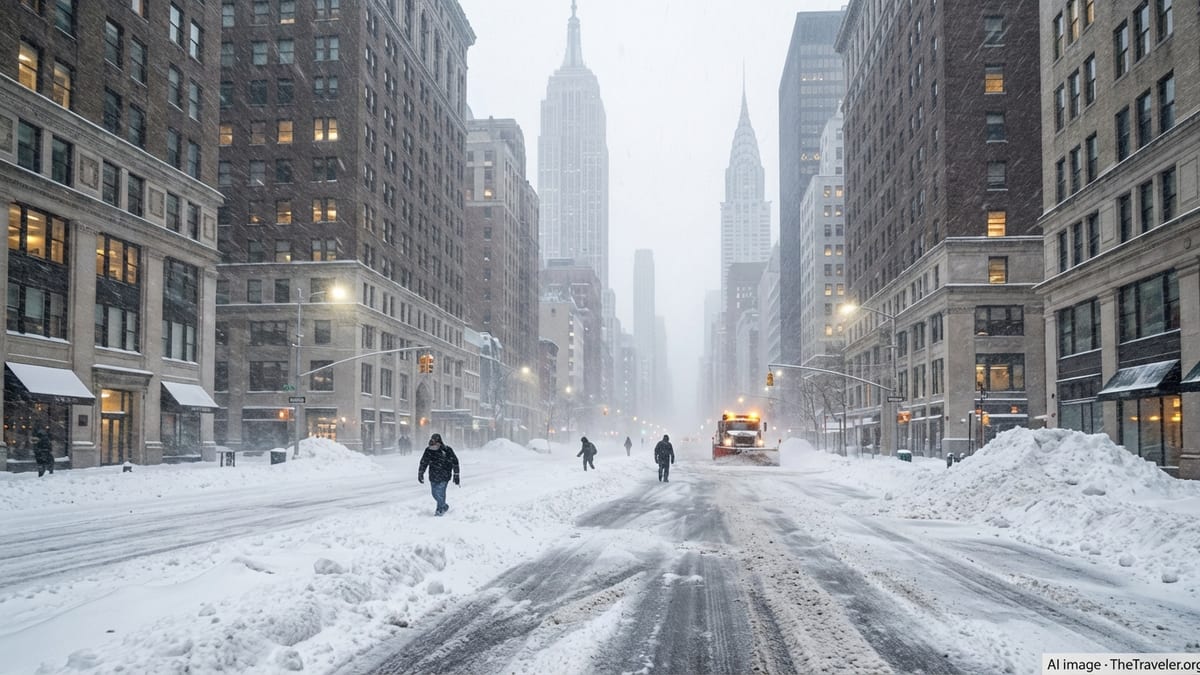
States of Emergency as Blizzard Hernando Slams the Northeast
The powerful nor’easter, named Winter Storm Hernando by forecasters, is rapidly strengthening off the Mid-Atlantic coast and is expected to reach full blizzard intensity overnight into Monday, February 23. Meteorologists are warning of near whiteout conditions, wind gusts topping 55 to 60 miles per hour, and snowfall totals that could exceed 20 inches in parts of the New York metropolitan area.
Governors in both New York and New Jersey declared states of emergency ahead of the storm, activating emergency operations centers and unlocking additional resources for plowing and utility repairs. In New Jersey, Governor Mikie Sherrill’s order covers all 21 counties, while in New York, Governor Kathy Hochul’s declaration spans more than 20 counties, including New York City and key downstate suburbs.
Officials say the emergency powers are critical to coordinate snow-removal fleets, deploy the National Guard where needed, and fast-track mutual aid as the storm intensifies. With temperatures plunging and wind chills expected to fall well below freezing, authorities are urging residents to remain indoors and avoid all but essential travel until the system passes.
Forecasters caution that the combination of heavy, wet snow and strong winds raises the risk of downed power lines and tree damage, particularly in coastal and suburban communities. Utility companies have pre-positioned crews but are already reporting outages in pockets of New Jersey and the outer boroughs, with more expected as the storm peaks overnight.
New York City Imposes Rare Citywide Travel Ban
New York City Mayor Zohran Mamdani ordered a rare citywide travel ban beginning Sunday night, barring most vehicles from streets across all five boroughs as plows race to keep up with the mounting snow. The restriction, coordinated with state officials, is scheduled to remain in place into Monday morning, with the exact end time dependent on evolving conditions.
Under the order, non-essential vehicles are prohibited from operating on city streets during the ban. Exemptions include emergency responders, public works crews, certain utility workers, and health care and transit personnel essential to storm response. Officials have warned that drivers who ignore the order could face fines or towing as police work alongside sanitation teams to keep priority routes passable.
City Hall officials say the decision to halt most vehicle traffic is intended to give plows unobstructed access to arterial roads, bus routes, and approaches to major bridges and tunnels. Allowing traffic to continue, they argue, would not only slow snow removal but could strand motorists in rapidly deteriorating conditions, tying up valuable emergency resources.
The ban follows a full day of intensifying snowfall and worsening visibility across the city. By Sunday evening, reports of spinouts, stuck vehicles, and multi-car fender benders were increasing on expressways from the Cross Bronx to the Brooklyn-Queens Expressway, bolstering the case for aggressive restrictions.
New Jersey Locks Down Roads With Mandatory Travel Restriction
Across the Hudson, New Jersey officials took the extraordinary step of issuing a mandatory travel restriction that effectively closes most state, county, municipal, and interstate roads to non-exempt vehicles overnight. The order, issued by the New Jersey Office of Emergency Management under the State Police, began at 9 p.m. on Sunday, February 22 and is currently set to run through 7 a.m. Monday, February 23.
The restriction bars most private vehicles from operating on affected roadways during the storm’s peak, with the notable exception of the New Jersey Turnpike, which remains open but hazardous. Exemptions apply for emergency and public safety vehicles, snow-removal crews, utility workers, health care staff, and other personnel deemed essential to keeping critical infrastructure functioning.
State transportation officials had already imposed earlier commercial-vehicle curbs on multiple interstate corridors from 3 p.m. Sunday, citing the risk of jackknifed tractor-trailers blocking key freight routes. Trucks already in the state were urged to pull into service areas and truck stops rather than park along shoulders, which must remain clear for plows and emergency responders.
Governor Sherrill framed the travel crackdown as a life-safety measure, warning that conditions could become “treacherous and potentially lethal” as visibility drops and drifts build overnight. State leaders are urging residents to hunker down and treat the restriction as a de facto curfew, particularly in coastal counties where blowing snow will combine with strong winds coming in off the Atlantic.
Airports, Rail and Transit Services Severely Disrupted
The sweeping road restrictions are being mirrored in the air and on rails as the storm halts much of the region’s transportation network. Airlines preemptively canceled thousands of flights into and out of the tri-state area’s three main airports, with totals climbing into the thousands nationwide as carriers scramble to reposition crews and aircraft.
At New York’s LaGuardia, John F. Kennedy International, and Newark Liberty International airports, departure boards on Sunday were dominated by cancellations and long lines at rebooking counters. Airport officials warned that de-icing queues and runway closures would extend disruptions well into Monday, even if snowfall rates begin to taper off by midday.
On the rails, operators have sharply curtailed schedules to reduce the risk of trains becoming stranded. NJ Transit suspended all bus, rail, and light rail service beginning Sunday night in tandem with the road travel ban, while in New York, the Long Island Rail Road shut down overnight and Metro-North Railroad shifted to limited storm schedules. Within the city, subway service continues on a reduced timetable, with surface lines and above-ground segments especially vulnerable to snow and ice accumulation.
Ferries across the New York Harbor and Hudson River have also implemented suspensions and reduced operations, severing another lifeline for commuters who typically rely on cross-river boat connections. With roads closed and transit scaled back, regional mobility has constricted to a bare minimum, largely limited to emergency and essential travel only.
Neighborhoods Brace for Power Outages and Coastal Impacts
While the headline concern remains travel, the intensifying storm is also sparking fears about prolonged power outages and coastal flooding, particularly in low-lying neighborhoods along the Jersey Shore, Staten Island’s east shore, and parts of Brooklyn and Queens near the Atlantic.
Strong northeast winds are piling water into bays and inlets even as snow whips across the coastline, leading forecasters to warn of minor to moderate coastal flooding at times of high tide. Local officials have urged residents in flood-prone areas to move vehicles to higher ground and to be prepared for rapidly changing shoreline conditions overnight.
Utilities in both states report that they have activated emergency response plans and staged line crews close to expected trouble spots. However, the combination of heavy, wet snow clinging to branches and high winds snapping limbs poses a classic recipe for downed distribution lines. Restoration efforts could be complicated by the very travel bans intended to keep roads clear, forcing companies to coordinate closely with state police and transportation departments for safe access.
Residents are being advised to charge devices, stock up on flashlights and batteries, and avoid relying on outdoor generators or improvised heating sources indoors, which carry risks of carbon monoxide poisoning and fire. In many neighborhoods, local community groups and volunteer networks are organizing check-ins on vulnerable residents, especially older adults and those with limited mobility.
Travelers Stranded as Hotels and Shelters Fill Up
With flights canceled and long-distance trains curtailed, the storm has stranded thousands of travelers in and around New York City and New Jersey. Hotels near major transit hubs like Midtown Manhattan, Jamaica in Queens, Newark Airport and Secaucus have reported brisk bookings, with some guests checking in for an unplanned extra night or two as they wait out the disruptions.
Tourists who had planned to depart Sunday or early Monday are now scrambling to secure later flights or alternative arrangements, often at significant cost. With ride-hailing services restricted by travel bans and food-delivery companies suspending operations in anticipation of the storm’s peak, many visitors are discovering just how quickly the city that never sleeps can grind almost to a halt.
Regional transportation agencies are urging affected travelers to avoid station lobbies and terminals unless they have confirmed itineraries, citing overcrowding and limited staffing. Announcements echo through cavernous, half-lit concourses reminding people that services are suspended and that more updates will follow once crews can assess tracks, switches, and overhead lines after the heaviest snow ends.
For some would-be travelers, the shutdown has become an impromptu winter experience in one of the world’s busiest metropolitan regions. Social media feeds show images of nearly empty avenues, snow-swept bridge spans, and shuttered tourist attractions, all set against a backdrop of swirling white and low visibility.
Local Residents Navigate Empty Streets and Essential Needs
Within city neighborhoods and New Jersey towns, the travel bans have transformed normally bustling streetscapes into quiet, snow-blanketed scenes. With most vehicles off the roads and businesses closing early, residents who do venture out on foot are greeted by muffled silence punctuated only by the scrape of shovels and the rumble of distant plows.
Grocery stores and pharmacies saw a surge in customers earlier in the day as residents stocked up on essentials, from pantry items and medications to batteries and pet food. Many shops shut their doors by late afternoon, both to allow staff to get home safely and to comply with the spirit of the travel restrictions.
For hourly workers and small business owners, the shutdown represents yet another weather-related financial hit, especially coming in the heart of winter when tourism is already slower. Some restaurants pivoted to limited takeout earlier on Sunday before delivery services suspended operations, but by evening, even many well-known late-night spots had gone dark.
Despite the challenges, neighbors are checking in on one another, offering help with shoveling, sharing extra supplies, and trading updates about power status and local conditions. In many communities, a familiar winter ritual is unfolding: kids eyeing sledding hills for the morning, while adults worry about commutes that may or may not resume on schedule.
Uncertain Monday for Commuters Across the Tri-State
As the storm continues to intensify, attention is turning to Monday and the question of how quickly the region can begin to reopen. Officials caution that even if snow tapers off by midday, strong winds and drifting could continue to make roads hazardous and rail lines vulnerable to delays.
State and city leaders in both New York and New Jersey have not ruled out extending or reimposing travel restrictions if conditions remain dangerous, particularly on secondary roads and elevated or exposed stretches of highway. Commuters are being urged to work remotely where possible and to avoid assuming that normal rush-hour patterns will return by Monday evening.
Transportation agencies plan to conduct overnight inspections of tracks, stations, and critical infrastructure, with limited crews braving the elements to clear switches, check for ice accumulation, and assess potential damage. Officials say they will provide updates early Monday, but they are already tempering expectations about how quickly full service can be restored across commuter rail and bus networks.
For now, the message from authorities is consistent and clear: stay home, stay off the roads, and allow emergency responders and road crews to do their work. As Blizzard Hernando peaks over the tri-state area, the unprecedented web of travel bans and shutdowns has, at least temporarily, turned one of the world’s busiest corridors into a snowbound quiet zone.