

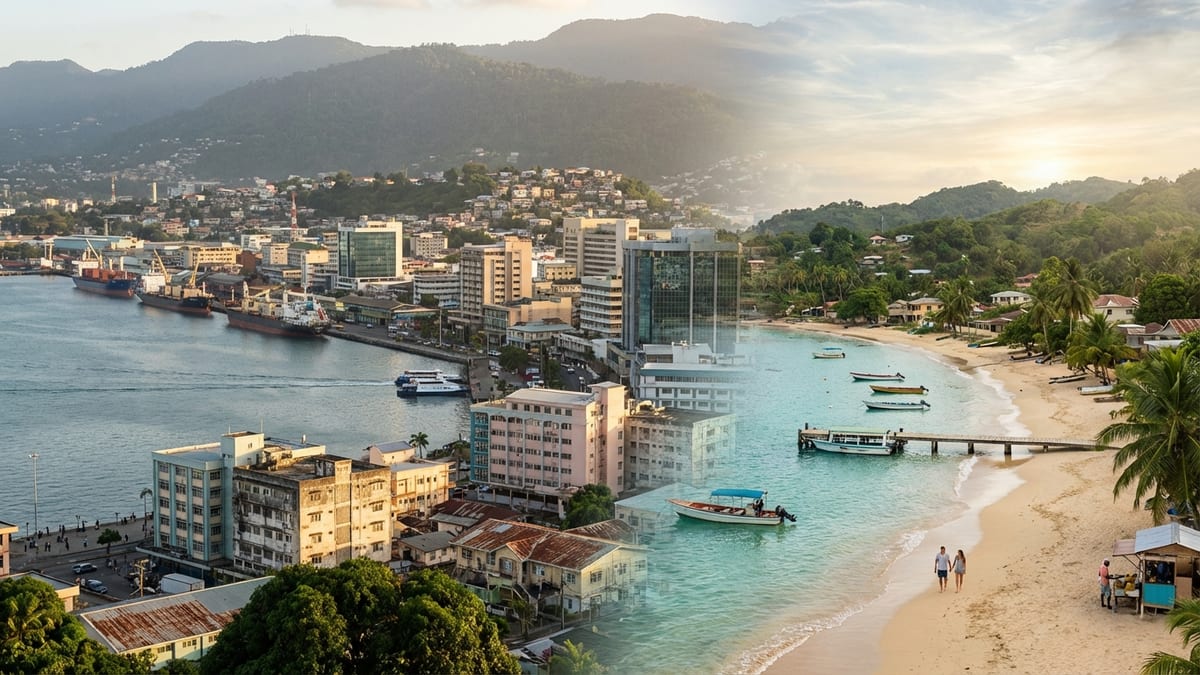
On a map, Trinidad and Tobago look like a single dot off the coast of Venezuela. On the ground, they feel like two very different worlds. Trinidad is big, busy and culturally electric, known for Carnival, steelpan and some of the Caribbean’s most exciting food.
Tobago is slower and softer, a laid back island of palm-fringed bays, coral reefs and rainforest. If you only have time for one, choosing between Trinidad and Tobago shapes the entire feel of your trip. This guide breaks down the differences, the practicalities and what kind of traveler each island suits best, so you can decide where to spend your hard-earned vacation days.
Trinidad vs Tobago at a Glance
Trinidad is the larger, more industrialized island, home to most of the nation’s population, businesses and cultural institutions. Port of Spain, the capital, is a compact city framed by forested hills and a busy harbor, with traffic, nightlife, festivals and a sense of constant motion. Visitors come for Carnival, concerts, food, and for quick access to nature in the Northern Range and nearby wetlands rather than classic resort tourism.
Tobago, by contrast, is small, green and low-rise. Villages curve around bays, fishing boats bob just offshore, and the island’s interior is dominated by the Main Ridge Forest Reserve, often cited as the oldest legally protected rainforest in the Western Hemisphere. Tourism is front and center here, with guesthouses and mid-range resorts spread along the coasts around Crown Point, Pigeon Point, Buccoo, Scarborough and Speyside.
For many travelers, safety is a deciding factor. Crime rates and security advisories are significantly more concerning for Trinidad, especially in and around Port of Spain, where some neighborhoods are under official “do not travel” guidance and certain areas can be subject to curfews or states of emergency during spikes in violence. Tobago generally reports lower levels of serious crime and feels more relaxed, though valuables on beaches and in cars still need basic vigilance.
In practical terms, Trinidad is about culture, nightlife and urban energy seasoned with pockets of wild nature, while Tobago is about beach time, reef trips and a village rhythm. Both are authentically Caribbean, both share the same national spirit and music, but they deliver very different styles of vacation.
Beaches and Nature: Which Island Wins the Scenery Battle?
If powdery sand and turquoise shallows are your main priority, Tobago is the clear winner. Pigeon Point is the island’s postcard image, with bright white sand, calm water and a famous wooden jetty set against shifting shades of blue. Just offshore, the Nylon Pool, a shallow sandbar lagoon in the middle of the sea, offers waist-deep, crystal clear water ideal for non-swimmers and families. Farther along the Caribbean coast, Englishman’s Bay curves in a gentle arc of golden sand backed by thick forest, popular with travelers seeking a quieter, more secluded feel.
Tobago also shines underwater. Buccoo Reef, easily reached from Pigeon Point and Store Bay, is one of the most accessible snorkeling spots, and glass-bottom boat tours make it possible to appreciate coral gardens and tropical fish without getting wet. On the island’s less-developed northeast coast, Speyside is a launch point for some of the region’s most rewarding diving, with sites known for vibrant coral formations and the chance to spot rays and large schools of fish. Sea turtle nesting, particularly by endangered leatherbacks, is another seasonal highlight on several Tobagonian beaches.
Trinidad’s beaches are fewer and more spread out, but several are memorable. Maracas Bay, on the north coast, is the best-known, a wide crescent of tan sand framed by steep green hills. Locals flock here on weekends to swim in the rolling surf and line up at beach shacks serving bake and shark, a legendary fried fish sandwich piled with toppings. Nearby Las Cuevas offers a somewhat quieter alternative with more shade and a gentler vibe. Farther east, the road winds toward more remote bays near Blanchisseuse, where hiking trails, rivers and small beaches meet the sea.
When it comes to broader nature experiences, Trinidad has some distinct strengths. The Caroni Bird Sanctuary, a mangrove wetland west of Port of Spain, hosts large evening roosts of the scarlet ibis, the national bird. Boat tours navigate steely channels at dusk as flocks of ibis arrive, turning the mangroves into a wash of crimson. Inland, the Northern Range harbors waterfalls, rivers and hiking paths, while the Asa Wright Nature Centre in the hills has long been a magnet for birdwatchers, with hummingbirds, tanagers and the elusive oilbird among the draws.
Culture, Festivals and Nightlife
Trinidad is the cultural engine of the country, and if your idea of a memorable trip includes music, street food, nightlife and big public celebrations, this is where you want to be. Carnival, held annually on the Monday and Tuesday before Ash Wednesday, is the headline event. For weeks beforehand, the island builds toward the main days with band launches, fetes, calypso and soca competitions, and costume preparations. During Carnival, Port of Spain’s streets fill with bands in elaborate feathered and bejeweled outfits, sound trucks blasting soca, and revelers who have often spent a year planning this moment.
Even outside Carnival season, Trinidad hums with cultural life. Steelpan, calypso, soca and chutney soca echo from panyards and bars. Neighborhoods such as Woodbrook and St. Clair host a mix of bars, live music venues and late-night food stalls, particularly on weekends. The country’s diverse population, with African, Indian, European, Chinese and Middle Eastern roots, means that on any given week you can encounter everything from stick-fighting traditions to tassa drumming to Diwali celebrations lit by rows of earthen lamps.
Tobago’s cultural pulse is softer but no less real. Villages frequently host small-scale festivals and community events, and there is a proud local identity that emphasizes both African heritage and a distinctive Tobagonian character. The island’s own Carnival celebrations, as well as the annual Tobago Heritage Festival, showcase dance, storytelling and village-based performances that feel more intimate than the grand spectacles in Port of Spain. Nightlife here centers on beach bars, live bands playing reggae, soca and old-school calypso, and occasional street parties rather than large nightclubs.
In plain terms, Trinidad offers more intensity and depth if you seek immersion in music and multi-ethnic urban culture, while Tobago provides a gentler, more low-key version of similar traditions, woven into village life and seaside evenings. Travelers who find Port of Spain’s energy overwhelming often feel that Tobago gives them more space to enjoy the same national culture at a slower pace.
Food and Drink: Street Bites or Seaside Grills
Both islands share the same national cuisine, but Trinidad’s larger population and more varied neighborhoods make it a particular magnet for food-focused travelers. Street food here is a vital part of daily life. Doubles, soft fried flatbreads stuffed with curried chickpeas and chutneys, are an almost unavoidable breakfast or late-night bite, sold from small stalls on busy corners. Roti shops with Indian roots serve flaky wraps filled with curry goat, chicken, shrimp or vegetables, and Chinese-style takeaways, Creole stews and barbecue are easy to find across urban and suburban areas.
In Port of Spain and its suburbs, you will also find a growing number of contemporary cafes, bakeries, and restaurants experimenting with local ingredients. Dishes like pelau, a one-pot combination of rice, pigeon peas and meat, sit alongside more international fare, and hot pepper sauces made with local chilies are omnipresent. Drinks range from fresh coconut water and sorrel juice to rum punches and local beers, often enjoyed at street-side bars or neighborhood liming spots where people gather after work.
Tobago’s food scene is narrower in range but stronger on location. Many meals unfold with sea views, on open-air decks or at simple beach shacks. Fresh fish dominates menus, with grilled or fried catches accompanied by provisions like plantain, breadfruit, cassava and salads. Pigeon Point, Store Bay and other popular beaches are lined with vendors offering everything from crab and dumplings to curries, rotis and, at the right time of year, specialties linked to local festivals.
For travelers, the real question is less about which island has “better” food and more about context. Trinidad is ideal if you want to eat your way through bustling markets, sample an array of street snacks and track down regional specialties late into the night. Tobago is best if your dream meal is grilled fish with a cold drink, your feet in the sand and nothing on your schedule afterward except a slow sunset.
Safety, Practicalities and Getting Around
Any decision between Trinidad and Tobago in 2026 needs to factor in safety. Trinidad has seen persistent concerns about violent crime, particularly gang-related incidents in and around Port of Spain. Recent advisories from foreign governments categorize the country at a relatively high caution level, and certain neighborhoods in the capital are specifically flagged as areas where tourists should not go. Authorities have declared temporary states of emergency and introduced curfews at times in response to spikes in criminal activity, especially in mid-2025, and local and visiting travelers are urged to monitor current guidance.
For visitors who do choose Trinidad, the practical response is not panic but careful planning. Staying in safer, well-known areas such as parts of Woodbrook, St. Clair or other established districts, using registered taxis or pre-arranged transport rather than hailing vehicles on the street, and avoiding isolated areas after dark are considered basic precautions. Popular beaches near the capital, like Maracas Bay, are best enjoyed during the day and avoided at night. Carrying minimal valuables, using hotel safes and being discreet with phones and cameras reduce the risk of opportunistic theft.
Tobago, while not crime free, generally has a calmer security profile. Tourist-friendly areas like Crown Point, Pigeon Point and Scarborough see occasional petty theft, especially when belongings are left unattended on beaches or in cars, but violent incidents are less frequent. The same common-sense measures apply: do not leave electronics or bags on the sand while you swim, lock vehicles, and do not wander alone along deserted stretches late at night. Many visitors choose Tobago specifically because it feels more relaxed and less tense, especially for families and solo travelers.
From a logistics perspective, most international flights land at Trinidad’s Piarco International Airport, with onward domestic hops to Tobago’s ANR Robinson International Airport operating several times a day, subject to schedule changes. There is also a ferry service between Port of Spain and Scarborough that carries passengers and vehicles, though sailing times, weather disruptions and booking policies make this better for travelers with flexible plans. On both islands, car rental is common, but on Trinidad in particular, driving at night in unfamiliar or rural areas is often discouraged. On Tobago, distances are shorter, traffic is lighter, and driving can be a more relaxed way to explore if you are comfortable with winding roads and local driving styles.
Who Each Island Is Best For
Matching your travel style with the right island is the heart of the Trinidad versus Tobago decision. Trinidad works best for travelers who thrive in cities and do not mind a certain level of grit and complexity in exchange for cultural immersion. If you are drawn to Carnival, live music, street food, late nights, and the chance to experience Caribbean life beyond resort gates, Trinidad delivers. It is also attractive to birdwatchers and nature enthusiasts who want to combine days in rainforests and wetlands with nights back in an urban base.
Tobago, on the other hand, suits travelers seeking a slower pace and a lighter planning burden. Beach lovers, couples on a romantic break, retirees, and families often gravitate here, knowing that the main decision on many days will be which bay to swim in and which reef to snorkel. The island is small enough that day trips can easily combine a waterfall hike with an afternoon at the beach, and evenings tend to revolve around simple pleasures: a seaside dinner, some local music, and an early night capped by the sound of waves.
Budget and infrastructure also play a role. Trinidad has more business hotels, guesthouses and mid-range options geared to work trips and local travelers, alongside a smaller number of boutique properties that cater to international visitors. Tobago’s accommodation stock leans toward beachfront guesthouses, villas, small hotels and a handful of larger resorts, with a noticeable tilt toward leisure travelers. In both cases, prices move with demand, rising during Carnival on Trinidad and at peak holiday periods on either island.
Ultimately, some travelers try to split their time between both islands, using Trinidad as a culturally rich entry point before retreating to Tobago’s beaches for the second half of the trip. For visitors with only a week, however, choosing one island and exploring it well often proves more satisfying than rushing between the two.
The Takeaway
Choosing between Trinidad and Tobago is not about identifying a winner so much as deciding what kind of Caribbean experience you want. Trinidad is for energy: Carnival bands, bustling food stalls, packed panyards, complex urban neighborhoods, and wild landscapes just beyond the city limits. It rewards travelers who are curious, adaptable and willing to navigate a destination with genuine social and security challenges in exchange for vivid cultural rewards.
Tobago is for ease: sheltered bays, accessible reefs, forested hills and an island community that moves at a gentler tempo. It appeals to visitors who value relaxation, simple routines and the ability to walk from guesthouse to beach without much stress. Safety concerns are present but more manageable with standard precautions, making it a popular choice for first-time visitors and anyone who wants a straightforward beach break with a local twist.
In 2026, with security advisories and regional dynamics in flux, the decision may tilt more people toward Tobago, particularly those traveling with children or those who simply want to minimize risk. Yet for travelers with a deep interest in Caribbean culture and the flexibility to plan carefully, Trinidad still offers experiences that are hard to match anywhere else, from the electric charge of Carnival to the quiet spectacle of scarlet ibis settling into mangroves at sunset.
If you can, give both islands time on separate trips. If you cannot, let your own instincts and priorities guide you: choose Trinidad if your top words are “culture, Carnival, food and nightlife,” and Tobago if they are “beach, snorkeling, quiet and ease.” Either way, you will encounter a nation whose creativity, resilience and warmth run deeper than the first view of sea and sand.
FAQ
Q1. Is Trinidad safe to visit in 2026?
Trinidad continues to face significant crime challenges, particularly in and around Port of Spain, and some foreign governments currently advise a high level of caution, with certain neighborhoods under explicit “do not travel” recommendations. Many visitors still travel without incident by staying in safer areas, arranging trusted transport, avoiding isolated places after dark and keeping up with the latest advisories, but risk levels are higher here than on many other Caribbean islands.
Q2. Is Tobago safer than Trinidad?
Overall, Tobago is considered calmer and safer than Trinidad, especially in main tourist areas such as Crown Point, Pigeon Point and Scarborough, where crime tends to be opportunistic rather than violent. Standard precautions still apply, including watching your belongings on beaches, locking vehicles and avoiding deserted spots late at night, but the security environment is generally less tense than in urban Trinidad.
Q3. Which island has better beaches, Trinidad or Tobago?
Tobago is widely regarded as having the more classic Caribbean beaches, with white sand and calm turquoise water at places like Pigeon Point and the secluded Englishman’s Bay, plus easy access to reefs and snorkeling. Trinidad has a handful of striking beaches such as Maracas Bay and Las Cuevas, often framed by dramatic hills, but its coastline is more limited for swimming and sunbathing compared with Tobago’s sheltered bays.
Q4. Can I visit both Trinidad and Tobago on one trip?
Yes, many travelers combine both islands in a single itinerary, flying into Trinidad’s main international airport and then connecting to Tobago by domestic flight or ferry. Doing both makes the most sense if you have at least 10 to 14 days, allowing time to experience Trinidad’s cultural side and still unwind on Tobago’s beaches without feeling rushed by transfers and logistics.
Q5. When is the best time of year to visit?
The drier months from roughly January to May are generally considered the most pleasant, with lower rainfall and plenty of sunshine. Trinidad’s Carnival, held on the Monday and Tuesday before Ash Wednesday, falls in this window and draws huge crowds, so prices and demand spike. Tobago is more consistently beach friendly year-round, though the wettest and stormiest conditions usually cluster between June and November.
Q6. Which island is better for families?
Tobago is typically the better choice for families, thanks to its relaxed pace, child-friendly beaches with calm shallows, and a generally lower sense of urban stress. Accommodation often caters to leisure travelers with family rooms and villas, and day trips can be as simple as a boat ride to Buccoo Reef or a short hike to a waterfall. Trinidad can be rewarding for older children interested in culture and festivals but requires more careful planning around safety and transport.
Q7. Do I need a car on either island?
A car can be useful on both islands, but the experience differs. On Trinidad, distances are longer, traffic can be heavy, and some areas are best avoided, so many visitors rely on taxis or pre-arranged drivers, at least in and around Port of Spain. On Tobago, rental cars are a popular option, as roads are less congested and it is convenient to explore multiple beaches and inland sights at your own pace, provided you are comfortable with left-hand driving and winding routes.
Q8. How expensive are Trinidad and Tobago compared with other Caribbean islands?
Trinidad and Tobago are generally mid-priced by Caribbean standards, often cheaper than heavily touristed resort destinations but more costly than some Central American beach towns. Trinidad has a wider range of budget food options due to its vibrant street scene, while Tobago’s costs are shaped by its focus on leisure tourism, with reasonable mid-range guesthouses and restaurants but fewer ultra-budget choices along the beach.
Q9. Which island should I choose for diving and snorkeling?
Tobago is the stronger pick for both diving and snorkeling, particularly around Buccoo Reef and the northeast coast near Speyside, where healthy coral, good visibility and varied marine life are common highlights. Trinidad offers some coastal and riverine nature experiences, but it does not rival Tobago’s combination of accessible reefs, dive operators and protected bays well suited to underwater exploration.
Q10. If I can only visit one island, which should I pick?
If your priority is an easygoing beach holiday with good snorkeling, small-scale nightlife and a generally relaxed atmosphere, Tobago is usually the better single choice. If you are specifically interested in Carnival, urban Caribbean culture, diverse street food and birding or hiking mixed with city life, and you are prepared to manage higher safety concerns, Trinidad can be uniquely rewarding. Your own comfort with risk, crowds and pace should guide the final decision.