

More news on this day
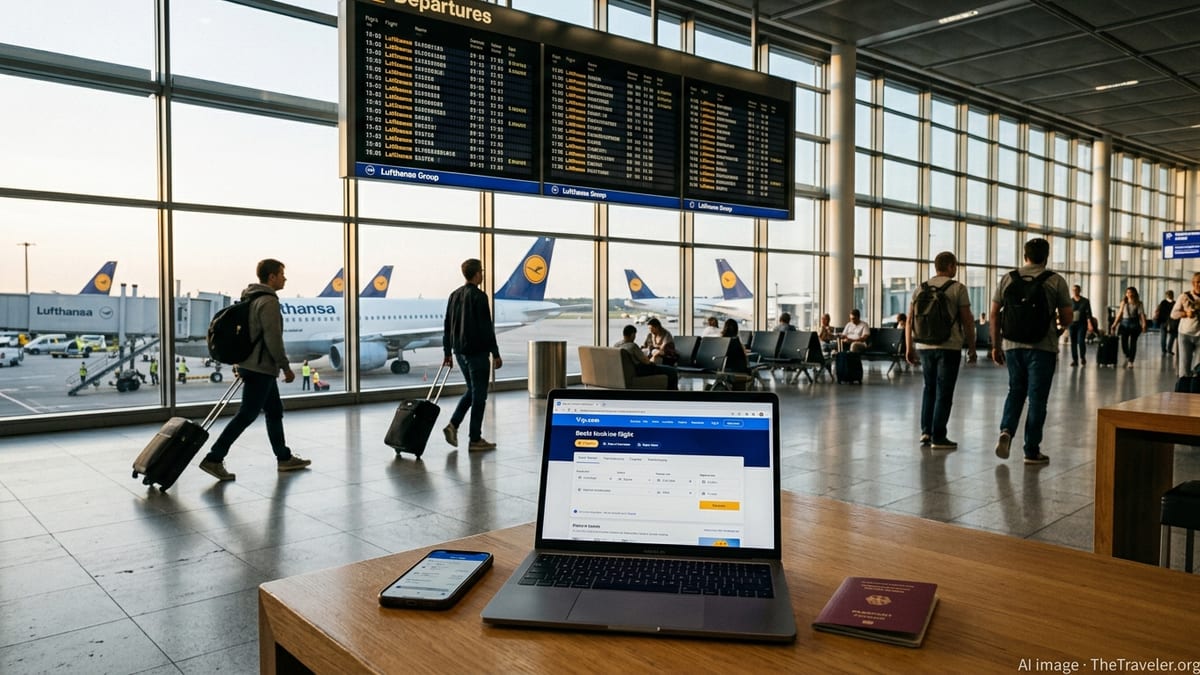
Trip.com Group and Lufthansa Group are stepping up their focus on smarter airline distribution, synchronising their New Distribution Capability initiatives to deliver richer content, dynamic offers and smoother post‑booking servicing for travellers and intermediaries across key global markets.
Get the latest news straight to your inbox!
NDC at the core of evolving distribution strategies
Publicly available information shows that both Trip.com Group and Lufthansa Group now place IATA’s New Distribution Capability standard at the centre of their distribution roadmaps, as they seek to modernise airline retailing and reduce reliance on legacy channels. Lufthansa Group has framed NDC as a cornerstone of its 2025 global distribution strategy, pairing direct connections with technology partners and agency programmes that promote adoption of modern content. Trip.com Group, meanwhile, has steadily expanded NDC connections with major carriers, positioning its platforms to surface richer fares, ancillaries and servicing options in real time.
Company materials indicate that Trip.com Group had established NDC cooperation with more than twenty airlines by the end of 2023, and has since enlarged that footprint with additional partners. For airlines, these connections promise more granular control over pricing and merchandising; for Trip.com Group, they underpin a shift from basic ticket distribution to full‑fledged retailing of branded fares, bundles and personalised offers. Lufthansa Group’s long‑running investments in NDC technology, including its own APIs and collaboration with global distribution technology providers, reflect a similar ambition to move beyond static fares and surcharges toward a more retail‑like model.
As the two groups intensify their collaboration around modern distribution, their strategies intersect in key areas such as dynamic pricing, access to branded fare families and alignment of post‑booking processes. The shared focus on NDC suggests that travellers booking Lufthansa Group airlines through Trip.com Group channels can expect a more consistent experience over time, with content and servicing gradually matching what is available through airline direct channels.
Smarter distribution: from legacy tickets to retail offers
According to industry coverage, Lufthansa Group has spent recent years re‑engineering how its fares reach the market, combining its own NDC channels with enhanced distribution through technology partners. Initiatives such as the group’s NDC Connectivity Program, unveiled in early 2026, outline tiered models that reward travel agencies for shifting bookings into NDC and using advanced servicing tools. The programme emphasises smarter distribution by tying incentives to content depth, automation levels and data quality rather than simple volume, signalling a more performance‑based approach to intermediary relationships.
Trip.com Group’s strategy aligns with this direction. Reports on its corporate presentations show that the company highlights NDC as a foundation for “smart travel” retailing, allowing it to algorithmically surface the most relevant itineraries, fare brands and add‑ons based on user behaviour and market conditions. As more Lufthansa Group content is made available via NDC, Trip.com platforms can theoretically tap continuous pricing, time‑limited promotions and channel‑specific products that were previously inaccessible in traditional systems.
This shift from legacy ticket distribution toward full retail offers changes the economics for both sides. Airlines can steer demand with more nuance, balancing direct and indirect channels without sacrificing merchandising sophistication, while an intermediary such as Trip.com Group gains differentiated inventory, improved margin potential and stronger loyalty hooks. For corporate buyers and travel management partners, the combined effort promises clearer transparency around fare components and better alignment between policy‑compliant options and traveller preferences.
Richer content and enhanced product transparency
New Distribution Capability has become synonymous with “richer content” in airline retailing, and the Trip.com Group and Lufthansa Group relationship illustrates how that concept plays out in practice. NDC connections enable the display of detailed fare attributes, branded fare families, paid seats, baggage options and on‑board services in a structured, real‑time format. When exposed consistently across channels, these elements help travellers understand what is included in a ticket and what can be customised for an additional fee.
Lufthansa Group has publicly positioned NDC as a means of distributing products such as continuous pricing, Green and Light fares, and other branded offers that are difficult to support in legacy distribution. Its programme materials highlight access to media‑rich product descriptions, clearer information on flexibility and sustainability‑linked options, and the ability to present targeted bundles. Trip.com Group, with its large mobile user base and emphasis on user interface design, is well placed to surface those details in a way that remains digestible for high‑volume leisure and corporate users.
The result is a retail environment where a customer booking a Lufthansa‑operated flight on a Trip.com platform should gradually see product attributes that more closely mirror what appears on the airline’s own website. That includes clearer differentiation between fare brands, improved seat and baggage selection flows and more accurate information on changeability and refunds. For frequent travellers comparing options across carriers, this level of transparency can support more informed decisions, particularly when balancing price against flexibility, comfort and environmental impact.
Seamless servicing and the push for end‑to‑end automation
Richer content is only one side of the equation; NDC also targets improvements in post‑booking servicing, an area where Trip.com Group and Lufthansa Group have been increasing their focus. An NDC connection supports end‑to‑end workflows for itinerary changes, voluntary refunds, schedule change handling and disruption management, all within the intermediary’s platform. Industry reports on Trip.com Group’s airline partnerships indicate that expanded NDC deployments have already enabled customers in new markets to initiate changes and refunds directly through the agency’s interface for certain carriers.
Lufthansa Group’s documentation on its NDC programmes stresses automation as a key objective, with certified partners expected to adopt tools that handle reissues, ancillary modifications and notifications without manual intervention. When combined with Trip.com Group’s in‑house servicing capabilities, this approach aims to reduce friction during irregular operations and routine adjustments alike. Travellers benefit from faster processing times and fewer handoffs between airline and intermediary support channels, while both organisations can lower servicing costs and focus human agents on complex cases.
For corporate travel buyers and travel management partners, seamless servicing is particularly significant. Modern NDC deployments can feed updated PNR and invoice data back into reporting and expense tools, helping companies maintain duty‑of‑care visibility even as bookings move into new distribution pipes. The alignment of Trip.com Group and Lufthansa Group around these standards suggests that corporate clients using Trip.com’s solutions to access Lufthansa Group content may see more consistent change handling and data quality over time.
Implications for agencies, tech partners and travellers
The collaboration between Trip.com Group and Lufthansa Group around smarter distribution, richer content and seamless servicing has broader implications for the travel ecosystem. Global distribution systems and aggregators have been expanding their own NDC integrations with Lufthansa Group, while also working with large online travel agencies to normalise how NDC content is queried and displayed. Trip.com Group’s participation in this landscape underscores the shift toward a hybrid model, where direct airline APIs, NDC aggregators and traditional platforms coexist within a single shopping and booking environment.
For smaller travel agencies, the evolution presents both opportunities and challenges. On one hand, programmes such as Lufthansa Group’s NDC Connectivity initiative offer frameworks, incentives and technology pathways to adopt modern content. On the other, agencies must invest in systems and training to handle new workflows, from offer‑order architectures to auto‑servicing processes. Partnerships with large intermediaries and technology providers may therefore become even more important, particularly in markets where Lufthansa Group and Trip.com Group are jointly active.
Travellers are unlikely to see these distribution changes explicitly, but they will encounter their effects in more tailored offers, clearer product information and increasingly self‑service solutions when plans change. As Trip.com Group and Lufthansa Group extend their cooperation within the NDC ecosystem, the long‑term outcome points toward a booking and servicing experience that is closer to modern e‑commerce standards, while still accommodating the complexity of global air travel.