

Remote, rugged and wrapped in Lake Superior, Michigan’s Keweenaw Peninsula rewards travelers with wild shoreline, historic mine ruins, and small harbor towns that still feel pleasantly removed from the everyday rush. It is also a place where poorly researched plans unravel quickly. From misjudging driving conditions to assuming services will be open year-round, many common missteps can turn a dream Upper Peninsula escape into an exercise in damage control. With some realistic expectations and smart preparation, you can avoid the most frequent trip planning mistakes and experience the Keweenaw at its best.
Underestimating Distance, Driving Time and Remoteness
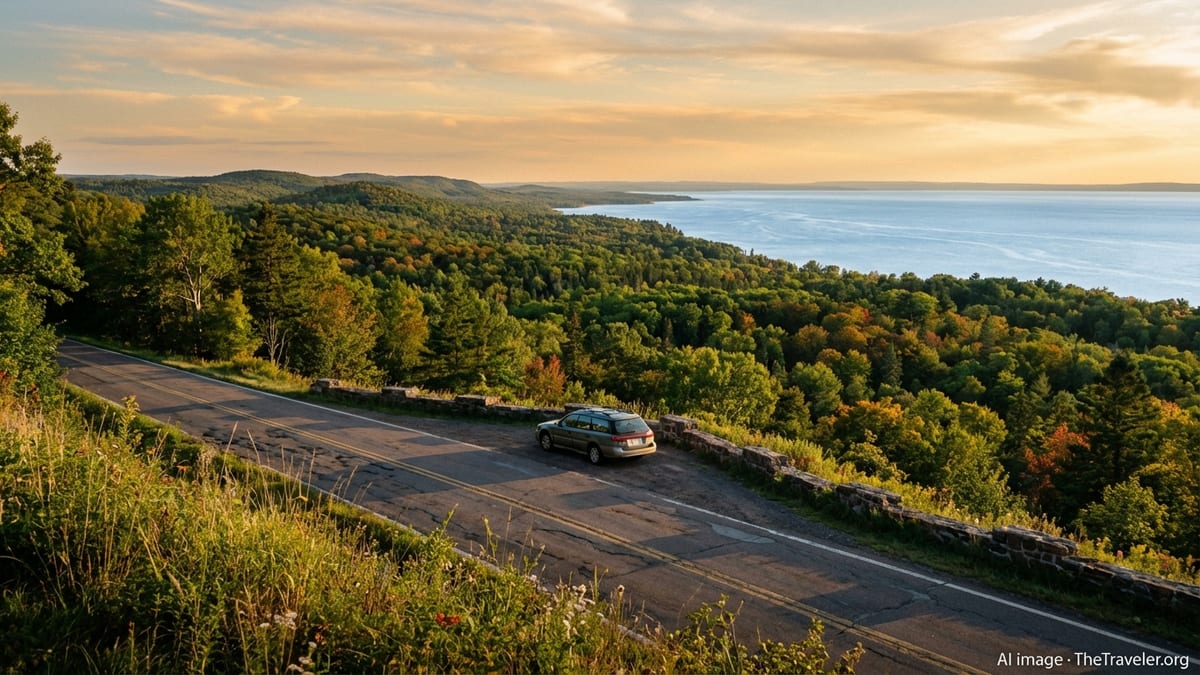
One of the biggest surprises for first-time visitors is how long it actually takes to reach and explore the Keweenaw Peninsula. On a map, Copper Harbor or Eagle Harbor may look like short hops from Houghton and Hancock, but winding two-lane highways, frequent curves, wildlife on the road and changing weather all slow travel. Once you leave the Portage Lake Lift Bridge area, you are driving through sparsely populated forest and shoreline where fuel stations, grocery stores and repair shops become increasingly spread out. Planning your day as if you are on a major interstate is a mistake that leads to rushed visits, night driving on unfamiliar roads and unnecessary stress.
A related error is trying to “do the Keweenaw” as a quick side trip from another Upper Peninsula destination. While the scenic Copper Country Trail National Byway and routes like M-26 along Lake Superior can technically be driven in a single day, the experience is diminished when every stop is timed to the minute. Towns such as Calumet, Eagle River and Copper Harbor reward lingering: mine tours take longer than expected, trailheads are down side roads, and that roadside beach you did not know existed will beg you to stay. Treating the peninsula as an add-on rather than a primary destination shortchanges both the place and your own enjoyment.
Visitors also underestimate how remote sections of the Keweenaw truly are. Cell coverage drops in and out as you move away from Houghton and Hancock, and navigation apps may be slow or briefly unusable. Gas stations thin out north of Calumet, and late at night many are closed altogether. A miscalculation about fuel, or assuming that every small town will have a 24-hour station, can easily lead to nerve-racking drives on nearly empty tanks. In this region, it is wise to fill up when you can, not when you must.
To avoid distance-related missteps, build slack into your itinerary. Assume that a 40-mile drive could take well over an hour when you include photo stops, construction, or slower speeds in poor weather. Plan no more than a few major activities in a single day, and cluster destinations in the same part of the peninsula instead of bouncing back and forth. The Keweenaw is best appreciated at an unhurried pace that matches the landscape itself.
Ignoring Seasonal Closures and Harsh Weather
Seasonal reality shapes almost every aspect of travel in the Keweenaw, yet many visitors plan as if conditions were similar to southern Michigan or nearby cities on the Great Lakes. The peninsula receives substantial lake-effect snow in winter, and some of that snow can linger in shaded woods and higher elevations well into spring. Scenic drives popular in summer and fall, including Brockway Mountain Drive above Copper Harbor, close to vehicle traffic in winter and convert to snowmobile routes. Expecting to follow a blog’s summer driving loop in February or March is a recipe for frustration and backtracking.
Winter road conditions, especially on the last several dozen miles into Houghton and through to the tip of the peninsula, can be demanding even for experienced snow drivers. Local guidance emphasizes leaving extra time, slowing down significantly, and avoiding passing when plow berms and limited visibility create hidden hazards. Sudden whiteouts off Lake Superior, drifting snow and black ice can transform what looks like a straightforward two-hour segment into a slow, white-knuckle journey. Travelers who schedule tight arrivals in winter, such as aiming to beat sunset by only a few minutes, risk driving in the dark under the worst conditions.
Even in the warmer months, assuming stable weather is a common misjudgment. Lake Superior can generate rapid shifts from sun to fog, from calm to wind-driven waves, and from mild temperatures to surprisingly chilly afternoons. Fog can erase scenic views at Brockway Mountain or along coastal overlooks, while cool winds make lightly dressed hikers uncomfortable on exposed trails and beaches. Packing only summer clothing because it is July in Michigan ignores the peninsula’s maritime microclimate, where a lake breeze can feel more like early autumn.
The simplest fix is to plan around, rather than in defiance of, the seasons. Check recent road and weather reports in the days leading up to your trip, and maintain flexibility in which day you tackle more remote drives. If your heart is set on fall color, remember that peak foliage is concentrated into a relatively short window that can vary year to year, and it is safer to target a broad timeframe instead of a single weekend. In shoulder seasons, verify that roads, lookouts and trails you hope to visit are actually open to vehicles and not still under snow or mud-related closures.
Booking Lodging Too Late or in the Wrong Place
Another frequent planning mistake is assuming that you can find a room at the last minute, no matter when you visit. The Keweenaw Peninsula has a finite number of hotel rooms, motels, cabins and vacation rentals, concentrated in communities such as Houghton, Hancock, Calumet, Eagle River and Copper Harbor. During peak periods, especially mid-summer, fall color season and major events connected to Michigan Technological University in Houghton, demand often outstrips supply. Travelers who wait to reserve lodging until a few days before arrival are often left piecing together single nights in different towns, or settling for options far from the areas they most want to explore.
Choosing lodging solely based on nightly rate or a quick glance at a map can create its own problems. Staying in Houghton or Hancock is convenient for amenities, restaurants and the university, but it adds significant driving time if your plans center on Copper Harbor, Brockway Mountain, or hiking areas like Estivant Pines. On the other hand, basing yourself at the far northern tip of the peninsula can feel isolating if you intend to visit historic sites and breweries around Calumet, or take day trips back toward the base of the Keweenaw. Travelers sometimes realize, after arrival, that their accommodation choice forces them into long, repetitive drives each day.
Visitors also underestimate how early some lodging and campgrounds close for the season or shift to reduced operations. Lakeside campgrounds and smaller cabin resorts may not be open outside the main summer months, and some properties in Copper Harbor and along M-26 adopt shorter seasons aligned with hiking, biking and paddling demand. Showing up in May or late October expecting full services can result in limited options or higher prices for the few places that remain open.
A better approach is to match your base to your interests, then book as early as practical, especially for high-demand weekends. If your focus is exploring the length of the peninsula, consider splitting your stay between a night or two in the Houghton or Hancock area and several nights farther north. For those keen on trails, mountain biking and the feeling of being at the “end of the road,” a base in Copper Harbor during its operating season makes sense. Whatever you choose, confirm seasonal dates directly with your lodging provider so your arrival does not coincide with their closing week or first day of reduced hours.
Overlooking Safety, Gear and Lake Superior’s Power
The Keweenaw’s wild character is a major part of its appeal, but that same wildness demands respect. One of the most serious planning errors visitors make is treating Lake Superior like a large inland lake rather than a cold, ocean-like body of water. Even in midsummer, the lake’s temperatures can be cold enough to cause shock and rapid loss of dexterity, and conditions can deteriorate quickly with shifting winds. Entering the water at remote beaches without understanding rip currents, wave patterns or how far help might be is risky. Paddlers who launch kayaks without proper flotation, cold-water gear or a realistic read on the forecast are likewise putting themselves at unnecessary risk.
Hikers and casual walkers also sometimes underestimate trail difficulty and remoteness. Routes through old-growth forests, along rocky shorelines or up small peaks can be slick after rain, covered in roots and uneven stone, or poorly marked in places. Assuming that every trail will resemble a manicured park path leads to rolled ankles, confusion about directions and occasionally calls for assistance. Insect pressure from mosquitoes and blackflies can be intense at certain times, especially in spring and early summer, making long, unprotected hikes uncomfortable or impractical.
Another oversight is arriving without basic gear suited to a remote northern destination. Lightweight fashion sneakers, thin jackets and a single water bottle are poor matches for rocky shorelines, sudden temperature drops and longer-than-expected treks. Travelers who leave behind items such as rain shells, insulating layers, sturdy footwear, hats, gloves and small daypacks often find themselves cutting short outings when they could easily have stayed out longer in comfort. In winter, failure to equip your vehicle with good snow tires, an ice scraper, extra warm clothing and a small emergency kit is a mistake that can have serious consequences.
To plan safely, approach the Keweenaw with the same respect you would give any remote, weather-prone coastal region. Research the specific beaches and access points you want to visit, check recent conditions where possible, and understand that Lake Superior demands conservative decisions. Pack layers, including windproof and waterproof outerwear, and assume the shoreline will feel cooler than inland forecasts suggest. For hiking, bring footwear with traction, a paper map or offline-capable navigation, insect repellent, and enough water and snacks to be self-sufficient for several hours. These simple preparations transform the landscape from potentially unforgiving into exhilarating and enjoyable.
Misreading Local Culture, History and Pace
Some of the more subtle trip planning mistakes are less about logistics and more about expectations. The Keweenaw Peninsula is not a resort corridor lined with chain restaurants and uniform attractions. Its character is grounded in copper mining history, small communities, independent businesses and a slower, more personal rhythm. Travelers who arrive expecting dense clusters of generic tourist services sometimes feel momentary disappointment before realizing that the peninsula’s authenticity is its greatest asset.
A common oversight is failing to plan time for the region’s deep mining and maritime history. The Copper Country Trail National Byway passes ruins, interpretive sites and towns whose architecture reflects a 19th and early 20th century boom. Yet visitors often budget only quick photo stops when sites like Quincy Mine near Hancock or preserved downtown blocks in Calumet could easily fill half a day with tours, museums and walking. Skipping these experiences in favor of “just the views” misses much of what makes the Keweenaw unique in the Great Lakes.
Another misstep is assuming that hours of operation mirror urban norms. Many cafes, bakeries, shops and small museums keep limited or seasonal hours, closing earlier in the evening or taking days off midweek. Restaurants in Copper Harbor, Eagle River and other small towns can be bustling at peak times but entirely closed during shoulder seasons or on certain nights. Planning dinner or grocery stops without checking current hours may lead to long drives back to larger communities or reliance on convenience-store fare.
To align your plans with the peninsula’s pace, build room for unscheduled exploration and local conversation. Stop into visitor centers, small museums and historic societies to ask about events and lesser-known sites. Accept that your preferred restaurant may be closed one evening and have a backup option in mind. Embrace the individuality of places like Calumet’s historic district or tiny lakeside parks along M-26 instead of looking for the familiar icons of national chains. When you allow the Keweenaw to unfold on its own terms, your trip feels far richer.
Relying Too Heavily on Technology and Skipping Backup Plans
In remote regions, technology is a tool rather than a guarantee. One planning mistake that appears with increasing frequency is assuming that constant connectivity will guide every decision. Travelers depend on streaming navigation to find trailheads, restaurants and lodging, expecting real-time rerouting if a road is closed or a ferry schedule changes. In the Keweenaw, however, cellular coverage can be patchy away from main towns, and some forested or hilly stretches offer little or no signal.
When your route planning, reservations and activity ideas live exclusively in the cloud, a dead zone can quickly translate into confusion. Drivers overshoot unmarked side roads, miss turnouts for scenic overlooks or find themselves unable to confirm which dirt road leads to a particular waterfall. Visitors who have not downloaded maps for offline use or taken screenshots of key directions sometimes resort to guesswork, which can lead to unintentional trespassing or long detours. The same problem applies when you arrive at a trailhead and realize the detailed route description you were counting on is locked behind a login you cannot reach.
Another tech-related misstep is trusting outdated information without cross-checking. Older blog posts and discussion threads may list businesses, campgrounds or tours that have changed ownership, adjusted hours or ceased operations. Copying an itinerary created years earlier, without verifying that services still operate in the same way, is a common cause of disappointment. In a region where small, family-run enterprises are the norm, changes can be more frequent than in areas dominated by large chains.
Good planning in the Keweenaw involves both using technology wisely and preparing for its absence. Before you travel, download regional maps that work offline, and consider printing or writing down directions to your lodging and any trickier trailheads. Save current information about hours and seasons for key attractions. When you arrive, pick up paper maps or brochures at visitor centers; they often highlight scenic routes and pullouts you might otherwise miss. By having both digital and analog tools at hand, you can keep exploring even when your signal drops.
The Takeaway
Exploring the Keweenaw Peninsula is less about conquering a checklist and more about adapting to a landscape that resists being rushed. The most common mistakes travelers make stem from treating this remote corner of Michigan like an easily controlled, tightly scheduled destination. Underestimating distances, ignoring seasonal realities, booking lodging as an afterthought, overlooking safety considerations and assuming that technology will smooth every bump all increase the chances of plans unraveling.
With a realistic understanding of remoteness, a healthy respect for Lake Superior and its weather, and genuine curiosity about local history and culture, you can avoid these pitfalls. Plan with generous time margins, verify seasonal conditions, choose lodging that supports rather than complicates your daily routes, and pack as if you were headed to a northern coastal region rather than a typical summer resort town. When you do, the Keweenaw rewards you with quiet beaches, sweeping overlooks, historic streets and forested trails that feel worlds away from the everyday. In a place where the road simply ends at the lake, careful preparation allows you to relax into the experience and let the peninsula’s untamed charm do the rest.
FAQ
Q1. How many days should I plan for a first-time trip to the Keweenaw Peninsula?
For a first visit, many travelers find that three to five full days provide enough time to explore Houghton and Hancock, drive to Copper Harbor with stops along the way, enjoy a few hikes or beach visits, and fit in at least one historic site or mine tour without feeling rushed.
Q2. What is the best time of year to visit the Keweenaw to avoid major crowds and closures?
Late June through early September offers the widest range of open services, while early to mid-September can be a sweet spot with slightly smaller crowds before peak fall foliage. Shoulder seasons such as late May and late October can be quieter but come with a higher chance of cool, wet weather and some seasonal businesses already closed or not yet open.
Q3. Do I need a four-wheel-drive vehicle to explore the Keweenaw Peninsula?
A standard passenger car with good tires is adequate for most main roads and popular sights in normal conditions. In winter, dedicated snow tires are highly recommended, and more remote dirt or forest roads may require extra clearance or all-wheel drive, but for typical summer and fall touring, careful driving on paved routes is usually sufficient.
Q4. How early should I book lodging during busy seasons?
For peak summer, fall color weekends and major event dates linked to Michigan Technological University, it is wise to reserve preferred lodging several months in advance. Even outside those windows, booking a few weeks ahead increases your chances of finding accommodations in your preferred town rather than piecing together single nights in different locations.
Q5. Is it safe to swim in Lake Superior around the Keweenaw Peninsula?
Many people wade and swim at popular beaches in warm weather, but Lake Superior remains cold even in midsummer and conditions can change quickly. To stay safe, choose established access points, pay attention to waves and currents, avoid swimming alone in remote areas, and limit time in the water if temperatures feel very cold.
Q6. What should I pack for a summer trip to the Keweenaw?
In addition to typical warm-weather clothing, pack layers for cooler temperatures near the lake, including a light fleece or sweater and a windproof jacket. Sturdy walking shoes, rain gear, insect repellent, sun protection and a small daypack for water and snacks will make hikes, shoreline walks and scenic stops more comfortable.
Q7. Will my phone work everywhere on the peninsula?
Coverage around Houghton, Hancock and the larger towns is generally decent, but it becomes patchy in more remote stretches, especially in forested or hilly areas. You should expect occasional dead zones, so download offline maps and save key directions, addresses and reservation details before you lose signal.
Q8. Are roads like Brockway Mountain Drive open year-round?
No. Scenic roads at higher elevations, including Brockway Mountain Drive near Copper Harbor, typically close to vehicles in winter and can remain closed into spring depending on snow and maintenance conditions. They reopen for seasonal driving when the route is clear and safe, so always check current information before planning a specific drive.
Q9. Do I need to worry about wildlife on the roads?
Yes, it is important to stay alert for deer and smaller animals, especially at dawn, dusk and night. Slowing down on wooded stretches, avoiding distracted driving and using high beams when appropriate on dark rural roads all reduce the risk of collisions with wildlife.
Q10. How can I experience local history without overloading my schedule?
Choose one or two key sites, such as a historic mine tour or a walk through a preserved downtown district, and build them into your existing driving routes. Even a half day devoted to history, combined with interpretive pullouts along the Copper Country Trail, provides a rich sense of the Keweenaw’s mining heritage without overwhelming your itinerary.