

More news on this day
Montreal–Trudeau International Airport was plunged into turmoil this weekend as US and Israeli strikes on Iran triggered sudden airspace closures across the Middle East, forcing airlines including Air Canada, Emirates and Qatar Airways to cancel or reroute flights and leaving thousands of passengers stranded or facing overnight delays.
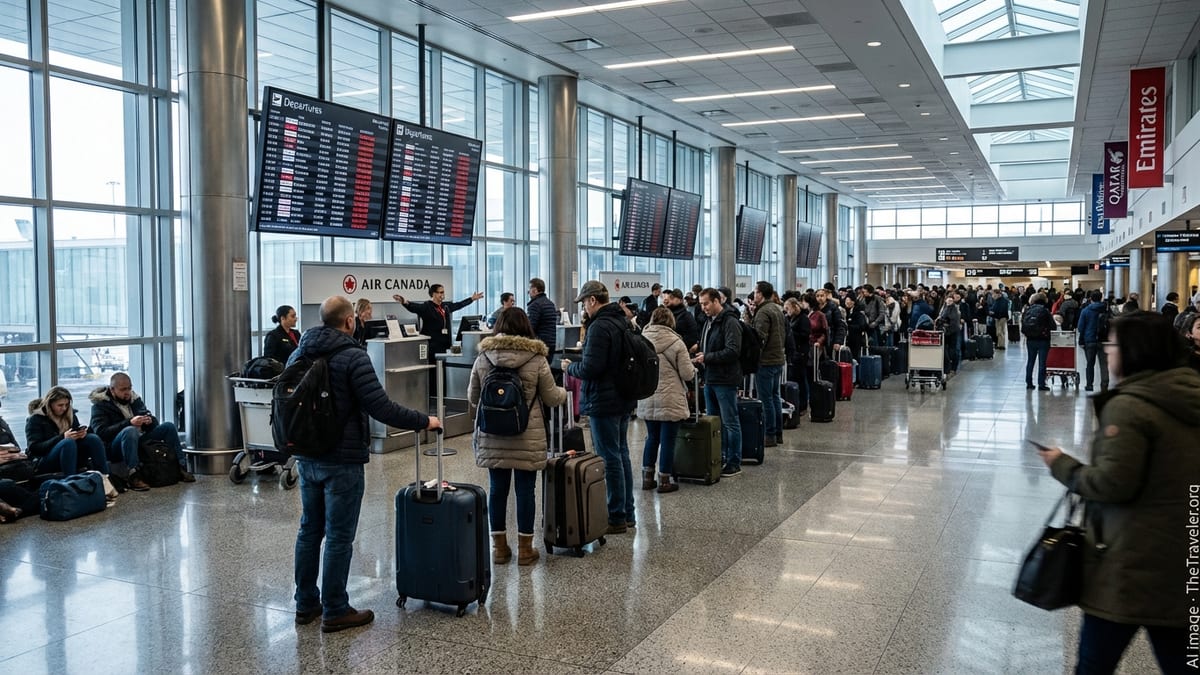
Middle East Airspace Closures Ripple Into Montreal
The coordinated military action on Iran on February 28 set off an unprecedented shutdown of airspace across much of the Middle East, including Iran, Israel, Iraq, Syria, Kuwait, Qatar, Bahrain and the United Arab Emirates. With Dubai, Abu Dhabi and Doha among the airports forced to halt or drastically scale back operations, global long haul networks that rely on these hubs were thrown into disarray.
For Montreal–Trudeau, a key Canadian gateway for Europe and onward connections to the Gulf and South Asia, the knock on effects were immediate. Flights that typically route over the Middle East or connect via major Gulf hubs were cancelled, delayed for many hours or diverted to alternative airports as carriers scrambled to find safe, legal routings around closed skies.
By Sunday morning, departure boards at Trudeau were dotted with cancellations for flights touching the region, along with extended delays on services to Europe and Asia that would normally overfly the conflict zone. Airport officials warned that disruption could worsen and persist for days as airlines continually adjust schedules to fast changing military and regulatory conditions.
Passengers arriving at the terminal found long lines at check in desks and customer service counters as travellers tried to rebook abandoned itineraries, arrange last minute accommodation or recover checked luggage that never left the tarmac. Many reported receiving overnight emails or app notifications advising them not to travel to the airport, only to discover the messages too late.
Air Canada, Emirates and Qatar Airways Slash Services
Air Canada, whose long haul network relies heavily on overflying or connecting through the Middle East to reach India, Southeast Asia and parts of Africa, moved quickly to cut or reroute services. The carrier suspended multiple flights to Gulf destinations and announced that routes which normally use affected airspace would be operating on significantly longer tracks, adding hours of flying time and straining aircraft and crew availability.
Montreal based passengers booked on Air Canada services to Dubai and Doha via Toronto reported last minute cancellations or indefinite delays, with the airline offering either full refunds or free rebooking for later dates. Travellers bound for India and Pakistan were told to expect extended flight times and possible technical stops as aircraft detoured south over Saudi Arabia or east over alternative corridors.
Gulf super carriers also dramatically cut capacity, amplifying the shock for Trudeau passengers who rely on one stop connections through the region. Emirates suspended all flights to and from Dubai while the city’s airports remain effectively closed, severing a major link between Montreal, Europe and destinations across Asia, Oceania and East Africa. Qatar Airways likewise halted operations to and from Doha amid a shutdown of Qatari airspace that has turned one of the world’s busiest hubs into a temporary dead zone.
With Etihad Airways and a long list of European and Asian carriers also cancelling flights into the Middle East or avoiding affected skies, Trudeau based travellers suddenly found many traditional one stop options to destinations like Bangkok, Johannesburg and Sydney off the table. Travel agents in Montreal reported a surge of calls from customers asking whether any safe, practical alternatives remained.
Thousands Stranded as Rebookings Overwhelm Systems
The scale and speed of the disruption left hundreds of thousands of travellers worldwide displaced, and Montreal–Trudeau was no exception. By Sunday, thousands of passengers either originating, terminating or transiting through the airport were dealing with missed connections, cancelled trips and involuntary layovers.
Airline call centres and digital channels were quickly overwhelmed as affected passengers attempted to rebook. Some Montreal travellers reported waiting several hours on hold or receiving automated messages instructing them to manage their trips online, only to find that no viable alternatives were available in the coming days. Others said they were handed paper hotel vouchers only to discover that nearby properties were already full.
Inside the terminal, ground staff from Air Canada and foreign carriers tried to triage the most urgent cases, prioritising families with young children, elderly passengers and those with tight onward connections. Volunteers from airport assistance organisations distributed water and snacks to stranded travellers who had been in the building since the previous night, while maintenance staff scrambled to set up additional seating in crowded gate areas.
For many, the uncertainty proved the most stressful element. With military operations ongoing and aviation authorities issuing rolling notices about airspace closures, passengers at Trudeau had little clarity on whether their rebooked flights would actually operate or be cancelled again at short notice. Some elected to abandon their trips altogether, while others opted for complex reroutings through secondary European hubs that still had seats available.
Longer Routes, Higher Fares and Operational Strain Ahead
Aviation analysts warned that the immediate chaos at Montreal–Trudeau may only be the beginning of a longer period of instability for travellers. With so much Middle Eastern airspace effectively off limits, airlines are being forced to fly significant detours that add hours of flight time, require more fuel and push aircraft and crew utilisation to the limit.
For Canadian carriers, this means that even routes not directly serving the Middle East may be affected. Flights from Montreal to parts of South and Southeast Asia that previously tracked through the region are now being reprogrammed to skirt conflict zones, which can require additional technical stops or the substitution of different aircraft types. This in turn can trigger last minute schedule changes, equipment swaps and seat downgrades that ripple across entire networks.
Industry experts say that if airspace closures and military activity persist, higher operating costs are likely to flow through to ticket prices. Travellers from Montreal booking spring and summer holidays to destinations in Asia, Africa and the Indian Ocean could face tighter capacity and steeper fares, particularly in premium cabins that are already in high demand.
There are also concerns about congestion along remaining open corridors, including routes funnelling traffic south of the Arabian Peninsula and across parts of Central Asia. Increased density on these paths could lead to additional air traffic control delays, further complicating efforts by carriers at Trudeau and elsewhere to restore something resembling normal operations.
What Montreal Travellers Should Do Now
With the situation evolving by the hour, travel and aviation officials are urging Montreal–Trudeau passengers to stay flexible and informed. The most consistent piece of advice is to check directly with airlines before leaving for the airport, using official apps or customer service channels to confirm that flights are still scheduled and on time.
Passengers whose itineraries touch the Middle East, or who are connecting through major hubs that normally route over the region, are being encouraged to consider postponing non essential travel or exploring alternative routings. Travel agents in Montreal report that some clients have successfully shifted to itineraries that connect via Western European gateways or, for certain Asian destinations, through US West Coast hubs instead of Gulf airports.
Those already at Trudeau and facing lengthy delays are being advised to keep boarding passes, receipts and any written communication from airlines, as these documents may be needed later to claim refunds, travel credits or out of pocket expenses. While compensation rules vary depending on the airline and jurisdiction, most carriers are at minimum waiving change fees and offering flexible rebooking options for journeys disrupted by the conflict.
For now, the only certainty for Montreal travellers is continued uncertainty. Until airspace begins to reopen and military tensions ease, Montreal–Trudeau is likely to remain a visible Canadian flashpoint in a crisis that has abruptly reminded the world how tightly global travel is bound to geopolitical events far beyond the departure gate.