

More news on this day
Specialist regional aircraft lessor TrueNoord has delivered three factory-new Airbus A220-300 aircraft to Breeze Airways under a long-term sale-and-leaseback agreement, a move set to sharpen the U.S. low-cost carrier’s focus on comfort, efficiency and underserved routes across the country.
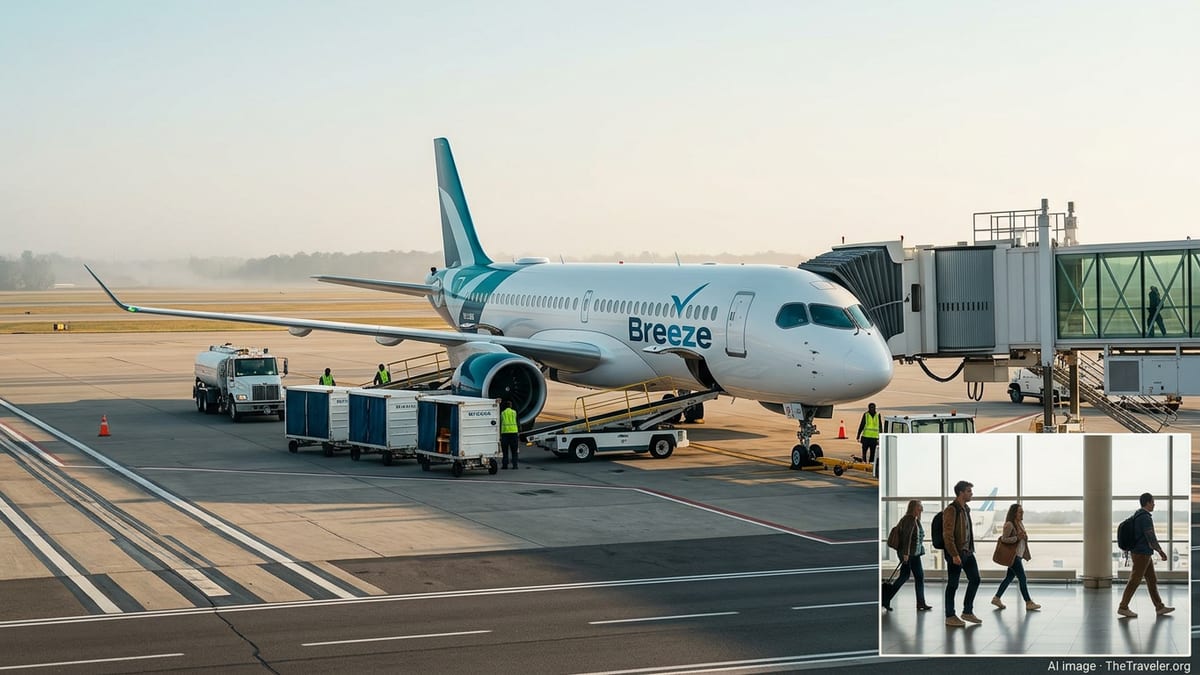
Milestone Deal Deepens TrueNoord–Breeze Partnership
The three Airbus A220-300s, handed over to Breeze Airways in February 2026, mark TrueNoord’s first foray into leasing Airbus aircraft and the largest type so far to join its portfolio. The transaction is structured as a long-term sale-and-leaseback, enabling Breeze to release capital tied up in new aircraft while still growing capacity at pace.
For Breeze, the additional jets arrive as the airline continues its rapid transformation from a mixed Embraer and Airbus operation to a simplified A220-focused fleet. For TrueNoord, the deal extends a relationship that began with Embraer E190 leases and underscores the lessor’s ambition to expand from regional jets into the new-generation small narrowbody segment.
Executives at TrueNoord have framed the transaction as a strategic step that aligns the company with one of the fastest-growing operators of the A220. The aircraft’s economics and range profile place it squarely in the sweet spot of Breeze’s business model, connecting secondary and tertiary U.S. cities with nonstop service that larger narrowbodies struggle to serve profitably.
Delivered directly from Airbus’s production system as factory-new frames, the three A220-300s immediately enter front-line service across Breeze’s domestic network. Their arrival helps the airline keep capacity growth on track as the manufacturer steadily increases output of the type.
A220 at the Heart of Breeze’s Network Strategy
Breeze Airways has made the A220 the centrepiece of its growth story, disclosing firm orders for 90 aircraft and positioning itself among the largest global customers for the type. The carrier has been steadily transitioning away from its earlier Embraer fleet as more A220s arrive from Airbus and from sale-and-leaseback partners.
The strategy is built around serving “under-connected” city pairs across the United States, often linking Tier 2 and Tier 3 airports that have limited or no nonstop service. The A220’s range of around 3,600 nautical miles and its right-sized 100 to 150 seat capacity allow Breeze to open routes that would be uneconomical for larger narrowbodies, while still offering jet service that competes strongly with driving or connecting through major hubs.
With the latest aircraft from TrueNoord, Breeze gains additional flexibility to refine frequencies, test new markets and upgauge popular routes. The airline has been progressively converting more of its flying to the A220, and the strengthening pipeline of deliveries supports its aim of fielding an all-A220 scheduled fleet.
The expanded A220 base also gives Breeze more tools to respond to seasonal demand. The type’s efficiency on both shorter and longer sectors means the same aircraft can rotate between dense leisure routes, thinner business markets and mid-haul transcontinental services without compromising economics.
Passenger Experience: Quieter, Roomier Cabins in the Skies
For travellers, the most visible impact of TrueNoord’s latest delivery will be on board. The A220 is known for a spacious, modern cabin with large windows, higher sidewalls and a 2-3 seating layout that reduces the number of middle seats. Breeze configures the aircraft with a mix of premium, extra-legroom and standard economy seating, giving passengers more choice on comfort and price.
The new jets feature the same interior product that Breeze has been rolling out across its A220 fleet, including in-seat power, fast onboard connectivity on many routes and streaming entertainment options designed for travellers using their own devices. Wider seats and generous hand-luggage space help speed boarding and reduce congestion in the aisle.
Noise levels are a key differentiator. With advanced aerodynamics and Pratt & Whitney’s latest-generation geared turbofan engines, the A220 generates a significantly smaller noise footprint than older narrowbodies. For passengers, that translates into a noticeably quieter cabin from takeoff through cruise, making work, conversation and rest easier on longer sectors.
From a travel experience perspective, these characteristics support Breeze’s positioning as a “nice, new way to fly” within the U.S. market. The addition of three more factory-fresh aircraft helps the airline maintain a young fleet profile, which often correlates with higher reliability and cabin cleanliness scores that matter to frequent flyers.
Efficiency and Sustainability Benefits for Routes and Communities
The A220-300 brings tangible operating gains that underpin Breeze’s low-cost promise. Compared with previous-generation aircraft in a similar seat category, the type delivers substantial reductions in fuel burn and carbon emissions per seat, aided by its lightweight materials, modern wing design and efficient engines.
These performance advantages give Breeze more margin to keep fares competitive on thin point-to-point routes while still achieving the unit economics needed to sustain year-round service. In turn, smaller cities and regional airports benefit from consistent nonstop links to larger markets, supporting local tourism and business travel.
The quieter profile of the A220 also matters at the community level. Lower takeoff and landing noise helps airports meet increasingly strict environmental and neighbourhood-impact standards, which can be a deciding factor when carriers seek to introduce additional flights or extend operating hours.
For TrueNoord, adding the A220 to its portfolio positions the lessor squarely within the aviation industry’s broader shift toward more sustainable, new-technology aircraft. The company can now offer airline customers a mix of turboprops, regional jets and small narrowbodies that support fleet-renewal programs aimed at lowering emissions.
Implications for U.S. Travelers and the Wider A220 Market
As the U.S. domestic market remains highly competitive, fleet choices have become a key differentiator in how airlines shape their networks and customer experience. Breeze’s growing A220 fleet, reinforced by the three new aircraft from TrueNoord, underscores the rising prominence of smaller, fuel-efficient narrowbodies in connecting secondary cities without forcing passengers through congested hubs.
For travelers, the practical outcome is a wider range of nonstop options between mid-sized cities, often with schedules tailored for weekend getaways or short business trips. The comfort of the A220 cabin, coupled with Breeze’s relatively simple product and digital-first approach, aims to peel passengers away from longer, more complex itineraries offered by larger network carriers.
On the manufacturer side, steady deliveries to Breeze and its lessor partners highlight the Airbus A220 program’s growing global footprint. With production rates increasing and more leasing companies adding the type, the aircraft is steadily moving from niche regional jet replacement into a mainstream workhorse for short and medium-haul travel.
The latest collaboration between TrueNoord and Breeze Airways therefore resonates beyond a single airline. It reflects how lessors and operators are jointly leveraging new-generation aircraft to reshape domestic air travel, offering quieter, more efficient flights on routes that once struggled to sustain regular jet service.