

More news on this day
A senior aide to President Donald Trump has triggered a fresh debate over airline accountability and U.S. passenger protections after publicly venting about a lengthy American Airlines maintenance delay, prompting criticism from former transportation officials and renewed scrutiny of how the United States oversees its aviation industry.
Trump Deputy’s Complaint Sparks Political Turbulence
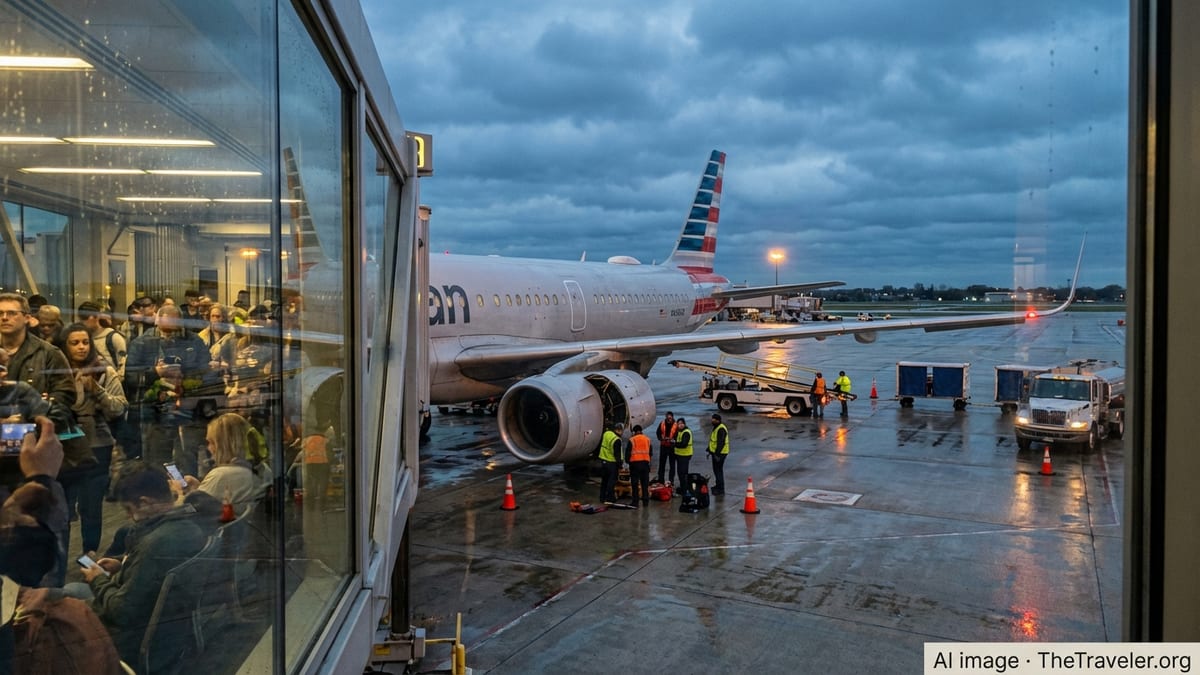
The controversy erupted after James Blair, Deputy White House Chief of Staff for Legislative, Political and Public Affairs, posted on the social platform X on February 26 that his American Airlines flight had been delayed two and a half hours because “someone failed to notice empty hydraulic fluid” until the aircraft was already on the runway. He added that on the previous day, his wife’s flight on the carrier had been disrupted after the airline “apparently forgot to book a pilot.”
Blair concluded his post by saying he was “going to take a new interest in the airline industry,” a remark widely interpreted within Washington and the aviation sector as a veiled threat that the White House might use its power to pressure the carrier. The message quickly circulated among political observers, frequent fliers and airline employees, many of whom questioned both the accuracy of Blair’s description and the appropriateness of a senior official publicly singling out a company over a personal travel inconvenience.
The aide, a former political consultant who helped steer Trump’s 2024 campaign before moving into the West Wing, has not elaborated on what form his “new interest” might take. The White House has so far declined to clarify whether his comments reflected any formal policy direction or were simply an expression of frustration at routine operational disruptions that affect millions of passengers each year.
Maintenance Delay Puts U.S. Airline Safety in the Spotlight
Blair’s complaint focused on a mechanical issue involving hydraulic fluid, a system critical for operating an aircraft’s brakes, flaps and other flight controls. Aviation safety experts note that while such problems can be disruptive, they are precisely the kind of issue airlines are required to catch before departure, and delays related to last minute maintenance checks are a built-in feature of a safety-first system.
Industry analysts say that, from a safety perspective, a delay because a fault was detected and addressed is preferable to an on-time departure with unresolved issues. For passengers, however, the distinction can be cold comfort, especially when they receive limited information at the gate and face missed connections, added expenses and uncertainty. Blair’s post tapped into that broader resentment, even as pilots and mechanics pushed back on his characterization of the incident as evidence of negligence.
American Airlines has been under its own microscope following a period of elevated cancellations and operational hiccups compared with some U.S. rivals. Recent data from aviation analytics firms show the carrier near the top of the rankings for cancellations among major U.S. airlines, reflecting weather disruptions, crew availability challenges and the strain of operating dense schedules out of hub airports.
For regulators and safety professionals, the episode underscores the delicate balance between maintaining rigorous maintenance standards and managing passenger expectations in an era when social media can instantly turn individual delays into national talking points.
Passenger Rights Clash With Policy Rollbacks
The political reaction to Blair’s remarks quickly widened the lens from one traveler’s bad day to the broader landscape of U.S. passenger protections. Former Transportation Secretary Pete Buttigieg, who oversaw efforts in the previous administration to toughen compensation rules for delays and cancellations, responded publicly by urging the current White House to restore “passenger rights work” that had been rolled back.
Under Buttigieg, the Department of Transportation pursued rules that would have required airlines to provide automatic cash compensation when disruptions were caused by the carrier rather than by weather or air traffic control. Those proposals, modeled in part on regulations in the European Union, Canada, Brazil and the United Kingdom, were designed to push airlines to improve reliability by imposing direct financial consequences for preventable delays.
The Trump administration ultimately shelved the compensation initiative, arguing that mandatory payouts would impose heavy costs on airlines and lead to higher fares for consumers. Officials instead signaled a preference for allowing carriers to compete on customer service and voluntary compensation policies, while maintaining existing requirements for ticket refunds in the event of cancellations. Consumer advocates counter that without enforceable standards, passengers are left to navigate a complex patchwork of airline rules that offer far fewer guarantees than those enjoyed by travelers in many other developed markets.
Blair’s very public frustration has now sharpened that policy divide, with critics pointing out that senior officials who oppose stricter rules on carriers are, in effect, limiting the recourse available to ordinary travelers facing the same disruptions.
Global Comparisons Highlight U.S. Travel Frustrations
The flare up comes at a time when international travelers are increasingly attuned to the contrast between U.S. rules and more robust protections abroad. In the European Union, for example, passengers on flights delayed or canceled for reasons within an airline’s control can receive set cash payments depending on delay length and route distance, creating a clear, predictable framework for compensation.
By comparison, in the United States airlines are not legally required to provide cash for delays, and only must refund passengers when flights are canceled or significantly changed. While some carriers offer vouchers, miles or hotel accommodations during major disruptions, the terms vary widely by airline and circumstance, and travelers often must negotiate at the airport or through customer service channels with limited transparency.
For international visitors flying into or within the United States, this gap can be jarring. Travel advisors say they routinely explain to clients that the protections they may be used to in Europe or Canada do not necessarily apply on domestic U.S. itineraries, and that trip insurance or flexible planning can be essential hedges against disruption.
The debate ignited by Blair’s criticism of American Airlines arrives against this backdrop, raising uncomfortable questions about whether the world’s largest aviation market is lagging on fundamental consumer rights even as it projects an image of high standards and strong federal oversight.
What the Dispute Means for American Travelers
For most passengers, the immediate impact of the flap between a Trump insider and a major U.S. carrier is likely to be more symbolic than practical. There has been no indication that American Airlines faces specific new regulatory threats as a result of Blair’s comments, and the airline has not publicly detailed the mechanics of the delay he described.
Yet the episode has drawn fresh public attention to the everyday realities of flying in the United States, where aging infrastructure, congested airspace and tight airline schedules combine to make delays a recurring feature of travel. It also highlights how easily personal grievances by powerful figures can become flashpoints in broader policy battles, particularly in a heated political climate.
For travelers planning trips in and around the United States, experts say the practical lessons remain consistent: build buffers into tight connections, keep a close eye on flight status notifications, and understand each airline’s compensation policies before booking. As long as federal rules stop short of guaranteeing compensation for most delays, informed preparation and flexible itineraries will remain the most reliable protections for passengers, no matter who is venting online about a late departure.