

More news on this day
As Donald Trump’s second-term immigration crackdown deepens in early 2026, a mounting “Trump slump” in international travel is rippling through America’s tourism economy, shrinking visitor numbers, eroding jobs and forcing would-be visitors to think twice before booking a trip to the United States.
A Steep Drop in Visitors and Billions in Lost Spending
Fresh data show the United States entering 2026 with a sharp reversal in international tourism, bucking the global recovery seen elsewhere. The U.S. Commerce Department’s National Travel and Tourism Office reported that inbound travel fell 4.8 percent in January compared with a year earlier, the ninth straight month of decline and a sign that negative sentiment is hardening just as other destinations pull ahead.
The pullback follows a difficult 2025. While global tourism expanded, the United States saw a 6 percent drop in foreign visitors, according to industry analyses, making it the only major destination where international visitor spending actually declined. Forecasts that once projected strong inbound growth have been repeatedly revised downward, with research firms now expecting an 8 percent or greater fall in overall international arrivals and billions of dollars in lost export revenue.
Trade groups warn that each percentage point drop in overseas visitor spending represents roughly $1.8 billion in lost export earnings and thousands of at-risk jobs in hotels, restaurants, attractions and transport services. Destination marketing organizations from New York to Las Vegas report softening bookings and thinner forward demand from key markets in Europe and Asia, even during what should be peak planning season for summer travel.
The downturn is especially pronounced among Canadians, historically the single largest source of foreign visitors. Analysts estimate that millions fewer Canadians crossed the border in 2025 compared with the previous year, wiping out several billion dollars in spending in border states that rely heavily on drive-in traffic.
Visa Barriers, Travel Bans and Tougher Screening
Behind the numbers is a tightening web of policy changes that have collectively made visiting the United States feel more difficult, more expensive and less predictable. A new presidential proclamation issued in late 2025 expanded and extended country-specific entry restrictions, now affecting nationals from dozens of countries through a mix of full bans, sharply limited visa categories and heightened security vetting.
At the same time, the administration has moved to raise costs and administrative hurdles even for travelers from traditional partner nations. Industry groups are lobbying against new and proposed fees, including a so-called visa integrity surcharge and steep processing charges on certain work-related visas, arguing that the added costs filter down to leisure and business travelers and deter long-haul trips.
More intrusive screening has become a flash point. Travel and civil-liberties advocates point to growing use of social media checks, device searches at ports of entry and longer secondary inspections as factors that lengthen queues and inject uncertainty into routine trips. Incidents in which visitors with valid visas are detained for extended periods, including high-profile cases of retirees and students, have received wide coverage in foreign media and social platforms, reinforcing a perception that even compliant travelers can find themselves caught in a dragnet.
For travelers from countries covered by the expanded bans, discretionary waivers technically exist but are opaque and rarely granted, according to immigration lawyers. For many in those markets, the practical impact is a near-total halt to tourism to the United States, pushing demand toward Europe, Canada and parts of Asia instead.
Airports Under Strain and Trusted Traveler Turmoil
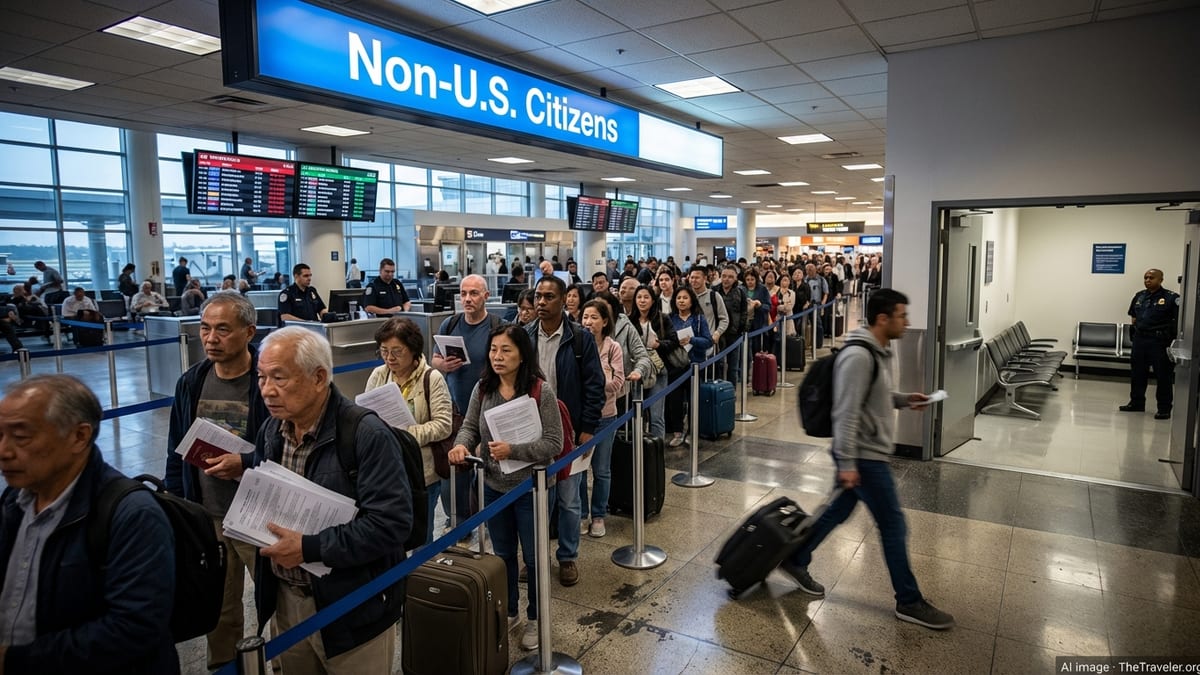
The impact of hard-line immigration policies is being felt most acutely at major gateways. In early 2026, a partial federal government shutdown collided with escalating border and immigration demands, leading the Department of Homeland Security to briefly announce the suspension of key Trusted Traveler programs, including Global Entry and, initially, TSA PreCheck. Conflicting messages followed, with the Transportation Security Administration keeping many expedited lanes open on a case-by-case basis, creating confusion among frequent international travelers.
Even where fast-track security remains available, staffing shortages and tougher inspection protocols have lengthened wait times at passport control in airports such as New York, Washington and Los Angeles. Airlines report missed connections and higher misconnect handling costs on transatlantic and transpacific routes, and are advising inbound passengers to build in extra time for immigration formalities.
Airport executives say that while infrastructure has improved since the pandemic, the overall experience for foreign nationals has deteriorated. Officers have broader discretion to question intent, demand supporting documentation and refer travelers to secondary inspection. For visitors, particularly those with nontraditional itineraries or complex travel histories, the result can be an unpredictable arrival experience that undermines confidence in choosing the United States over competitor destinations.
The turmoil around Global Entry, which offers expedited immigration processing for pre-vetted, low-risk travelers, has especially unsettled high-spending business and premium-leisure segments. With new enrollments and some renewals delayed or suspended during the shutdown, corporate travel managers are reporting a shift of meetings and incentive trips to destinations where border procedures are perceived as more stable.
Tourism Jobs on the Line Across the Country
As international arrivals slide, the damage is increasingly visible in local job markets. Coastal cities and gateway hubs that depend on overseas visitors for a significant share of hotel nights and attraction tickets are feeling the squeeze first, but the pain is spreading inland to theme-park corridors, convention destinations and national park communities.
Industry economists estimate that the shortfall in foreign visitors in 2025 alone translated into more than $8 billion in lost spending, with the drag intensifying as the slump carries into 2026. Because international travelers typically stay longer and spend substantially more per trip than domestic visitors, even a modest decline in arrivals can trigger outsized revenue losses for tour operators, guides, retailers and restaurants.
Hotel associations in northern border states have reported occupancy drops of several percentage points year on year, tied directly to the collapse in Canadian land arrivals. In some resort towns, seasonal employers say they are hiring fewer workers, trimming hours or postponing investments, citing uncertainty over whether international demand will recover while the current immigration posture remains in place.
National trade groups caution that if current trends persist, the United States risks ceding market share for years to come. Once airlines cut capacity and travelers habituate to alternative destinations, rebuilding demand can be slow and costly, particularly if the country is perceived as unwelcoming or unpredictable at the border.
What International Travelers Should Know Before Visiting in 2026
For those still planning trips to the United States in 2026, travel experts stress that careful preparation is essential. Prospective visitors are urged to apply for visas and any required travel authorizations earlier than they might have before, as appointment backlogs and extended security reviews can stretch processing times. Allowing several extra weeks or even months can provide a buffer against unexpected delays.
Travel planners recommend carrying thorough documentation to support the stated purpose of a visit, including confirmed accommodation details, return or onward tickets, proof of employment or enrollment, and evidence of funds. Having digital and paper copies can help if connectivity issues arise during inspection. Travelers should also be prepared for more detailed questioning at ports of entry and understand that officers have wide discretion to examine electronic devices or social media activity.
Airlines and airports are advising inbound passengers to factor in longer connection times when transiting through U.S. hubs and to monitor government announcements closely, particularly during periods of political standoff that could affect staffing or the operation of expedited screening programs. Those enrolled in Trusted Traveler schemes should verify their status before departure and keep expectations flexible as agencies adjust operations in response to budget and policy shifts.
Above all, travel advisers say, visitors should stay informed. Policies are changing quickly, and experiences can vary widely depending on nationality, route and even airport. While millions of international travelers will still enter the United States in 2026 without incident, the current immigration crackdown has introduced a new level of complexity and risk that anyone contemplating a U.S. trip needs to weigh carefully.