

More news on this day
President Donald Trump has announced he will sign an emergency order directing the Department of Homeland Security to immediately resume pay for Transportation Security Administration officers, framing mounting delays and staffing shortages at U.S. airports as a national emergency born of a prolonged funding standoff.
Get the latest news straight to your inbox!
Emergency Order Follows Weeks of Unpaid Airport Security Work
The planned directive comes more than a month into an ongoing lapse in funding for the Department of Homeland Security, which has required tens of thousands of TSA officers to work without regular pay. Publicly available information shows that missed paychecks have fueled spikes in sick calls and resignations, particularly at busy hubs handling peak spring travel volumes.
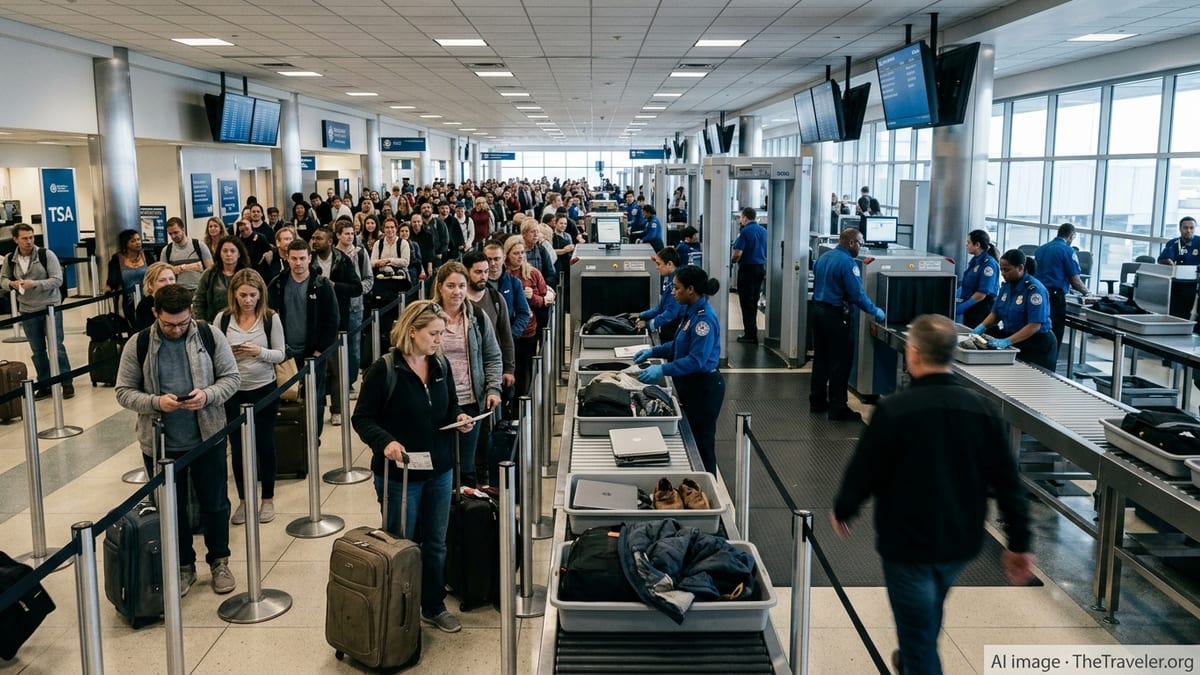
Reports indicate that airport security lines have stretched to hours at several major gateways, with some passengers missing flights and airlines warning of cascading operational disruptions. TSA officers, classified as essential workers, have been legally obligated to remain on the job, even as personal finances strain under rent, childcare and transportation costs.
Travel industry groups and unions representing aviation workers have repeatedly urged Washington to restore pay for front line security staff, citing both hardship for employees and growing concerns about system resilience. In their view, the emergency order reflects how pressure from travelers, airports and airlines has turned routine screening bottlenecks into a high-profile national issue.
According to published coverage, the administration intends to use existing executive authority to carve out TSA pay from the wider Department of Homeland Security shutdown, while broader disputes over immigration enforcement and border policy remain unresolved on Capitol Hill.
Airports Grapple With Long Lines, Staffing Gaps And Traveler Frustration
Operational reports over recent days describe a patchwork of conditions across the country, with some smaller airports functioning close to normal and others experiencing acute strain. At large coastal and midcontinent hubs, travelers have posted images and accounts of security queues snaking through terminals, with wait times in excess of two hours during peak periods.
Union representatives and aviation analysts note that staffing has become increasingly unpredictable as the shutdown has dragged on. Highly trained officers have resigned rather than endure another payless pay period, while others have taken on second jobs or gig work, limiting their flexibility to pick up overtime at airports already running lean.
Federal contingency measures have included temporarily sending Immigration and Customs Enforcement personnel and other Homeland Security staff to assist at checkpoints, a step that has prompted questions about training, efficiency and costs. Experts cited in national media coverage warn that such stopgap deployments are no substitute for a stable, fully paid TSA workforce with specialized screening expertise.
For passengers, the result has been a more stressful start to air journeys. Travel planners recommend arriving at airports far earlier than pre-shutdown norms, especially at busy hubs and during early morning and late afternoon peaks when security lines have been most volatile.
National Emergency Framing Raises Legal And Policy Questions
In announcing the move, Trump has portrayed the airport situation as a national emergency requiring immediate executive intervention, separate from the underlying partisan clash over immigration enforcement and Homeland Security funding. According to commentary in major U.S. outlets, the administration is expected to rely on flexible budget authorities inside DHS to prioritize pay for TSA officers while other programs remain partially shuttered.
Legal scholars quoted in public analyses note that the order is likely to face scrutiny over whether it stretches executive power in the context of a congressionally driven funding lapse. Some budget experts argue that selectively restoring pay in one part of a shuttered department risks blurring the lines between legislative control of spending and presidential discretion during emergencies.
At the same time, travel and tourism stakeholders broadly welcome any step that keeps checkpoints staffed and reduces the risk of full or partial airport closures. Industry observers suggest that Trump’s framing of “chaos at the airports” as a national emergency underscores how quickly aviation disruptions can gain political salience, especially heading into a peak travel season.
Policy analysts also point out that the move sets a practical precedent: future shutdowns that hit Homeland Security may prompt rapid calls to insulate TSA and related aviation functions from funding brinkmanship, either through legislation or more clearly defined emergency authorities.
Travel Industry Warns Of Lingering Damage Despite Pay Restart
Even if pay resumes promptly, airlines, airports and tourism organizations are cautioning that the damage from weeks of uncertainty may not disappear overnight. Trade associations have previously estimated that earlier shutdowns cost the travel economy billions of dollars through canceled trips, reduced bookings and lower spending by both leisure and business travelers.
Several major carriers have already cited the current disruption as a headwind in investor communications, pointing to increased staffing costs, schedule adjustments and reputational risks as travelers hedge against potential cancellations or extreme delays. Airport executives have likewise warned that local economies dependent on visitor spending can feel the ripple effects long after government funding fights are resolved.
Experts in aviation labor note that morale within TSA may be slow to recover. Officers who depleted savings, took on debt or relied on food banks during the shutdown may continue to weigh whether a career in airport security is sustainable, particularly if the threat of future funding standoffs looms.
For international travelers, the episode may reinforce perceptions of unpredictability in the U.S. travel experience, complicating efforts by tourism boards to market the country as a seamless and welcoming destination.
What Passengers Should Expect In The Coming Days
Publicly available guidance suggests that any easing of airport congestion will be gradual rather than immediate. Even once TSA payroll systems restart, it may take days for staffing levels and schedules to normalize, especially at airports that have suffered elevated attrition or unusually high sick-out rates.
Travel planners advise that passengers continue to build in extra time at security, monitor airport and airline communications closely and remain flexible with connections. Priority lanes and trusted traveler programs, where operational, may help some flyers, but delays at baggage drops, check-in counters and boarding gates can still cascade from earlier congestion at checkpoints.
Industry analysts will be watching closely to see whether the emergency order calms financial markets’ concerns about aviation disruption and whether lawmakers use the breathing room to finalize a broader funding compromise for Homeland Security. If negotiations stall, pressure could mount for more permanent protections that shield critical travel infrastructure from future shutdown showdowns.
For now, the order to pay TSA officers marks a pivotal shift in the administration’s shutdown strategy, acknowledging the central role of airport security in the national economy and the political costs of prolonged travel turmoil.