

More news on this day
Donald Trump has said he will sign an executive order instructing the Department of Homeland Security to immediately resume pay for Transportation Security Administration agents, seeking to contain mounting airport disruption during a protracted funding shutdown.
Get the latest news straight to your inbox!
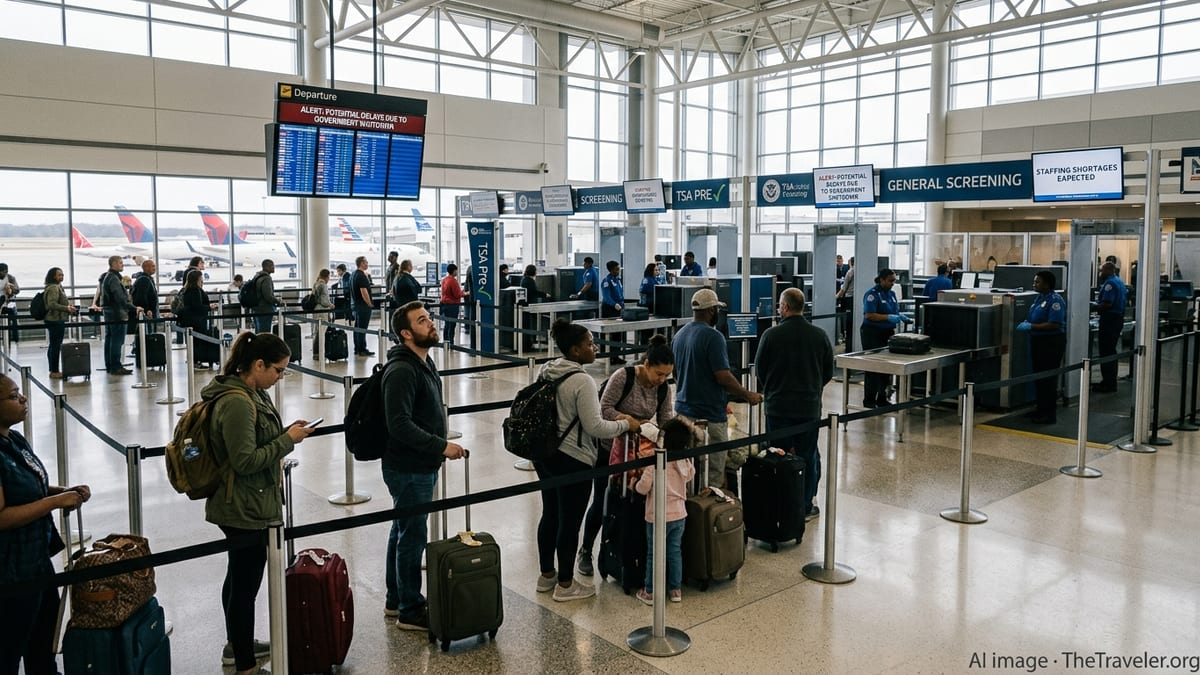
Order Aims to Ease Airport Strain as Shutdown Drags On
Publicly available information indicates that Trump announced his intention on Truth Social, saying he would direct Homeland Security officials to “immediately pay our TSA agents” to address what he described as chaos at U.S. airports. The statement comes as a partial shutdown of the Department of Homeland Security has stretched past 40 days, halting regular pay for tens of thousands of airport screeners.
Reports indicate that TSA officers have been reporting increased financial strain after missing multiple full paychecks, with some workers calling in sick or seeking other employment. The resulting staffing gaps have contributed to longer security lines at several major hubs, raising concern among airlines, airport operators and travel groups about the reliability of air travel heading into the spring and early summer travel period.
Travel industry organizations have recently highlighted the economic risks of prolonged disruption at security checkpoints, warning that past shutdowns produced billions of dollars in lost travel spending. The renewed uncertainty has prompted calls for both Congress and the White House to ensure that frontline aviation security personnel are paid, even when broader budget disputes remain unresolved.
Legal Questions Around Executive Authority
Trump’s announcement raises fresh questions about how far a president can go in directing pay for specific categories of federal employees when agency appropriations have lapsed. Previous shutdowns have generally required congressional action to restore compensation, and experts cited in published coverage note that the executive branch is constrained by longstanding budget laws that limit expenditures without appropriations.
According to legal analysis referenced in recent commentary, an order to “pay TSA agents” would likely need to rely on preexisting funding streams, reprogramming authority or emergency powers within the Department of Homeland Security’s budget. It remains unclear from public statements what specific legal basis Trump intends to invoke, and whether such a directive could survive potential court challenges.
Some observers have also pointed out that any move to single out TSA employees for pay during a shutdown could trigger demands from other unpaid federal workers performing essential functions, including Border Patrol agents, air traffic controllers and certain law enforcement personnel. That dynamic underscores the tension between addressing immediate airport concerns and maintaining parity across the wider federal workforce.
Travel Sector Watches for Impact on Passenger Experience
U.S. airports have already begun to experience sporadic checkpoint slowdowns and temporary lane closures as the shutdown continues. Airlines and airport authorities are closely monitoring Trump’s promised order, calculating whether a resumption of pay for TSA agents would help stabilize staffing and restore more predictable wait times at security.
Travel groups have previously documented how long waits and uncertainty can discourage discretionary trips and business travel. Memories remain fresh of earlier shutdowns, when terminal bottlenecks and last-minute staffing adjustments led some passengers to miss flights or reroute itineraries through less congested airports. Industry analysis suggests that even modest declines in passenger volumes can ripple through local economies that depend on tourism, meetings and conventions.
Airport managers are also weighing operational questions, such as how quickly any new pay directive could be implemented and whether it would apply retroactively to missed pay periods. Until formal guidance is issued, many are planning for continued volatility, encouraging travelers to arrive earlier than usual and building in extra buffer time for connecting flights.
Frontline TSA Workforce Under Financial Strain
The shutdown has highlighted the precarious financial position of many TSA agents, whose pay levels often leave little room for extended income interruptions. Public posts by employees and union representatives describe officers struggling to cover housing, child care and transportation costs while continuing to staff checkpoints deemed essential for national security.
During previous funding lapses, accounts circulated of agents visiting food banks, seeking short-term loans or selling personal items to bridge the gap until back pay arrived. The current impasse has revived those concerns, with some workers warning that prolonged uncertainty could erode morale and accelerate attrition in a workforce that already faces demanding schedules and high stress.
For travelers, the financial stress on screeners is not just a human concern but a practical one. Experienced agents play a central role in maintaining both efficiency and security at checkpoints. If Trump’s proposed executive order succeeds in restoring pay, it could help retain seasoned staff at a critical moment, though long-term stability will still depend on broader budget agreements between the White House and Congress.
What Travelers Should Expect in the Coming Days
Until the executive order is formally issued and implemented, travelers are likely to experience a mixed picture at U.S. airports. Some locations may see relatively normal operations, while others could face longer lines during peak periods if staffing remains thin. Aviation observers note that conditions can vary significantly from one airport to another, and even from day to day, during a funding standoff.
Passengers planning trips in the near term are being advised in public guidance from airlines and airports to arrive earlier than usual and to allow added time for check-in and security screening. Flexible itineraries, including longer layovers for connections, may help mitigate the risk of delays caused by checkpoint slowdowns.
If Trump follows through on signing the order and if the measure can be legally implemented, travelers could begin to see gradual improvements in staffing and throughput at security lanes. However, the overall outlook for the summer travel season will hinge on whether the shutdown itself is resolved, restoring predictable funding not only for TSA but for the broader aviation system that keeps passengers and cargo moving.