

More news on this day
Air travelers across the United States are facing some of the longest airport security lines on record as a partial shutdown of the Department of Homeland Security collides with a late executive order from President Donald Trump to pay Transportation Security Administration officers, prompting widespread delays for American, United, Delta, JetBlue and Southwest passengers and leading some international tourists to cancel hotel stays with major brands such as Marriott and Hilton.
Get the latest news straight to your inbox!
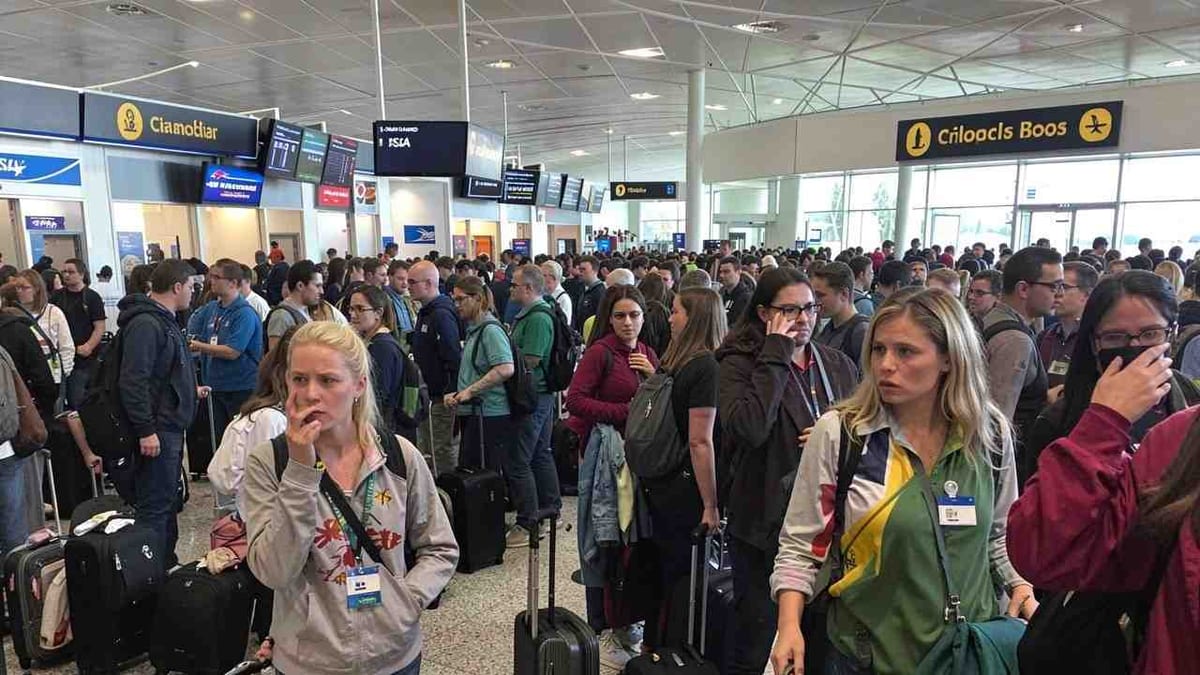
Image by Travel And Tour World
Executive Order Arrives Amid Deepening DHS Shutdown Crisis
The current wave of disruption began with the Department of Homeland Security funding lapse on February 14, 2026, which forced tens of thousands of TSA officers to keep working without regular pay. Publicly available information shows that callouts and resignations increased steadily through March, thinning staffing levels at key checkpoints just as spring break travel ramped up.
On March 27, Trump signed an executive order directing that TSA officers be paid using alternative funding mechanisms even while the DHS shutdown continues. News coverage indicates that the payments could begin as early as March 30, but the order does not immediately resolve broader staffing shortages or address the uncertainty surrounding future pay periods if the budget standoff continues.
Travel industry groups and aviation analysts note that the timing of the order means it functions more as an emergency stopgap than a long-term fix. Many front-line screeners have already missed multiple paychecks, and reports indicate that several hundred officers have quit since the shutdown began, leaving a gap that cannot be filled overnight even if pay resumes.
As a result, the executive order has so far had limited effect on conditions at crowded hubs, where slow-moving security queues and rolling delays remain the norm heading into one of the busiest leisure travel periods of the year.
Major U.S. Carriers Grapple With Historic Security Bottlenecks
American Airlines, United Airlines, Delta Air Lines, JetBlue Airways and Southwest Airlines are among the carriers most exposed to the gridlock at large domestic hubs. Extensive reporting from national and local outlets describes hourslong lines at security checkpoints in cities including New York, Houston, Atlanta, Phoenix, Denver and Orlando, with passengers often advised to arrive more than three hours before departure even for domestic flights.
Because the disruption is rooted in federal staffing issues rather than airline operations, carriers have limited tools to fix the problem directly. Publicly available airline advisories show that several major carriers have issued broad waivers allowing travelers to change flights without fees in certain affected markets. In some cases, airlines are holding flights longer at the gate when large numbers of passengers are still stuck in security queues, but that approach risks creating knock-on delays across their networks.
Industry data and historical comparisons suggest that current TSA wait times are among the longest recorded nationwide. Coverage from public radio and regional television stations describes scenes of security lines spilling into parking garages, with some travelers missing flights outright despite arriving more than two hours before boarding. The pressure is especially intense at fortress hubs for American, United and Delta, where connecting passengers who clear customs or arrive from delayed feeder flights often find themselves at the back of immense security queues.
Low-cost and point-to-point carriers are not immune. JetBlue and Southwest, which rely heavily on fast aircraft turns and dense schedules, can be particularly vulnerable to cascading delays once early-morning departures are pushed back by security bottlenecks. Travel analysts warn that even modest disruptions during the first wave of departures can snowball into widespread afternoon and evening delays across entire route maps.
Foreign Visitors Rethink Trips as Lines Stretch for Hours
The impact is not confined to U.S. residents. Travel trade publications and hotel-industry commentary indicate that international visitors from Canada, Brazil and the United Kingdom are increasingly reconsidering or cancelling trips amid images of chaotic queues and reports of missed connections. For long-haul travelers who already face lengthy flights and jet lag, the prospect of spending several additional hours in a crowded security hall on arrival or departure is proving to be a significant deterrent.
Tour operators that cater to inbound visitors from these markets report rising concern from clients booked on U.S. itineraries. Some agents are steering customers toward alternative destinations in Europe, the Caribbean or Mexico, where entry and departure processes are currently perceived as more predictable. Others are advising travelers who cannot change their plans to build in extra buffer days on either end of their trips to account for possible disruption.
Industry groups have warned for years that prolonged government shutdowns can dampen inbound tourism by eroding confidence in the reliability of the U.S. travel system. The present standoff, arriving just months before large-scale America 250 commemorations and other major events, is raising fresh alarms about the potential for longer-term damage to the country’s reputation as an easy place to visit.
For many prospective visitors, the combination of heightened geopolitical tensions, elevated airfares driven by fuel costs and now unpredictable airport experiences is tipping the scales toward postponement. This is particularly evident among discretionary leisure travelers from Canada and the United Kingdom, who have a wide array of alternative city-break and resort options that do not require transiting U.S. hubs in the midst of a staffing crisis.
Marriott and Hilton Feel the Pinch From Canceled Bookings
The turbulence at airports is beginning to ripple through the hotel sector, with major chains such as Marriott and Hilton reporting signs of softening demand from key international markets. While the companies have not attributed every change in booking patterns to the TSA funding impasse, hospitality analysts note a clear correlation between the worst weeks of airport disruption and a rise in cancellations or rebookings from foreign guests.
City-center properties and airport hotels appear to be the most immediately affected. Data shared by travel research firms shows an uptick in late cancellations for stays in gateway cities such as New York, Miami and Los Angeles, where visitors from Canada, Brazil and the United Kingdom often begin or end their U.S. itineraries. In some cases, travelers who experience severe delays on arrival are choosing to shorten their stays, cutting a night or two from city visits in order to preserve time at onward destinations.
At the same time, some hotels are seeing a different kind of demand spike: distressed passengers stranded overnight after missed connections. Airport-adjacent Marriott and Hilton properties near major hubs have reported higher same-day walk-in traffic from travelers whose flights were disrupted by security delays earlier in the day. While this can offset some of the lost business from cancellations, it is often less lucrative than longer, pre-planned stays from international guests.
Hotel executives and tourism boards are increasingly vocal in their calls for a swift resolution to the DHS shutdown and more durable funding mechanisms for TSA. They argue that the current disruption illustrates how closely aviation reliability and hospitality performance are intertwined, particularly in competitive global tourism markets where visitors can readily choose other destinations.
Uncertain Outlook as Pay Resumes but Shutdown Persists
With TSA officers expected to receive pay under Trump’s executive order while the broader DHS funding battle remains unresolved, the travel industry is bracing for a protracted period of uncertainty. Aviation experts say that even if paychecks arrive on schedule at the end of March, it could take weeks for staffing levels and morale to stabilize, especially if employees fear another abrupt loss of income.
Consumer advocates note that passengers caught up in the disruption have limited recourse. Unlike European Union rules that mandate compensation for certain types of delays and cancellations, U.S. regulations provide relatively few guarantees when delays are caused by government operations rather than airline decisions. Travelers on American, United, Delta, JetBlue and Southwest are largely dependent on individual carrier policies for rebooking, vouchers or hotel accommodations.
Travel organizations are renewing calls for Congress to pass legislation that would insulate critical aviation security and air traffic control functions from future shutdowns by ensuring continuous pay. Recent proposals to that effect have repeatedly stalled on Capitol Hill, only to be revived during each new funding crisis as pressure mounts from airlines, airports and tourism businesses.
For now, publicly available guidance continues to urge passengers to arrive at airports far earlier than normal, monitor flight status closely and be prepared for long waits. Until the political standoff in Washington is resolved and TSA staffing returns to more typical levels, both domestic flyers and international visitors may continue to face an unusually unpredictable and time-consuming start or end to their journeys through U.S. airports.