

More news on this day
From new Chinese-built mega ports on the Pacific to fresh US travel bans on Latin American officials, a sharpening power struggle between Donald Trump’s Washington and Beijing in Latin America is beginning to spill directly into how, and where, travelers move across the hemisphere.
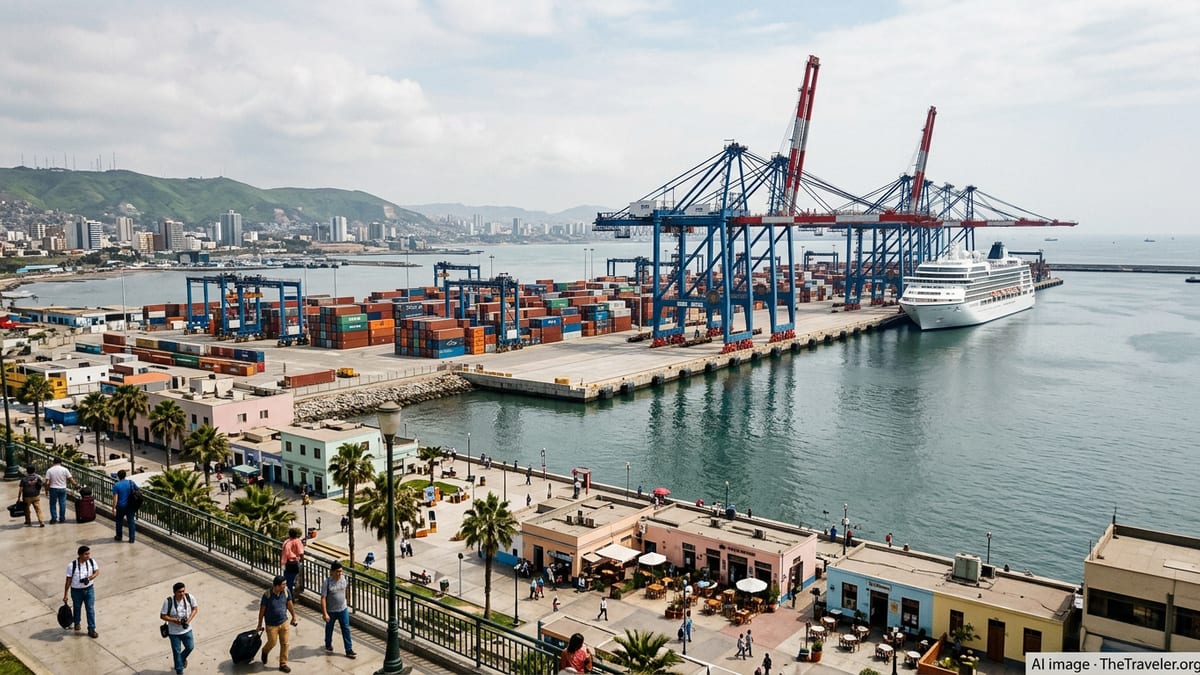
Rival Visions Collide Over Latin America’s Gateways
Within months of returning to the White House, President Donald Trump has recentered US foreign policy on the Western Hemisphere, casting China’s deepening economic role in Latin America as a strategic threat. His new national security strategy, unveiled late last year, explicitly frames the region as a testing ground for reasserting US dominance, with particular attention to Chinese-backed ports, railways and digital infrastructure that double as tourism arteries.
Beijing, for its part, has spent the past decade quietly financing and building the physical network that underpins both trade and leisure travel: deepwater ports, upgraded airports, cross-continental highways and digital backbones. The Port of Chancay in Peru, inaugurated during President Xi Jinping’s 2024 visit, has rapidly become a symbol of this push, slashing shipping times to Asia and positioning Peru as a new hub for cruise and cargo traffic along the Pacific coast.
As Chinese state lenders and companies accelerate direct investment in logistics and hospitality, Washington is moving from rhetoric to retaliation. Recent US travel bans on Chilean officials involved in a planned undersea fiber-optic link with China, and pointed warnings to Peru about ceding control over Chancay, signal that tourism and connectivity assets are now squarely in the crosshairs of great-power competition.
For travelers, the contest is no longer abstract. It is beginning to shape which ports cruise lines favor, which airports attract new long-haul routes and how easy it is to move between Latin America, North America and Asia.
China’s Infrastructure Play: Ports, Rails and New Tourist Corridors
Chinese-backed infrastructure projects across Latin America were initially framed around commodities and trade, but many are now explicitly marketed as catalysts for tourism. The deepwater port at Chancay is designed not only to handle container traffic but also to host larger cruise ships, offering new itineraries that link Peruvian coastal cities with Asian and Pacific destinations while relieving congestion at nearby Callao.
Further south, discussions over a Brazil–Peru transcontinental railway, revived in 2025 with Chinese participation, envision a land corridor from Atlantic ports through the Amazon to Pacific terminals. Although primarily a freight concept, planners in both countries have highlighted potential for rail-based eco-tourism and more accessible overland routes between Andean and Amazonian attractions that could be packaged with cruises and flights.
Beyond marquee projects, Chinese firms have financed or upgraded regional airports, cruise terminals and tourism-focused waterfronts from Central America to the Southern Cone. Studies tracking Chinese overseas infrastructure show a steady rise in tourism-adjacent investments, from piers serving beach resorts in El Salvador and Ecuador to highway links feeding colonial cities and natural parks. These projects promise to redistribute visitor flows away from long-dominant hubs like Miami and Cancun toward secondary Latin American gateways more closely tied to Asia.
That shift is already visible in airline strategies. Carriers in Brazil, Mexico, Chile and Peru have expanded partnerships with Chinese airlines, eyeing a future in which more visitors from East Asia arrive via direct or one-stop routes to Latin America’s Pacific rim rather than through US hubs. For destination marketers, courting this traffic means aligning with Chinese payment systems, digital platforms and holiday calendars.
Trump’s Counteroffensive: Visas, Sanctions and Security Frictions
The Trump administration’s response leans heavily on coercive tools that could produce collateral damage for tourism. In recent weeks Washington has imposed travel bans on Latin American officials tied to Chinese infrastructure deals, including the planned fiber-optic cable linking South America to Asia, a project that could have expanded bandwidth for hotels, airports and digital nomad communities across the region.
US diplomats have also pressed Peru and Panama on the security implications of Chinese-financed ports and logistics parks, hinting at potential sanctions or loss of preferential trade treatment if governments do not revisit key concessions. Such moves introduce uncertainty for cruise lines, port operators and investors weighing whether to base ships, open hotels or launch new shore excursions around Chinese-backed facilities.
On the regulatory front, Trump’s broader clampdown on migration and border controls is tightening entry for some Latin American travelers and workers, even as Washington urges governments to align with US security priorities. Tougher US visa scrutiny and periodic talk of new travel restrictions risk depressing northbound leisure and shopping trips that sustain airlines and tourism-dependent cities from Texas to Florida.
The administration argues that a more controlled border and reduced Chinese footprint will create a safer, more stable region that ultimately benefits tourism. Industry executives, however, warn that sudden sanctions, travel bans and security incidents around ports and sea lanes can quickly deter cruise passengers and long-haul visitors, especially if insurance premiums and perceived risks rise.
Visa Liberalization and the Battle for Long-Haul Tourists
While Washington leans on sticks, Beijing is increasingly offering carrots to travelers. China has dramatically expanded its visa-free and streamlined entry schemes, adding several Latin American nations, including Argentina, Brazil, Chile, Peru and Uruguay, to programs that allow short stays for tourism, business and family visits. These moves aim to jump-start inbound tourism and cast China as an open, welcoming destination as the US tightens controls.
Latin American governments see an opportunity to diversify their long-haul markets. Tourism boards in Brazil, Chile and Peru have stepped up joint promotions with Chinese airlines and tour operators, highlighting everything from vineyard routes and Patagonian treks to Machu Picchu and Amazon cruises, often bundled with stopovers in Chinese gateway cities. Eased entry for their own citizens heading to China, meanwhile, supports outbound travel agencies and creates a two-way flow of visitors and business links.
US restrictions intersect awkwardly with this trend. Latin American travelers who once combined US shopping trips with onward connections to Asia may find it simpler to route directly through Europe or new Pacific hubs developed with Chinese financing. For destinations such as Miami, Orlando and Las Vegas, which rely heavily on high-spending visitors from Brazil and Mexico, even modest shifts in visa policy and flight patterns can be felt in hotel occupancy and luxury retail sales.
The competition is not only about where tourists go, but whose rules shape their journeys. If Chinese-backed airports, ports and digital systems become the default infrastructure for South–South travel between Latin America and Asia, US leverage over global mobility patterns could erode, even if American destinations remain attractive in their own right.
What This Power Struggle Means for Travelers on the Ground
For individual travelers, the emerging Trump–China contest in Latin America is likely to manifest less as overt confrontation and more as subtle shifts in choice, price and convenience. New cruise itineraries may favor Chinese-financed ports offering lower fees and expanded berths. Airlines might debut routes that bypass traditional US hubs in favor of Pacific corridors linking Santiago, Lima or Mexico City with Shanghai or Shenzhen.
At the same time, sudden diplomatic flare-ups could disrupt carefully laid plans. If Washington tightens sanctions on a Chinese-operated terminal or digital network, cruise lines and tour operators might be forced to reroute at short notice, reshuffling shore excursions and embarkation points. Stricter US visa vetting could introduce longer lead times and higher rejection risks for Latin American travelers, nudging them toward destinations that roll out more predictable, traveler-friendly policies.
Local communities in Latin America’s emerging tourism zones will feel the stakes most acutely. Towns near new ports, airports and railheads backed by Beijing are banking on a wave of hotel construction, restaurant openings and job creation. Should US pressure slow or complicate these projects, promised benefits could be delayed or diluted. Conversely, if Chinese capital proceeds unchecked, critics worry about environmental impacts and uneven development that leave smaller operators sidelined.
For now, the map is still being redrawn. Travelers planning trips over the next few years will be navigating a region where geopolitics is increasingly baked into the infrastructure of holidays: which passport queues move fastest, which ports welcome the biggest ships and which skies see the newest long-haul routes. In that contest between Trump’s America and Xi’s China, Latin America’s beaches, cities and natural wonders are both the prize and the playing field.