

More news on this day
Donald Trump’s push to embed federal immigration agents more visibly around Transportation Security Administration checkpoints at U.S. airports is colliding with legal challenges, civil liberties concerns, and warnings from security specialists that the plan could unsettle an already strained air travel system.
Get the latest news straight to your inbox!
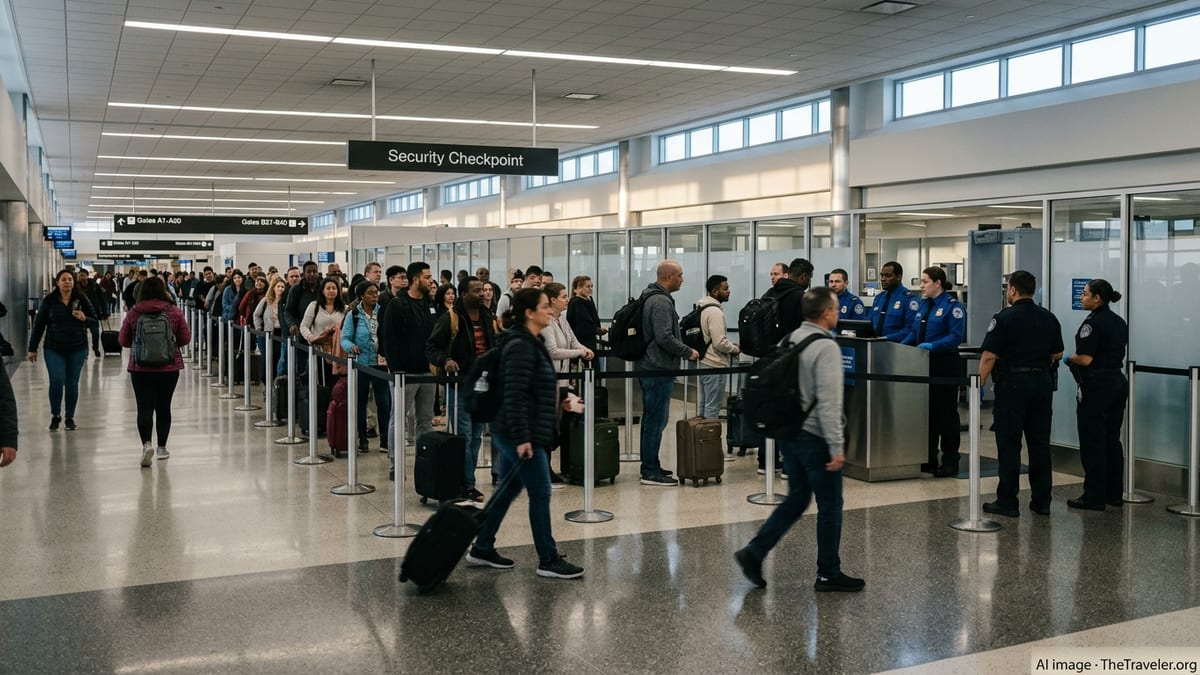
Plan to Extend ICE Presence Into the Heart of Airport Security
Reports indicate that the administration intends to deploy U.S. Immigration and Customs Enforcement personnel in and around TSA screening zones, including ID check stations, exit lanes, and gate areas. While the administration frames the move as a way to bolster security and leverage additional federal manpower during staffing shortages and political standoffs over funding, the practical effect would be to push immigration enforcement much closer to the core of domestic air travel.
Publicly available information shows that ICE agents are already a familiar presence at many major airports, particularly near international arrivals and in back‑of‑house investigative roles. What is different about the current plan is the prospect of routine ICE visibility at domestic security chokepoints that most travelers must pass through, regardless of whether they are flying internationally or have any connection to immigration proceedings.
Security analysts cited in recent coverage have raised basic operational questions about how officers trained for immigration enforcement would integrate into TSA’s highly regulated screening environment. TSA procedures, use‑of‑force rules, and layers of aviation security training are distinct from ICE’s focus on arrests, removals, and fugitive operations. Critics warn that collapsing those functions inside the same checkpoint could confuse both passengers and personnel, and could complicate accountability if something goes wrong.
Civil Liberties, Racial Profiling, and Data Sharing Under Scrutiny
Civil rights and immigrant advocacy groups have been documenting what they describe as a steady blurring of boundaries between aviation security and immigration control even before Trump’s latest announcement. Public guidance from legal organizations notes that TSA has expanded information sharing with ICE, using passenger manifests, Secure Flight data, and ID checks to flag individuals with outstanding immigration issues, sometimes on purely domestic routes.
Legal analyses published in recent months argue that visibly embedding ICE at TSA lanes heightens risks of racial profiling and unlawful questioning of citizens and lawful residents who appear foreign or speak accented English. Attorneys warn that travelers with prior immigration encounters, old removal orders, or pending asylum cases may face detention at checkpoints with little warning, altering the basic risk calculus of routine domestic travel for entire communities.
Privacy advocates also highlight the role of biometrics and watchlist technology in this evolving system. Lawsuits filed in federal court challenge the expanded use of facial recognition, mobile fingerprint scanners, and real‑time data sharing between TSA and ICE for interior enforcement, contending that these tools were never publicly authorized for domestic dragnet immigration checks. The prospect of ICE agents physically stationed at checkpoints is seen as the next step in normalizing those practices.
Legal Challenges Test the Limits of Federal Power Inside Airports
The Trump plan is emerging against a backdrop of intensifying litigation over immigration enforcement in transportation hubs. State and local governments, as well as civil liberties groups, have brought cases contesting what they describe as unconstitutional stops and searches by federal immigration agents in bus stations, train platforms, and airport concourses far from the border.
Recent lawsuits target policies that broaden ICE’s authority to question people about immigration status without individualized suspicion, and to use civil administrative warrants in ways that resemble criminal arrest powers. Legal filings argue that when such practices are imported into tightly controlled spaces like TSA checkpoints, travelers have little practical ability to walk away or decline questioning, raising Fourth Amendment and due‑process concerns.
Airport operators are caught in the middle. Public memoranda from several airport authorities acknowledge that they must comply with federal security directives in order to retain certification and funding, yet also face pressure from local officials who oppose expanded interior immigration enforcement. Attorneys for airport sponsors warn that attempts to restrict ICE access to secure areas can run afoul of federal grant assurances, even as communities demand clearer limits on what immigration agents can do around security lines.
Travel Disruptions and Operational Risks for TSA Checkpoints
Travel industry observers caution that overlaying immigration operations on TSA lines could worsen congestion and unpredictability for passengers. Aviation and travel publications already describe extended waits at some major hubs due to staffing strains, evolving technology, and an uptick in secondary screening. Adding a parallel layer of immigration questioning, arrests, or identity checks at or just beyond the checkpoint may stretch throughput even further.
Security experts note that TSA’s screening lanes are engineered for a carefully timed flow of passengers and baggage. When that flow is interrupted by arrests, interrogations, or document disputes that fall outside TSA’s usual remit, the ripple effects can cascade through departure boards, missed connections, and gate crowding. Airports in regions with significant immigrant or mixed‑status populations may experience disproportionate disruption as more travelers attempt to reroute, cancel flights, or consider alternative modes of transportation.
Some analysts warn of a potential chilling effect on U.S. domestic tourism and business travel, particularly for travelers who are not citizens or who come from families with mixed immigration status. Reports from immigration lawyers and community groups indicate that many clients are already reconsidering nonessential flights, building in extra hours for possible delays, or avoiding certain airports perceived as more aggressive in working with ICE.
States, Cities, and Travelers Adapt to a Changing Airport Landscape
In response to the expansion of immigration enforcement in transportation hubs, several states and municipalities have been exploring legal strategies to curb what they view as overreach. Proposed legislation in some jurisdictions would make it easier for residents to sue federal immigration officers for alleged constitutional violations, increase oversight of data sharing, or limit local cooperation with deportation operations. While these measures may not directly control federal agents inside airports, they signal growing friction between national policy and local political priorities.
Airport communities have also seen protests and public campaigns demanding greater transparency about how TSA and ICE coordinate. Demonstrations near terminals, city council hearings, and statements from local leaders reflect concern that travelers are being funneled into de facto immigration checkpoints when they simply intend to visit relatives, attend school, or take a domestic vacation.
Travel advocates and legal service providers are responding by publishing detailed know‑your‑rights materials specific to airports, including guidance on what questions travelers are legally required to answer, what documents they must present, and how to document potential misconduct. These resources emphasize that rules can differ sharply depending on whether a traveler is clearing customs, in a secure area, or standing in a public part of the terminal, adding another layer of complexity to an already confusing environment.
For now, the administration’s effort to place ICE closer to TSA checkpoints remains constrained by lawsuits, operational pushback, and unresolved constitutional questions. As the legal battles unfold, travelers face a shifting landscape in which the simple act of passing through airport security has become a frontline issue in the broader fight over immigration enforcement and civil liberties in the United States.