

More news on this day
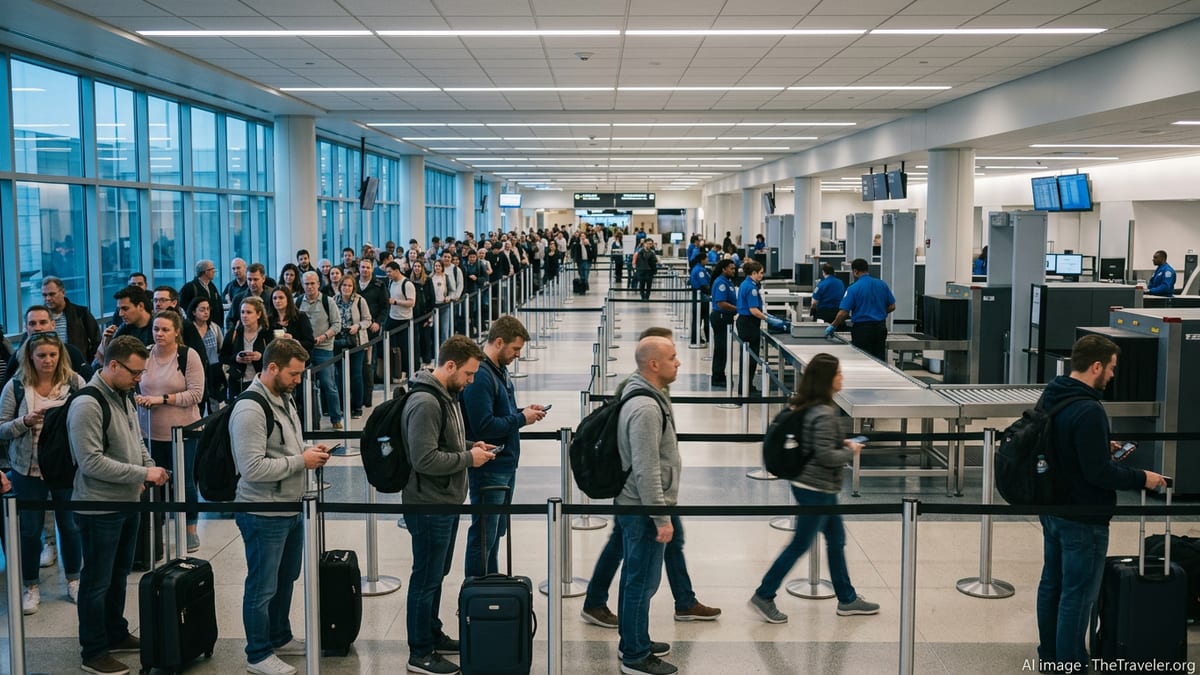
U.S. air travelers are facing hours-long security lines at major airports this week as Transportation Security Administration officer absences climb during a prolonged budget standoff that has left the agency funded only partially and many staff working without pay.
Shutdown Fallout Leaves TSA Officers Unpaid and Overstretched
The latest disruption stems from a partial shutdown of the Department of Homeland Security that began in mid-February, after Congress failed to agree on full-year spending for the current fiscal cycle. While aviation security has remained operational, roughly 95 percent of TSA screeners are classified as essential and must report to work even as their paychecks are delayed, according to agency and union officials.
Worker representatives say the strain is beginning to show. Sick calls are rising as officers juggle unpaid bills, child care and second jobs, creating day-to-day staffing gaps at checkpoints. At some airports, only a portion of lanes are open during peak periods, amplifying the impact of each absence and pushing wait times well beyond typical targets.
Internal data shared with lawmakers and referenced in recent congressional analyses highlight a fragile workforce that never fully recovered from last year’s record-length government shutdown and subsequent mass layoffs. The combination of frozen hiring, high turnover and renewed budget uncertainty has left many checkpoints operating with thin margins, where a handful of absences can ripple into major delays.
“People are proud of the mission, but they still have to pay rent,” one officer told a travel-industry group that has been organizing food drives and emergency grants for unpaid screeners. “You can only ask folks to work without pay for so long before they start looking for other options.”
Major Hubs Warn of Hours-Long Waits as Spring Break Crowds Build
The staffing squeeze is colliding with one of the busiest travel periods of the year. With spring break traffic surging, airports from New Orleans to Houston and Charlotte have issued public advisories urging passengers to arrive at least three hours before departure, even for domestic flights.
On Monday, several large hub airports reported early-morning checkpoint backups that stretched deep into ticketing halls. Local officials said they were working with TSA to add overflow queuing areas, redeploy non-screening personnel to manage lines and open additional lanes when officers were available. Nonetheless, photos shared by passengers showed crowded concourses and families waiting with luggage snaking past concessions stands.
Business travelers are also feeling the strain. With TSA PreCheck and other expedited screening options temporarily scaled back or intermittently suspended at some locations in order to concentrate limited staff on standard lanes, frequent fliers accustomed to breezing through security have been caught off guard by waits approaching an hour or more.
Airports stress that airline operations and runway capacity are not the primary bottlenecks at the moment. “Flights are ready, the planes and crews are here,” one airport spokesperson said. “The chokepoint is getting people through security with the personnel we have on duty.”
Budget Uncertainty Clouds TSA Workforce Planning
Behind the scenes, officials say the deeper challenge is a budgeting process that has left TSA and other homeland security agencies lurching from one short-term funding patch to another. The current impasse centers on the broader Department of Homeland Security budget, with competing proposals on Capitol Hill over overall spending levels and policy riders.
Without a stable, full-year appropriation, TSA leaders have limited flexibility to hire, train and retain officers at the scale needed to match record passenger volumes. Continuing resolutions keep the lights on, but they also lock in last year’s funding patterns, hindering the agency’s ability to add staff at chronically understaffed airports or invest in new screening technology that could increase throughput with fewer officers.
Recent reports from congressional researchers and aviation stakeholder groups warn that the cycle of shutdown threats and short-term fixes is eroding workforce morale and discouraging potential recruits from joining federal service. Prospective officers face lengthy background checks and training, only to see headlines about furloughs, missed paychecks and proposals for future staffing cuts.
Airport executives and airlines have pressed lawmakers to treat aviation security as a long-term infrastructure commitment rather than a bargaining chip. Industry letters in recent weeks have emphasized that even short disruptions can have outsized economic effects, especially when they strike during peak leisure travel periods and create the perception that air travel is unpredictable.
Travelers Adjust Plans Amid Fears of Missed Flights
For passengers, the immediate concern is making their flights. Social media feeds on Monday were filled with stories of travelers racing through terminals after spending two hours in security lines, as well as accounts of missed departures blamed on unexpectedly long waits at checkpoints.
Some families heading to beach destinations or ski trips have opted for early-morning or late-night departures in hopes of dodging the worst of the congestion. Others are rebooking connections through smaller airports that appear to be faring better, even if it means longer drive times or more complex itineraries.
Travel advisors recommend that U.S. passengers build extra buffer time into their plans for at least the next several weeks, particularly at large hub airports and those that serve as gateways for low-cost carriers popular with spring break travelers. They also urge flyers to complete as much pre-travel preparation as possible, such as checking in online and consolidating carry-on items to speed bag checks.
Parents traveling with young children or older relatives are being advised to consider wheelchairs or other assistance services where available, both to secure earlier access to checkpoints and to reduce stress in crowded lines. While TSA maintains dedicated lanes for travelers with disabilities and certain priority categories, those queues can also lengthen when staffing is strained.
Industry Braces for Wider Impact if Standoff Drags On
Airlines, airports and tourism businesses are closely watching Capitol Hill for signs of a breakthrough, warning that sustained staffing shortages at TSA could dampen demand just as international and domestic travel are approaching pre-pandemic levels. Prolonged uncertainty, they argue, risks driving some travelers to postpone trips or switch to alternative modes of transportation where possible.
Trade associations representing airlines, hotel companies and airport operators have stepped up lobbying efforts for a swift budget resolution that restores full DHS funding and provides targeted resources for frontline security operations. Some groups are also calling for protections that would shield essential aviation safety and security functions from future shutdowns, ensuring officers are both working and paid on time.
For now, TSA officials insist that security standards remain intact, even as they acknowledge the strain on checkpoints. The agency has begun temporarily reassigning officers from less busy airports to the most severely affected hubs and is reviewing options to adjust scheduling, overtime and deployment of canine teams to keep lanes moving.
Absent a definitive budget deal, however, travelers should expect the current pattern of sporadic long lines and rolling delays to continue. With no clear end date to the political standoff, the nation’s airport security queues have become one of the most visible symbols of how Washington’s budget battles are playing out for millions of everyday travelers.