

More news on this day
Airports in New Orleans, Houston, New York, and Atlanta are reporting some of the nation’s most severe security bottlenecks as historic absenteeism among Transportation Security Administration screeners collides with a prolonged Department of Homeland Security shutdown that began on February 14, 2026, causing widespread delays, missed flights, and heightened unease among travelers.
Get the latest news straight to your inbox!
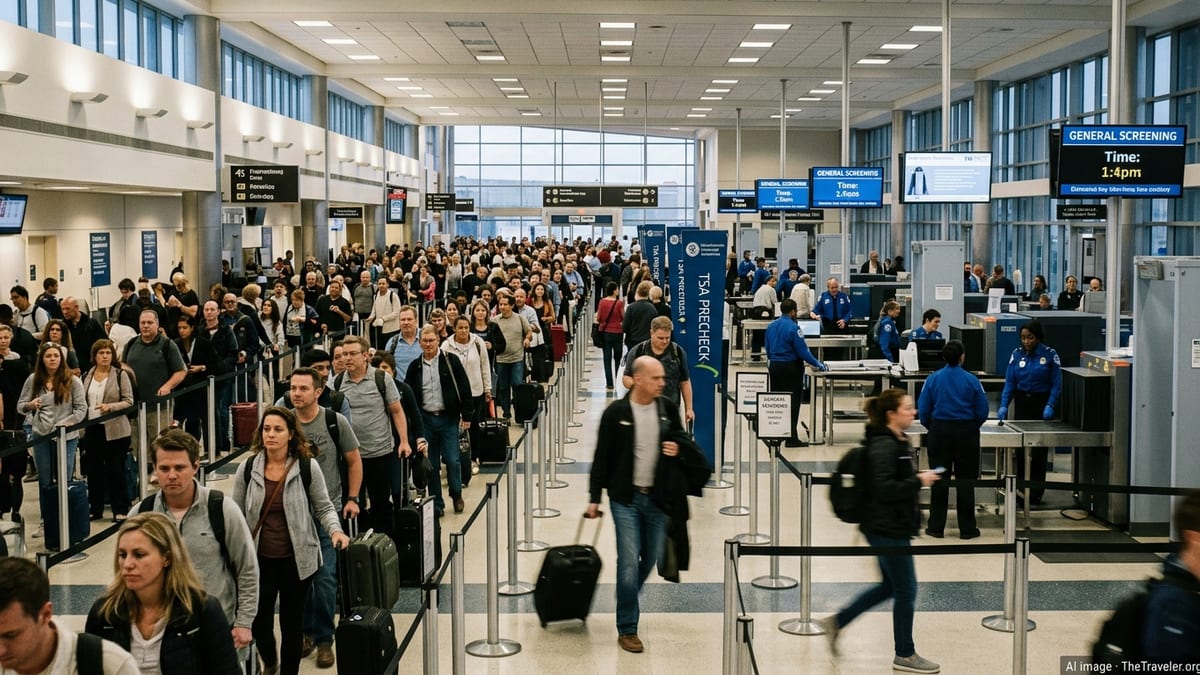
Shutdown Deepens, TSA Callouts Surge
The partial shutdown affecting the Department of Homeland Security has entered its fifth week, with publicly available information showing no clear path to a funding deal. As TSA employees miss paychecks, reports indicate that more screeners are calling out, transferring to other jobs, or exiting the agency altogether, eroding the staffing levels required to keep airport checkpoints running smoothly.
Recent coverage of the shutdown notes that TSA officers, classified as essential, are still required to report for duty despite not being paid on time. Union statements and policy analyses describe mounting financial strain on front-line workers, from difficulty affording transportation and child care to growing personal debt, factors that appear to be pushing absenteeism to new highs at some of the country’s busiest hubs.
While air travel continues nationwide, the reliability of screening operations has become increasingly variable from day to day and even hour to hour. Industry trackers and news outlets describe a patchwork pattern in which some airports experience near-normal conditions in off-peak windows, only to see lines suddenly spike when staffing fluctuates or a single checkpoint lane is taken offline.
Transportation analysts warn that this volatility is especially challenging during the spring travel period, when leisure demand, business trips, and major events such as college basketball tournaments all converge. With passenger volumes rising faster than TSA staffing can adapt under shutdown constraints, the likelihood of localized breakdowns at key nodes in the network has sharply increased.
Atlanta and New Orleans Face Extended Queues
Atlanta’s Hartsfield-Jackson International Airport, the world’s busiest by passenger volume, has emerged as one of the most visible pressure points. Recent reporting from national outlets describes days in which security lines in certain concourses have stretched for well over an hour, occasionally spilling into the ticketing halls after a combination of severe weather, checkpoint closures, and short staffing. Local dispatches note that wait times can moderate later in the same day, underscoring the fragile balance between staffing levels and surging passenger flows.
In New Orleans, Louis Armstrong New Orleans International Airport has also seen mounting strain. Travel forums and social media posts catalog morning peaks when travelers have waited up to two hours to clear security, with some missing departures despite arriving well before the typically recommended two-hour domestic window. Anecdotal accounts describe uneven operations, with a limited number of screening lanes open at times when multiple banks of flights are scheduled to depart.
Data shared in online aviation communities indicates that New Orleans now ranks among the airports with the highest TSA callout rates since the shutdown began, trailing only a handful of larger hubs. Frequent travelers report that midweek mornings and Sunday evenings are particularly vulnerable, as leisure and business itineraries overlap and airline schedules compress departures into tight waves.
Regional tourism stakeholders are closely watching the situation in New Orleans, where the airport serves as a critical gateway for festivals, conventions, and cruise traffic. Any sustained perception of unreliable security wait times could influence traveler behavior, encouraging earlier arrivals at the terminal and potentially discouraging last-minute weekend trips that the region relies on.
Houston Airports Struggle With Hourslong Waits
Houston’s two primary commercial airports, George Bush Intercontinental and William P. Hobby, have repeatedly featured in accounts of some of the longest security lines during the shutdown. Recent coverage notes that passengers at Bush Intercontinental endured waits of up to three hours on multiple days in March, particularly during early-morning departure banks when transcontinental and international flights depart in quick succession.
Local news reports and online travel communities also highlight Hobby as a hotspot for staffing gaps, with certain checkpoints reportedly seeing more than one-third of scheduled screeners absent on the most difficult days. That level of absenteeism has, at times, forced the consolidation of lanes and the temporary closure of secondary checkpoints, feeding into a cycle of congestion that can take much of the day to unwind.
Industry data services tracking delays show that these security-related backups are increasingly visible in flight statistics out of Houston, where late pushbacks and missed connections have become more common. While airlines can adjust schedules or add ground staff, they have limited ability to compensate when large numbers of passengers are physically stuck in security lines as boarding times approach.
Travel advisers are urging passengers bound for Houston’s airports to build in significantly more buffer time, with many recommending at least three hours for domestic departures during the shutdown period, especially for early-morning and late-afternoon flights when queues have historically been longest.
New York Hubs Add to the National Bottleneck
New York’s major airports have long been among the most delay-prone in the country, and the ongoing shutdown has amplified that reputation. Recent national coverage of weather-related disruptions across the eastern United States notes that security strains at airports such as John F. Kennedy International and LaGuardia have compounded the impact of storms, with already tight schedules becoming more vulnerable to relatively small operational hiccups.
Publicly available accounts from airlines and flight-tracking services indicate that on peak days, New York airports have experienced high rates of departure delays as passengers trickle through heavily burdened checkpoints. When security waiting times extend beyond an hour, even minor schedule disruptions can cause cascading missed connections, particularly for international passengers facing longer document checks.
Analysts observing the network effects of the shutdown describe New York as a key amplifier of nationwide disruption. Because so many transatlantic and cross-country routes flow through the region’s airports, a localized spike in security delays there can send ripples through hubs in the Midwest, South, and West Coast, including those not directly experiencing the worst TSA absenteeism.
Local traveler anecdotes describe a growing sense of unpredictability, with some days passing without serious issues and others marked by sudden surges in lines that overwhelm available staffing. The lack of consistent, real-time information about checkpoint conditions has led many New York–area travelers to revert to extremely early arrivals, adding to crowding in terminals even before security checkpoints open at full capacity.
Security Concerns and Traveler Strategies
Beyond inconvenience, the spike in TSA absenteeism has raised broader questions about security coverage and risk management during a prolonged funding lapse. Security experts cited in recent academic and policy analyses note that while the TSA is required to maintain minimum staffing thresholds, sustained gaps in experienced personnel can make it more difficult to manage surges, handle secondary screenings, and respond quickly to atypical situations in crowded checkpoints.
Published research on the evolution of airport security delays suggests that high-volume hubs like Atlanta, New York, and Houston play an outsized role in how disruptions propagate through the national system. When screening operations at these airports fall below optimal staffing for extended periods, the probability of systemic delays and operational stress elsewhere in the network increases.
Travel industry guidance circulating in recent days strongly encourages passengers to take a more conservative approach to timing and planning. Common recommendations include arriving at least three hours before departure at the hardest-hit airports, traveling with carry-on luggage only when possible to reduce time at check-in, and scheduling longer layovers on connecting itineraries through major hubs affected by the shutdown.
With negotiations over Homeland Security funding still unresolved, travelers using New Orleans, Houston, New York, and Atlanta in the coming weeks are likely to face continued uncertainty. For now, publicly available information points to a travel landscape in which flexibility, patience, and extra time at the airport are becoming essential tools for navigating an aviation system under sustained pressure from historic TSA absenteeism.