

More news on this day
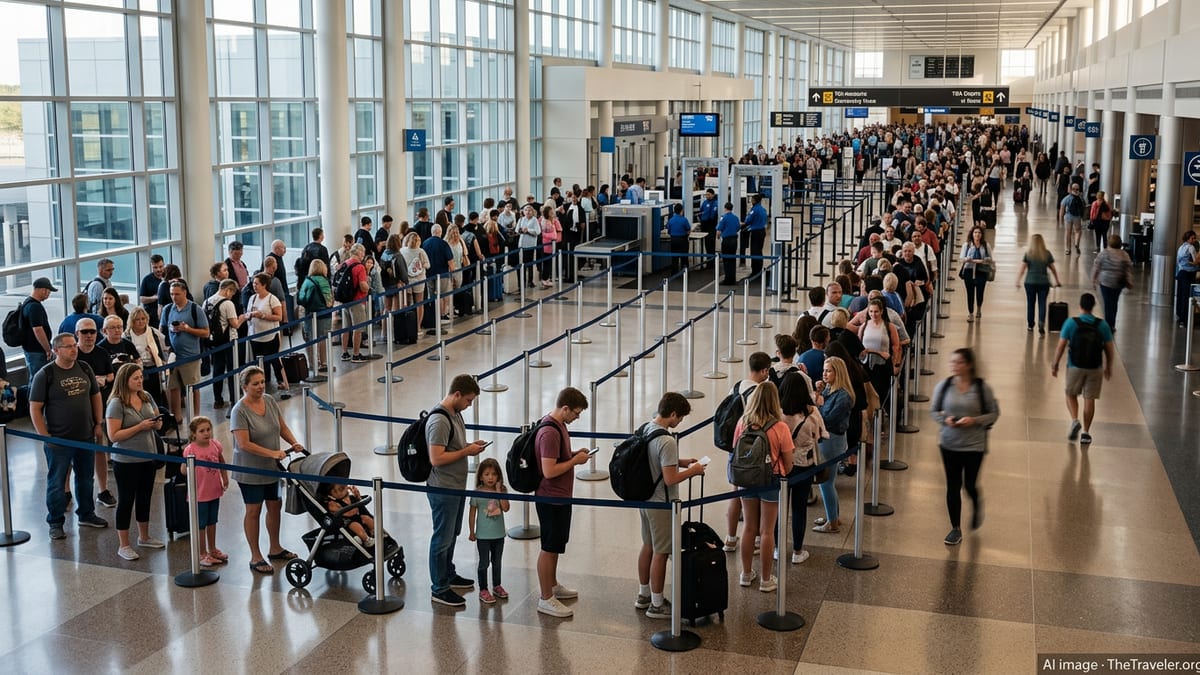
Hours-long security lines, missed flights and crowded concourses are confronting U.S. spring break travelers this March, as Transportation Security Administration checkpoints strain under near-record passenger volumes and the added stress of a partial federal government shutdown.
Get the latest news straight to your inbox!
Record Volumes Collide With a Fragile Security System
Publicly available travel forecasts and airport data indicate that U.S. passenger traffic heading into March 2026 is approaching or surpassing pre-pandemic highs at a number of major hubs. Recent figures from airports including Las Vegas, Seattle and Charlotte show that 2024 and 2025 already set or neared historic records for annual passenger counts, setting the stage for an especially intense spring break season this year.
Federal transportation statistics show that U.S. airlines carried more than 83 million passengers in March 2025, only slightly below the previous year, reinforcing that the baseline for spring travel demand is already extremely high. Industry groups note that global demand in early 2026 continues to rise, and while some domestic markets have softened, popular leisure destinations in the United States remain busy, particularly during school holiday periods.
In that context, the current surge is hitting an airport system that was already operating close to capacity. Several airport authorities describe multi-year streaks of record or near-record passenger totals, adding that security screening volumes on peak days are among the highest ever recorded. Even modest increases in traffic, they suggest, can tip TSA operations into visible strain.
Shutdown Fallout Turns Long Lines Into Full-Blown Gridlock
The immediate pressure on TSA operations this spring is being magnified by a partial shutdown of the Department of Homeland Security, which includes the agency’s screening workforce. According to published coverage from national and local outlets, the funding lapse has led to uneven staffing levels at checkpoints, with some officers working extra shifts and overtime to keep lanes open while others call out or are reassigned.
Reports from Houston, New Orleans and other cities last weekend described standard security wait times swelling to more than three hours at the height of the rush. Social media posts amplified images of snaking queues stretching into ticketing halls and even parking structures, while airport advisories urged passengers to arrive four to five hours before departure in hopes of clearing security in time.
Travel industry coverage notes that the shutdown has also disrupted trusted traveler and expedited entry programs that normally help siphon off some of the load from standard TSA lanes. The suspension and gradual restart of services such as Global Entry have pushed more returning international passengers into regular processing streams, further slowing flows at already crowded facilities.
Aviation analysts warn that the combination of heavy leisure demand, constrained staffing and political uncertainty over funding makes the current spring break period especially vulnerable to cascading delays. Once lines reach a certain length, they argue, even small procedural glitches or equipment outages can turn a busy day into system-wide gridlock.
Hot Spots From Houston to Florida as Spring Break Peaks
The pain is not evenly distributed. Coverage from travel and regional news outlets points to particular stress at sun and theme-park gateways, from Texas to Florida. Houston’s William P. Hobby Airport and George Bush Intercontinental have been among the hardest hit, with area travel reports noting that more than two million spring break passengers are expected to pass through the city’s airports over a matter of weeks.
In Florida, where millions of visitors are bound for Orlando’s theme parks and South Florida’s beaches, local tourism and aviation coverage warns that major airports such as Orlando International and Miami International are bracing for record or near-record holiday crowds. Advisories there similarly urge travelers to arrive much earlier than usual, with some carriers recommending three hours for domestic flights and four for international departures.
Other leisure-oriented hubs and mountain gateways are seeing early signs of strain as college and private school breaks begin in waves across March. Travelers have reported early-morning TSA queues in Denver, Salt Lake City and other connection points that spill far beyond normal roped areas, even on weekdays. In contrast, some medium-sized and regional airports report relatively smooth operations so far, highlighting how unevenly the pressure is being felt across the network.
Online discussions among passengers indicate that conditions can change quickly, even at the same airport, depending on the time of day and the particular checkpoint. A handful of recent accounts from New Orleans, for example, describe a sharp shift from hours-long lines at the weekend peak to minimal waits by midweek as schedules and staffing adjusted.
Airports Scramble With Tech Fixes and Operational Workarounds
Airport operators are responding with a patchwork of mitigation efforts aimed at keeping passengers moving despite the strain on TSA resources. At some large hubs, officials have expanded real-time wait time displays, pushing checkpoint estimates to terminal monitors and mobile apps so travelers can choose the shortest line and plan their arrivals with more precision.
Other facilities are reconfiguring queuing areas, opening overflow lanes and redeploying customer service staff to guide passengers and pre-sort those with imminent departures. In certain markets, airport management has encouraged airlines to stagger flight banks or adjust schedules slightly to spread demand more evenly throughout the day, although such measures can take time to implement and require carrier cooperation.
Industry coverage highlights that infrastructure investments made over the past several years, such as expanded lobbies and consolidated security halls, are helping some airports absorb the shock. New lobby expansions in cities like Charlotte and capital projects in Seattle and Las Vegas have added screening capacity and circulation space, which can reduce choke points even when lines are long.
Still, experts note that such upgrades cannot entirely offset the impact of nationwide staffing constraints or a prolonged federal funding dispute. Checkpoint throughput ultimately depends on the number of trained TSA officers available at any given moment, as well as the reliability of screening equipment and the complexity of the passenger mix.
Travelers Adjust Strategies Amid Uncertain Weeks Ahead
With the peak of spring break travel likely to extend through late March, travelers are adapting expectations and strategies. Consumer travel guides and airline advisories increasingly emphasize arriving much earlier than in previous years, especially for morning departures from large hubs and popular leisure gateways.
Passengers are also being urged to build longer connection times into itineraries, particularly when connecting between airlines or terminals that require a fresh trip through security. Travel writers recommend monitoring TSA and airport apps for live wait time data on the day of travel, and suggest that families consider off-peak departure times where schedules allow.
Enrollment in programs that can speed security or border processing, such as TSA PreCheck and Global Entry, continues to be encouraged despite recent shutdown-related interruptions. While these services do not eliminate lines altogether, they can significantly reduce screening friction once staffing and system operations stabilize.
As negotiations over federal funding continue in Washington, aviation stakeholders caution that conditions at checkpoints may remain volatile. For millions of Americans heading to beaches, theme parks and family reunions over the coming weeks, the spring break journey may begin not with a relaxing getaway, but with a tense wait in an airport security line that seems to have no end in sight.