

More news on this day
American travelers heading into peak spring break are facing a volatile mix of airport gridlock, European strikes, and severe weather, as new disruptions emerge across several key routes and destinations.
Get the latest news straight to your inbox!
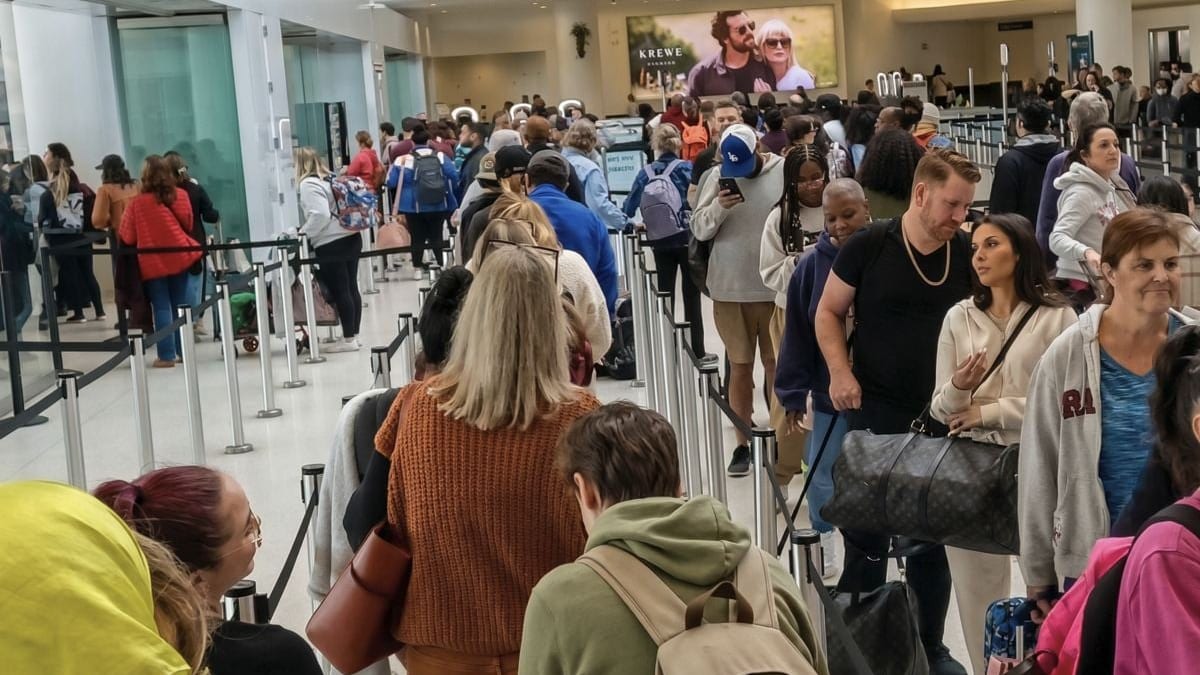
Image by traveloffpath.com
TSA Staffing Crisis Creates Nationwide Airport Gridlock
Security screening has become the biggest wildcard in U.S. air travel as a partial federal government shutdown continues to squeeze the Transportation Security Administration. Publicly available data and recent news coverage indicate that hundreds of TSA officers have resigned since mid-February, while callout rates at major hubs remain elevated. The result has been hours long security lines at some of the country’s busiest airports, particularly over recent weekends.
Major hubs such as Atlanta, Houston, Baltimore/Washington and several large coastal airports have reported security wait times stretching well beyond 90 minutes at peak periods, with social media images showing lines snaking through ticketing halls and into baggage claim areas. Some checkpoints have operated with reduced lanes, concentrating passengers into fewer screening points and amplifying delays during morning and evening banked departures.
The White House has moved to authorize emergency pay for TSA officers in an attempt to stabilize staffing, and Congress has advanced short term funding for parts of the Department of Homeland Security. However, industry reporting suggests that any improvement in screening capacity will lag behind the policy announcements, given the cumulative impact of resignations and ongoing worker fatigue. Airport advisories continue to urge passengers to arrive significantly earlier than usual until patterns normalize.
For Americans flying in the coming days, the most practical adjustment is time. Many airlines and airports are now recommending that travelers allow at least three hours for domestic flights from large hubs and four hours or more for international departures, particularly in the early morning and late afternoon peaks. Travelers with tight connections should consider rebooking to longer layovers where possible, since missed flights linked to security delays are proving common.
ICE Agents at Airports Raise Questions for International Travelers
The deployment of Immigration and Customs Enforcement officers to assist at security checkpoints has become another defining feature of the current airport environment. According to recent national coverage, roughly 150 ICE agents have been sent to more than a dozen airports, including some of the busiest international gateways. The move is framed in public reporting as a response to escalating TSA absences and the need to keep security lanes open during the shutdown.
While aviation officials emphasize that core screening protocols remain under TSA authority, the presence of ICE personnel in and around security lines is a notable change for many travelers. Civil liberties organizations have publicly questioned whether immigration enforcement activities could expand in these areas, and legal experts are advising passengers to understand the differences between TSA screening requirements and interactions that may be voluntary.
For Americans departing or returning from overseas, this convergence of security and immigration functions may create additional stress, particularly for travelers carrying sensitive documents or those traveling with noncitizen family members. Travel industry guidance now frequently encourages passengers to carry digital copies of key documents, remain calm and cooperative in all checkpoint interactions, and document any unusual encounters as long as it can be done safely.
Despite these tensions, airport operations data shows that flights themselves are largely continuing to operate, with the primary impact felt in the time required to reach the gate rather than in widespread cancellations. Even so, the changed security landscape is becoming an important factor in how travelers plan departures, connections, and arrival times at U.S. airports this spring.
Spain Strikes Threaten Easter Holiday Plans
Across the Atlantic, Spain is confronting its own wave of travel disruption just as Easter and early summer bookings ramp up. Following a deadly commuter rail derailment in Catalonia in January, labor tensions in the country’s transport sector have intensified. Trade unions representing train drivers and other rail workers have called a series of strikes over safety conditions and staffing, and published schedules point to rolling walkouts across key corridors in the weeks ahead.
These rail actions are coinciding with localized strike threats in aviation and urban transit, especially around major hubs such as Madrid and Barcelona. While the exact impact varies by day and region, several recent strike days have already produced reduced frequencies on intercity routes, shuttle bus delays to major airports, and crowding on the services that do operate. Tourism industry analysts note that Spain remains one of Europe’s most visited countries for U.S. travelers, making any disruption especially consequential during peak holiday periods.
Spanish law often requires a minimum level of “essential services” during strikes, so a complete shutdown of rail or air travel is unlikely. However, reduced timetables and last minute changes can still derail carefully planned itineraries, particularly for travelers relying on tight connections between long haul flights and domestic trains. Reports from previous strike days show long queues at ticket counters and information desks, as visitors scramble to rebook or reroute.
Americans with upcoming trips to Spain are being advised by tour operators and travel insurers to build in more flexibility than usual. That can include booking fully refundable tickets on key rail legs, considering alternative airports or domestic flights within Spain, and allowing extra time in Madrid or Barcelona before onward journeys to coastal or rural destinations. Monitoring local media and transport operator announcements in the 24 to 48 hours before each travel day is also emerging as essential practice.
Cyclone Narelle Poses Serious Threat to Australia Routes
In the Southern Hemisphere, a powerful tropical system is creating fresh concerns for travelers heading to or through northern Australia. Regional meteorological updates describe Severe Tropical Cyclone Narelle as a high intensity storm in the Coral Sea, tracking westward toward the Queensland coast. The current Australian cyclone season has already produced several significant storms, and forecasts suggest that Narelle could bring damaging winds, heavy rain, and coastal flooding to parts of Far North Queensland.
The main tourist hubs of Cairns, Port Douglas, and the surrounding Great Barrier Reef region sit within the broader zone of interest for forecasters, even as the precise landfall point and intensity remain subject to change. Airlines serving domestic and some international routes into northern Queensland have historically responded to comparable storms with preemptive schedule adjustments, including cancellations of smaller regional flights and the consolidation of services into larger aircraft or alternative airports.
Australian emergency bulletins typically encourage residents and visitors in cyclone prone areas to finalize preparations several days before the most intense conditions arrive. For American travelers, that can mean adjusting plans to leave earlier than scheduled, delaying arrivals until after the system passes, or shifting activities southward to destinations less affected by cyclone impacts. Travel insurance policies that cover weather related disruption may be particularly relevant, although coverage usually requires that the policy be purchased before a storm is widely forecast.
Even travelers not heading directly into northern Queensland may feel the ripple effects of the cyclone. Long haul flights that usually connect through Brisbane or other eastern Australian gateways could face knock on delays if aircraft and crew rotations are disrupted. Industry observers recommend that passengers transiting Australia in the next week keep contact information up to date with airlines and download carrier apps for real time push notifications.
Security and Geopolitical Flashpoints Reshape Long Haul Plans
Beyond immediate operational disruptions, a series of security and geopolitical developments are also reshaping how Americans plan long haul trips. In the Middle East, continued conflict involving Iran has led to updated travel advisories for nearby states, including the United Arab Emirates and Türkiye. Recent embassy alerts and travel magazine reporting describe a combination of elevated missile and drone risk, temporary airspace closures, and sudden flight cancellations or diversions affecting major hubs.
Dubai and Abu Dhabi, long popular as stopover points between North America, Asia, and Africa, are central to this uncertainty. Public guidance now commonly urges travelers not to proceed to the airport without a confirmed ticket and direct communication from the airline, since flights can be altered or canceled on short notice. Some carriers have rerouted flights around sensitive airspace, lengthening flight times and complicating same day connections.
In Türkiye, authorities have adjusted consular operations in certain regions, and Americans are being encouraged through public advisories to remain aware of evolving security patterns, particularly in border areas. While tourism to Istanbul, Cappadocia, and coastal resort towns continues, experts note that travelers should stay flexible, keep copies of key documents backed up, and register itineraries where relevant so that emerging advisories can be communicated quickly.
As these security dynamics intersect with operational concerns like TSA staffing, Spain’s transport labor actions, and severe weather, the picture for international travel this spring is markedly more complex than in recent years. For many Americans, the safest strategy is to build redundancy into every critical leg of a trip, from U.S. departure airports to overseas connections, rather than relying on narrow margins that depend on everything running perfectly.