

More news on this day
Newly released Transportation Security Administration performance figures and airline tracking data point to another bruising week for U.S. air travel, with more than 3,000 flights delayed or canceled nationwide and severe knock-on disruption at major hubs in Houston, New Orleans, Dallas, Chicago and New York City.
Get the latest news straight to your inbox!
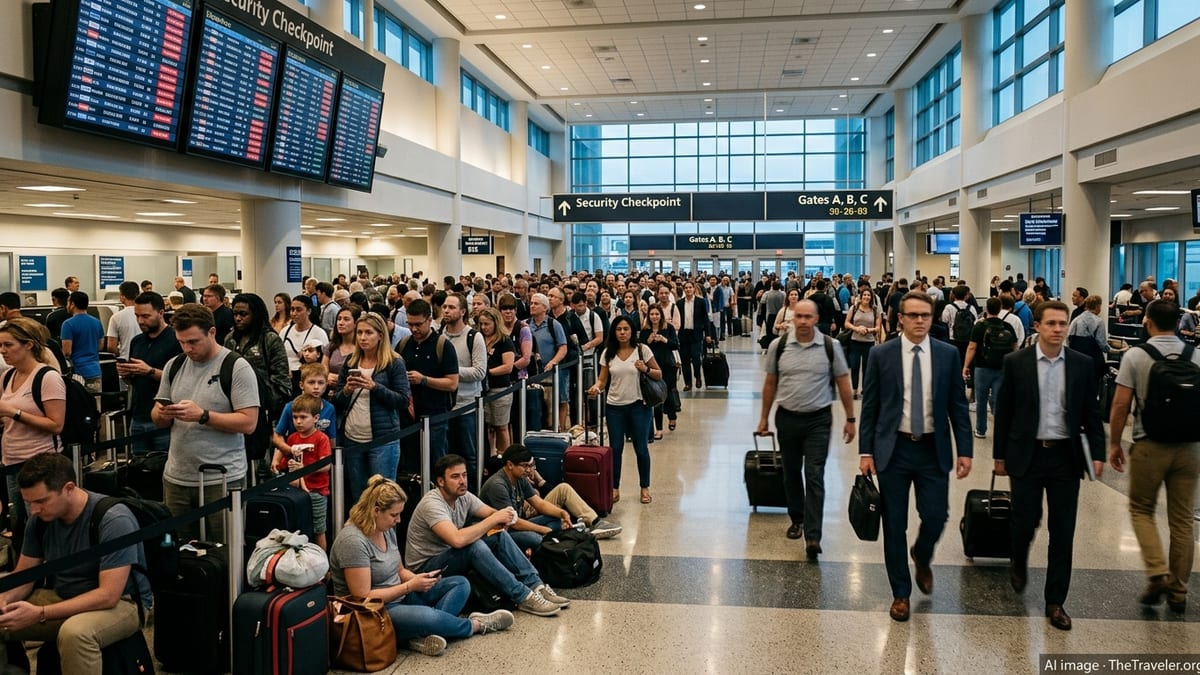
TSA Delay Metrics Underscore Strain on Security System
Publicly available Transportation Security Administration throughput dashboards and associated performance data for mid-March show a sharp uptick in security-related congestion at checkpoints across the United States. The figures, combined with airline on-time statistics, indicate that security screening bottlenecks contributed to thousands of missed departure slots and knock-on schedule problems, particularly at already busy spring travel gateways.
Analysts reviewing the data note that while weather and airline operations remain the leading causes of disruption, TSA-logged checkpoint backups are increasingly visible in national delay statistics. Industry-facing reports highlight that extended screening times at high-volume airports can ripple through the network, forcing aircraft to depart late, miss connection windows, and arrive out of position for subsequent flights.
Recent academic work using long-term Bureau of Transportation Statistics data has also traced a growing share of delay minutes to security and broader National Airspace System disruptions. These studies suggest that, in the post-pandemic era, longer and less predictable checkpoint queues have become a measurable part of the delay equation, especially at large hubs serving complex domestic and international banks of flights.
In this latest spell of disruption, the combination of TSA checkpoint congestion and heavy travel demand left travelers facing prolonged waits at security, with knock-on boarding delays and missed departures that compounded throughout the day. By evening, systems designed around tightly timed turnarounds were struggling to recover.
More Than 3,000 Flights Hit Nationwide
Flight-tracking platforms and airline operations reports indicate that more than 3,000 flights across the U.S. were canceled or delayed over several consecutive days, as security logjams, staffing pressures and residual weather impacts converged. The bulk of affected flights were domestic, but international operations also saw disruption where late-arriving aircraft and crews could not be turned quickly enough.
Industry data show that even modest delays at security during the early morning peak can have outsize effects. When the first wave of departures leaves late, aircraft often miss scheduled arrival slots at connecting hubs, pushing back later flights that rely on the same aircraft or crews. Airlines can sometimes absorb isolated delays with spare capacity, but the current pattern of widespread strain has limited their flexibility.
Public dashboards maintained by the TSA show passenger volumes approaching or exceeding pre-pandemic levels at many airports, particularly on peak spring break days. With federal staffing affected by budget uncertainties and seasonal surges, checkpoint throughput has struggled to keep pace. As a result, operators have had to hold some departures to accommodate passengers stuck in security lines, while other flights have departed with empty seats and stranded ticketed travelers.
The 3,000-flight figure captures both outright cancellations and significant delays, typically defined in industry reporting as more than 15 minutes behind schedule. The true impact for passengers is larger, as missed connections, rebookings, and overnight stays do not always appear clearly in headline statistics but represent substantial disruption on the ground.
Major Hubs From Houston to New York Face Gridlock
Operational data and local reporting highlight pronounced disruption at key nodes in the U.S. aviation network, including Houston, New Orleans, Dallas, Chicago and New York City. These hubs serve as critical transfer points and regional gateways, so any slowdown can have cascading effects across dozens of downstream airports.
In Houston, both the primary international hub and the secondary domestic airport experienced heavy morning and evening queues, with some travelers reporting multi-hour waits to clear security. At New Orleans, a sharp increase in departing passengers during the peak spring festival and cruise season collided with constrained checkpoint capacity, contributing to extensive lines and late departures.
Dallas and Chicago, among the country’s busiest connecting hubs, saw banks of flights pushed back as arriving aircraft missed their scheduled slots and gates remained occupied. Even small delays in these interlinked systems can produce rolling congestion, as crews reach duty-time limits and aircraft rotations are disrupted. New York City’s multi-airport system added further complexity, with weather-sensitive operations at congested airports compounding the impact of any security-related hold-ups.
Reports from other large airports, including Orlando, Atlanta and Boston, describe similarly volatile conditions, with days of relatively smooth operations followed by sudden surges in wait times and schedule changes. The patchy nature of the disruption has left travelers uncertain about how much extra time to budget for check-in and security, further complicating demand patterns.
Spring Travel Demand and Federal Budget Tensions Collide
The current wave of disruption comes at a difficult moment, as strong spring travel demand overlaps with federal budget tensions that have affected staffing and planning at transportation-related agencies. Passenger volumes are climbing in tandem with school holidays, college breaks and major sporting events, adding stress to an aviation system still adjusting to post-pandemic patterns.
Publicly available information on federal operations shows that short-term funding measures and administrative constraints can reduce flexibility for agencies tasked with staffing security checkpoints. Even when most personnel remain on duty, overtime, training schedules and the ability to surge staff to busy airports may be limited, leaving less resilience when travel peaks or weather conditions deteriorate.
Industry analysts say the combination of heavy demand, constrained staffing and volatile weather has created a “perfect storm” for delay propagation. Airlines, airports and federal agencies all operate on tight margins of error, and the loss of even a small buffer at one point in the system can magnify into widespread disruption by day’s end. Recent storms in the Midwest and along the East Coast, documented in meteorological reports, have further tightened those margins by forcing ground stops and runway closures.
The result has been a pattern of rolling disruption rather than a single, easily isolated failure. Travelers who cleared security quickly one day may encounter gridlock the next, even at the same airport and departure time, reflecting the sensitivity of the system to shifting staff levels and demand spikes.
Growing Calls for Transparency and Long-Term Fixes
As the latest figures on security delays and flight disruptions circulate, consumer advocates and transportation researchers are focusing on transparency and systemic reforms. Many argue that passengers need clearer, real-time information on checkpoint wait times, staffing constraints and the likely impact on departure schedules, particularly at large hubs known to experience repeated bottlenecks.
Some airports have expanded the use of wait-time displays, app-based alerts and virtual queuing tools that allow passengers to reserve security windows. However, adoption is uneven, and these tools depend on accurate data feeds from both airport operators and federal screening agencies. Without alignment between the different parties responsible for moving passengers from curb to gate, even well-designed digital tools can fall short.
Policy-focused reports in recent months have also highlighted the broader economic cost of recurrent aviation disruption, from lost productivity to missed business opportunities and weakened confidence in domestic tourism. Studies examining delay patterns across major hubs such as Chicago, Dallas, Houston and New York have quantified millions of passenger-hours lost each year to congestion and schedule instability.
For now, travel advisories from airports and airlines continue to emphasize early arrival, flexible itineraries and careful monitoring of flight status. Until security staffing, infrastructure upgrades and air traffic capacity catch up with demand, publicly available TSA delay data suggest that episodes of widespread disruption like this week’s 3,000-flight hit are likely to remain a recurring feature of the U.S. travel landscape.