

More news on this day
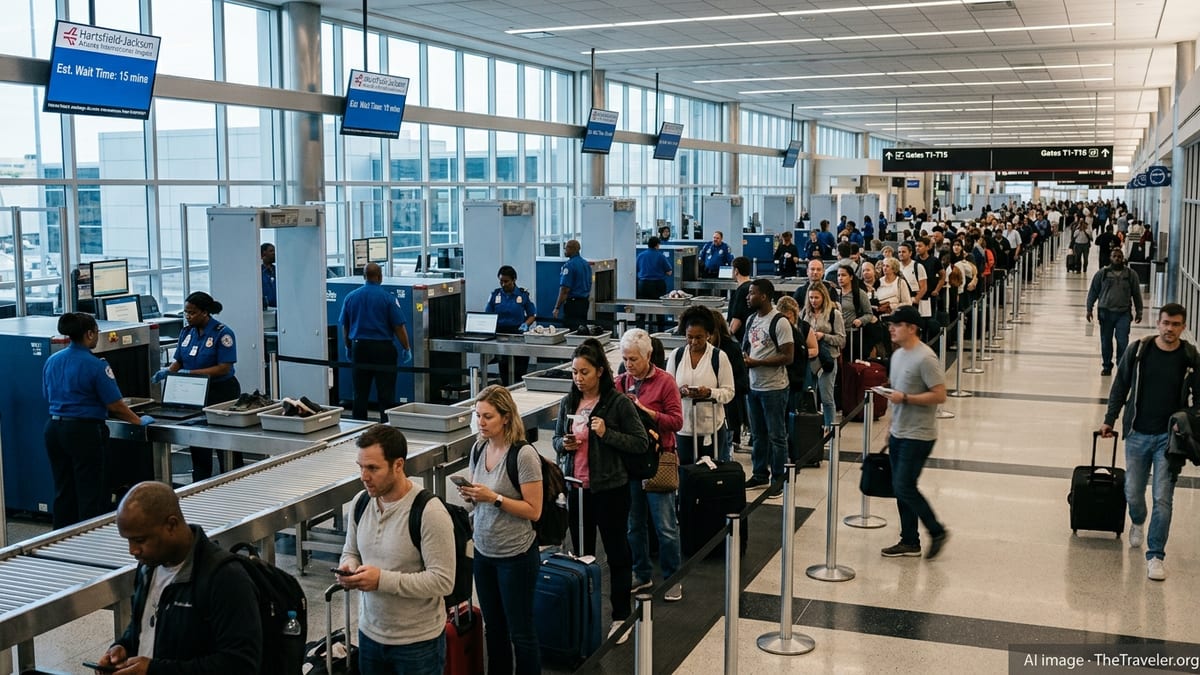
Surging security wait times at Atlanta and Houston airports are colliding with peak spring travel, raising fresh concerns that prolonged screening delays could erode tourism and business travel to two of the United States’ busiest aviation hubs.
Get the latest news straight to your inbox!
Shutdown-Fueled Staffing Crunch Hits Key Southern Gateways
Publicly available information shows that Hartsfield-Jackson Atlanta International Airport and Houston’s Bush Intercontinental and Hobby airports have been among the hardest hit by Transportation Security Administration staffing shortages during the current partial federal government shutdown. Recent coverage by national and local outlets describes a pattern of unscheduled absences, attrition among screening officers and checkpoint closures that has turned routine security checks into hourslong ordeals at times.
Reports indicate that some travelers in Atlanta and Houston have faced waits of 90 minutes to three hours at peak periods this month, with social media posts and local reporting describing lines stretching deep into ticketing halls. While conditions fluctuate day to day and sometimes even hour to hour, travel advisories from airport operators and travel assistance firms now routinely recommend arriving at least three hours before departure for many domestic flights through these airports.
The strain comes as Atlanta and Houston play outsized roles in the national air network. Atlanta, long ranked as the world’s busiest airport by passenger volume, and Houston, a key connecting point for both domestic and Latin American routes, are critical transfer nodes. Prolonged disruption at either location can ripple across airline schedules nationwide, amplifying the tourism impact far beyond the two metropolitan regions.
Broader context from transportation and labor coverage links the current crunch to an already challenging environment for TSA recruitment and retention. The shutdown has reportedly forced officers to work without pay for weeks at a time, prompting some to seek temporary second jobs or leave the agency altogether, compounding high baseline turnover and pushing checkpoint staffing below typical levels just as spring break crowds surge.
Early Signs of Tourism Fallout for Atlanta and Houston
Tourism analysts and travel industry reporting suggest that the timing of the wait-time spike is particularly sensitive for Atlanta and Houston. Both cities are marketing themselves aggressively as leisure and convention destinations in the run-up to major events, from large-scale trade shows to the buildup toward the 2026 FIFA World Cup matches planned in several U.S. host cities. Extended security delays risk undermining that positioning if they become synonymous with the travel experience.
Local business groups and hospitality leaders have spent recent years trying to rebuild visitor confidence after pandemic-era disruptions. Atlanta has promoted its role as a convenient one-connection gateway to the American South, while Houston has highlighted its culinary scene, cultural institutions and cruise connections through nearby Gulf ports. Travel trade publications now warn that repeat visitors may reconsider itineraries if they associate these hubs with unpredictable queues and missed flights.
Short-term effects are already visible in anecdotal indicators. According to traveler accounts compiled by regional media and online forums, some passengers connecting through Atlanta and Houston have voluntarily rerouted via alternative hubs, even at higher fares, to minimize the risk of missing tight connections. Corporate travel managers quoted in business coverage describe building in longer connection windows and, in some cases, favoring airlines that can route employees through less congested airports.
Tourism economists note that even modest shifts in traveler behavior can have an outsized financial impact. If visitors choose itineraries that bypass Atlanta or Houston, hotel nights, restaurant spending and convention bookings in those cities can suffer, while airports may see reduced non-aeronautical revenue from retail and parking. The concern is not only immediate disruption but also the potential for a reputational drag that lingers beyond the life of the current shutdown.
What Travelers Through Atlanta and Houston Should Expect
For passengers with upcoming trips, the current situation means planning around volatility. Public dashboards maintained by airport authorities and third-party providers show that security wait times at both Atlanta and Houston can swing dramatically within a single day. Morning rushes and late-afternoon bank departures are particularly prone to spikes, especially when they coincide with weather disruptions or irregular operations elsewhere in the system.
Travel guidance from airlines, airports and travel assistance organizations now broadly converges on a conservative approach. Many recommend arriving at least three hours before departure for domestic flights from Atlanta and Houston, and up to four hours ahead for international departures, particularly for travelers without TSA PreCheck or similar expedited screening. Even for passengers enrolled in trusted traveler programs, recent policy changes tied to the shutdown, including intermittent suspensions and reduced staffing at dedicated lanes, can erode the time savings those programs usually provide.
Passengers are also being urged by consumer advocates and travel experts to treat posted wait-time estimates with caution. Recent traveler reports out of both cities describe discrepancies between official online dashboards and actual conditions on the ground, with some checkpoints posting far shorter waits than passengers encountered once in line. In response, seasoned travelers are increasingly relying on a combination of airport mobile apps, airline alerts and real-time accounts from social media to decide which terminal entrance or checkpoint offers the most reliable throughput.
Families with young children, passengers with mobility considerations and travelers carrying special items such as medical equipment are advised to factor in additional buffer time. Some travel health and accessibility organizations note that extended standing in densely packed lines can be particularly taxing for these groups, making early arrival and careful planning even more important.
How the Crisis Could Reshape Airport Operations
The turbulence around TSA wait times is also accelerating longer-term debates over how Atlanta and Houston manage passenger flows. Planning documents and city capital improvement plans already called for investments in additional checkpoints, technology upgrades and more granular wait-time monitoring. The current crunch is likely to sharpen pressure for these projects to move more quickly, with a focus on automating routine screening tasks and improving real-time data sharing with travelers.
Aviation analysts observing the situation point to both airports’ efforts to use dynamic checkpoint management, shifting staffing and opening or closing lanes in response to live demand. However, limited staffing pools make it difficult to fully realize these strategies. Coverage in industry outlets notes that if TSA vacancies remain elevated, airport operators may push harder for expanded use of private contractors for non-screening roles, or for federal policy changes that allow more flexible scheduling, pay incentives or localized hiring pilots at the most congested hubs.
The crisis is also feeding into broader national discussions about how to measure and report security wait times. Organizations representing airlines, airports and business travel interests have urged federal agencies to adopt clearer performance benchmarks, such as maintaining average waits below 10 or 15 minutes during normal operations, along with transparent reporting when those targets are missed. Experiences in Atlanta and Houston are being cited as examples of how opaque or inconsistent data can leave travelers unable to make informed decisions about when to arrive.
In parallel, both cities’ tourism and economic development agencies are likely to recalibrate their messaging. Rather than focusing solely on route networks and connectivity, future marketing campaigns may need to emphasize resilience measures, such as added staffing during peak seasons, investments in modern scanners that reduce bag checks and partnerships with technology firms to streamline identity verification. For global travelers weighing multiple hub options, reliable security throughput is increasingly part of the competitive equation.
Practical Steps for Protecting Your Trip
For now, travel specialists suggest that individual passengers take a proactive role in managing the risk of disruption when flying through Atlanta or Houston. Building extra time into itineraries is a common recommendation, not only at departure but also for connections, where a missed link can cascade into overnight stays and rebooking challenges. When possible, choosing mid-day flights, which often avoid the sharpest peaks in line length, can also help.
Passengers are encouraged to monitor their flights closely in the days before departure, using airline apps to track any schedule changes that might alter peak-hour exposure. Some carriers are offering limited flexibility to rebook onto less crowded times when severe disruption is anticipated, and travel insurance policies may provide coverage for missed connections directly attributable to unusually long security lines, depending on the terms.
Experts in consumer travel also highlight the value of having a contingency plan once at the airport. This can include knowing alternative checkpoints within the same terminal complex, being prepared to use inter-terminal trains or walkways after clearing security and keeping essential items such as medications, chargers and a change of clothes in carry-on bags in case an unexpected delay leads to misrouted checked luggage.
As the government funding standoff continues, the outlook for faster relief at TSA checkpoints in Atlanta and Houston remains uncertain. However, with informed planning and realistic expectations, travelers can reduce the likelihood that extended screening lines will derail long-awaited vacations or important business trips, even as the tourism industries in both cities work to prevent a temporary staffing crisis from becoming a longer-term competitive setback.