

More news on this day
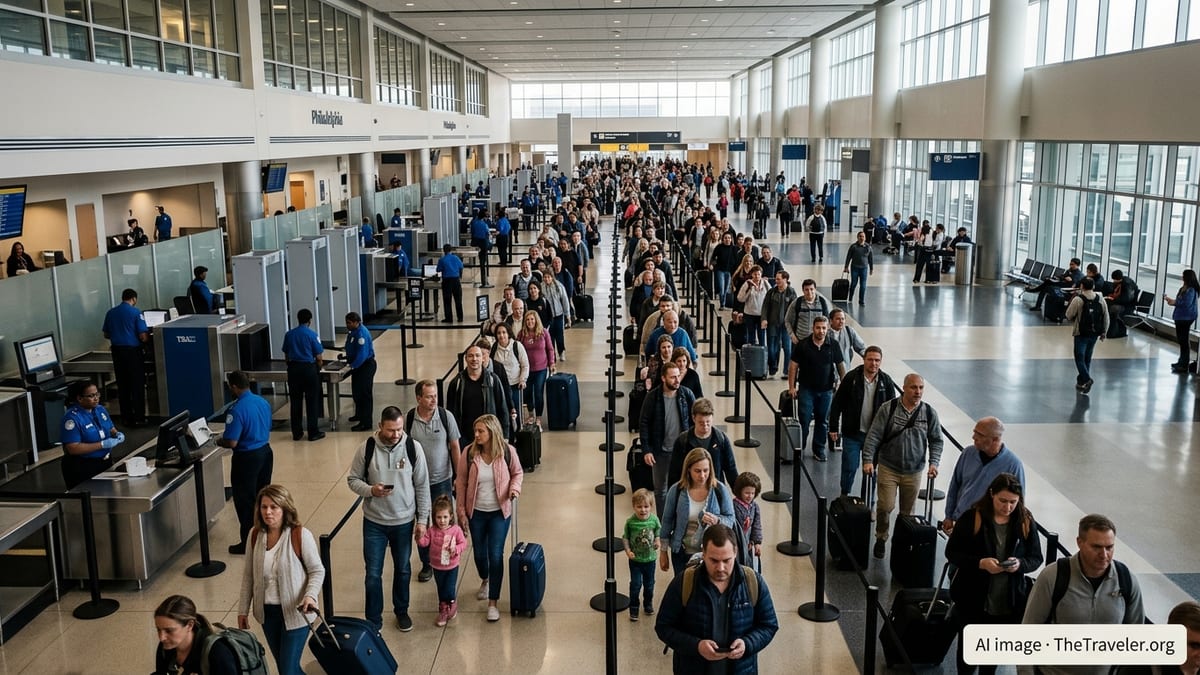
Philadelphia International Airport is contending with longer security lines and tighter terminal space this weekend as a fresh surge in U.S. air travel sends passenger volumes higher at airports nationwide, straining TSA staffing already under pressure during a partial federal government shutdown.
Get the latest news straight to your inbox!
Checkpoint Closures and Uneven Wait Times at PHL
Recent days have brought growing frustration for travelers using Philadelphia International Airport, with multiple security checkpoints reported closed or operating with reduced capacity as Transportation Security Administration staffing remains constrained. Publicly available information and local coverage describe some checkpoints being consolidated, pushing more passengers through fewer lanes at peak periods and creating backups that snake into the ticketing halls.
Travelers posting about their experiences in the past week describe a wide range of wait times at Philadelphia, from relatively smooth 20-minute queues at certain terminals to some of the longest security lines they have encountered at the airport during busy evening and early morning banks of departures. While TSA PreCheck lanes at PHL are still functioning, accounts indicate that the benefit can vary depending on which terminal is used and the specific time of day.
Confusion about real-time wait information has also added to the strain. Some passengers say the airport’s online checkpoint estimates have not always matched conditions on the ground, showing modest waits even as physical lines stretched far beyond the ropes. Others note that checking different terminals and being willing to walk after screening remains an effective strategy, since travelers are not obligated to use the checkpoint closest to their gate.
National Surge in Passenger Demand Intensifies Pressure
The challenges in Philadelphia are unfolding against a wider backdrop of renewed growth in air travel across the United States. A recent forecast from Airlines for America projects a record-breaking spring travel period, with about 171 million passengers expected to fly on U.S. carriers between early March and the end of April, an increase of roughly 4 percent from last year. Industry figures indicate airlines are adding flights and seats, but terminal space and security staffing are under more strain as volumes climb.
Transportation Security Administration data and industry analysis point to several days in March already ranking among the busiest for checkpoint screenings since before the pandemic, with individual days surpassing 2.7 million travelers nationwide. International Air Transport Association figures for early 2026 show global passenger demand continuing to expand, supported in part by gradually easing airfares and high leisure demand, even as airlines and airports wrestle with aircraft delivery delays and infrastructure constraints.
The current surge coincides with school spring breaks across large parts of the country and with major sporting events, including college basketball tournaments, which are sending additional leisure travelers through airports at the same time as regular business traffic. The partial federal government shutdown has compounded these pressures by creating uncertainty around staffing and pay for TSA officers, which has contributed to uneven checkpoint performance from one airport to another.
Mixed Experiences Across Major U.S. Hubs
Reports from major hubs show that Philadelphia is not alone in facing security bottlenecks, although conditions vary widely by location and time of day. In recent days, travelers at Houston’s largest airport described hours-long waits during an early-morning staffing crunch, before lines later dropped to less than 10 minutes as more lanes opened and peaks subsided. At Atlanta’s Hartsfield-Jackson International Airport, which had seen some of the country’s longest lines earlier in the week, subsequent days brought more moderate waiting times as schedules and staffing were adjusted.
Other large airports, from Denver to Dallas-Fort Worth and San Diego, have been preparing for the heavy spring period by publicizing expected peak days, opening additional checkpoints and encouraging passengers to arrive earlier than usual. Some medium-size facilities have reported smoother experiences relative to the largest hubs, but still caution travelers that conditions can change quickly when storms, ground delays or staffing shifts intersect with already high demand.
Despite scattered reports of extreme waits, many airports are still seeing checkpoint times that are broadly in line with seasonal norms. However, the inconsistency itself has become a concern for travelers and the industry alike. Publicly available commentary from travel organizations notes that while some terminals move efficiently, others can experience abrupt spikes, and it is increasingly difficult for passengers to predict whether they will move quickly through security or face a long, slow line.
Travelers Adjust Plans as Weekend Crowds Build
As the first major spring break weekends of 2026 unfold, travelers through Philadelphia and other busy airports are adjusting their habits in response to the uncertainty. Social media posts and local discussions suggest more passengers are arriving at PHL two to three hours before departure, even for domestic flights that they might previously have treated as short-turn trips, in order to build in a cushion for potential checkpoint delays.
Some travelers are routing through smaller regional airports to avoid what they perceive as worsening traffic and crowds at Philadelphia. Others are leaning more heavily on TSA PreCheck and Clear memberships where available, although even expedited lanes can experience backups when standard lines are overflowing or when multiple checkpoints are consolidated into a single screening area.
Within Philadelphia’s terminals, the buildup of travelers at security has downstream effects. Congested ticketing halls, longer waits at check-in counters and crowded gate areas are all being reported more frequently as peak periods stretch over more hours of the day. Yet many passengers still note that once they clear screening, operations at the gates, boarding and baggage claim generally proceed close to normal, underscoring that security remains the primary pinch point.
Outlook for the Coming Week
Available forecasts indicate that high passenger volumes will persist well into next week, as different school districts rotate through spring break and returning travelers overlap with new outbound waves. Airlines for America expects daily passenger counts to remain elevated through at least late April, while global industry groups project continued year-on-year growth in both domestic and international demand through the remainder of 2026.
At Philadelphia International Airport, that means travelers can likely expect more days of intermittent crowding at checkpoints, particularly during early morning departures and late afternoon and evening banks when business and leisure traffic converge. Local advice shared publicly emphasizes monitoring security wait-time tools, building in added time for transit and parking, and being flexible about which checkpoint to use once at the airport.
Across the national system, the combination of record or near-record passenger levels, infrastructure limits and the ongoing federal funding uncertainty for TSA suggests that security lines may remain a central stress point for travelers this season. For those flying through Philadelphia and other major gateways this weekend and into next week, the most reliable strategy appears to be arriving early, expecting crowds and preparing for conditions that can shift from manageable to congested with little warning.