

More news on this day
Hours long security lines, missed flights and mounting frustration are hitting U.S. airports this week as Transportation Security Administration staffing strains under the latest Department of Homeland Security shutdown just as the spring break travel rush gathers pace.
Get the latest news straight to your inbox!
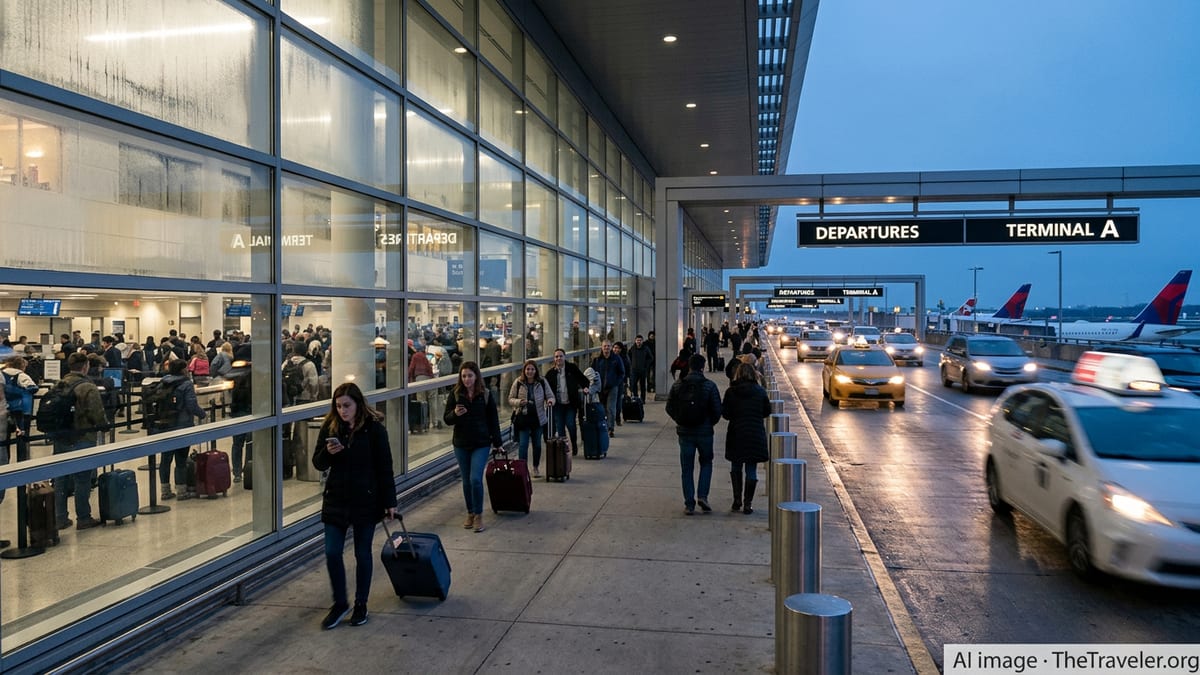
Hours Long Lines at Key Airports
From Houston to New Orleans and Phoenix, travelers are reporting wait times of two to three hours or more at Transportation Security Administration checkpoints, with lines in some terminals stretching into baggage halls and even parking garages. The worst delays have been concentrated at peak morning and early afternoon waves, when most leisure travelers depart and checkpoints are already operating near capacity.
At Houston’s Hobby Airport, passengers have been urged to arrive four to five hours before departure after early week lines topped three hours, forcing some travelers to abandon queues and rebook flights. Similar scenes played out in New Orleans, where the security line at Louis Armstrong New Orleans International Airport spilled into the parking area, and in Phoenix, where March is typically the busiest month of the year at Sky Harbor International Airport.
While not every airport is experiencing severe slowdowns, the patchwork pattern of delays is complicating connections. Travelers departing from smaller or less affected airports but connecting through major hubs are discovering missed onward flights and cascading disruptions as security bottlenecks at their first departure point push them behind schedule.
Major carriers say overall operations remain stable, but acknowledge that security delays are increasingly responsible for late departures. Airlines have been waiving some same day change fees on a case by case basis where passengers can show they were held up in extraordinary lines at screening checkpoints.
Shutdown Strains Unpaid Workforce
The partial shutdown, triggered by a standoff over Department of Homeland Security funding, has left thousands of Transportation Security officers working without pay for weeks. While the TSA has insisted that all checkpoints remain open, the financial pressure on front line staff has translated into higher sick calls, voluntary resignations and difficulty filling overtime shifts exactly when demand is surging.
Internal data cited by union officials indicate that the rate of workers quitting the agency has tripled compared with normal levels since mid February, eroding staffing rosters that were already lean. At the same time, many remaining officers are shouldering longer shifts, raising concerns about fatigue and morale at checkpoints handling record or near record passenger volumes.
Airport executives and local officials warn that the situation is unsustainable if the shutdown drags on. Some large airports are now coordinating food pantries, gift card drives and other support for federal workers, describing the measures as a stopgap to help agents cover basic expenses while paychecks are frozen. Airport leaders say the charitable drives underscore both the financial stress on workers and the fragility of an essential security function that depends on their continued willingness to show up.
Unions representing screeners argue that the current disruption was foreseeable given past shutdowns and long standing concerns over pay, retention and working conditions. They are pressing Congress to approve back pay guarantees more quickly and to classify Transportation Security officers as essential in a way that protects their salaries during future funding lapses.
Uneven Impact Highlights Alternative Models
The delays have not been uniform across the country. Several airports, including San Francisco International, report largely normal checkpoint operations despite the federal funding lapse. Industry analysts say part of the difference lies in how security screening is structured at certain facilities that rely on private contractors operating under Transportation Security Administration oversight rather than on directly employed federal officers.
At these airports, screeners are paid by private firms through separate contracts and so are insulated from the immediate effects of a federal paycheck freeze, even though federal managers still oversee standards and protocols. So far, those airports have largely avoided the wild swings in staffing and morale seen where officers are on furlough or working without pay.
The contrasting experiences have revived debate in Washington and within the aviation industry over whether more airports should be allowed or encouraged to adopt contractor based screening models as a way of insulating frontline security operations from partisan budget fights. Supporters say expanding the little used federal program that authorizes such arrangements could provide a safety valve during future shutdowns, helping to keep lines moving and reducing the risk of nationwide congestion.
Critics, including the main union for Transportation Security officers, counter that a broader shift to private screeners could erode wages and benefits, weaken job protections and ultimately make it harder to recruit and retain experienced staff. They argue that the current crisis is rooted less in the structure of screening programs than in Congress’s repeated willingness to let political disputes halt government paychecks.
Spring Break Rush Magnifies Disruptions
The timing of the Department of Homeland Security shutdown is magnifying its effects. The funding lapse collided almost precisely with the start of spring break, historically one of the busiest periods of the year for domestic leisure travel, and a time when many airports already operate close to their maximum screening capacity even under normal conditions.
Colleges, private schools and public school districts across the country stagger their breaks through March, creating multiple surges of vacationers. The first wave of college travelers has already hit the system, and aviation planners expect additional peaks in mid and late March as families head for beach destinations, theme parks and major cities. The fear among airport managers is that if the shutdown persists, the sporadic multi hour queues seen this week could spread to more airports and become a regular feature of the remaining holiday period.
Travel advisers note that the shutdown related slowdown is layered on top of other seasonal and operational pressures, from late winter storms to tight aircraft utilization, leaving little slack to absorb fresh disruptions. Where security lines have spilled outside secure areas, airports have also had to deploy extra staff for crowd control and wayfinding, further stretching resources.
Some airports are experimenting with mitigation measures, including dynamic reallocation of staff between checkpoints, extended opening hours at some lanes, and more aggressive use of real time queue monitoring to shift passengers to shorter lines. However, officials caution that such steps can only go so far when the underlying constraint is simply a shortage of paid, available screeners.
What Travelers Are Being Urged To Do
For now, the most consistent message from airport authorities and airlines to passengers is to build in significantly more time for security. Many airports that once advised travelers to arrive two hours before a domestic flight are now recommending at least three hours, and in some hotspots four or more, particularly for early morning departures when demand spikes and staffing can be thinnest.
Frequent travelers are being encouraged to make full use of any trusted traveler programs that remain operational, including TSA PreCheck and Global Entry, which were briefly suspended earlier in the shutdown but have since resumed processing at most locations. Even with those programs, however, travelers are warned not to assume they can cut arrival times to the last minute, given that dedicated lanes may be closed or merged into general screening at short notice depending on daily staffing levels.
Industry experts also advise passengers to pack strategically to reduce secondary screening, keep identification and boarding passes ready, and use airline and airport apps to monitor both flight status and, where available, estimated wait times at checkpoints. For those with tight connections at affected hubs, some carriers suggest booking longer layovers or selecting itineraries that avoid the most constrained airports until conditions stabilize.
With no clear timeline yet for a political resolution to the Department of Homeland Security funding standoff, aviation leaders warn that travelers should brace for at least several more days of unpredictable security wait times. For spring break fliers heading to the airport this weekend, patience, preparation and an extra hour or two on the front end of their journeys may be the only reliable tools to avoid becoming the latest victims of shutdown induced delays.