

More news on this day
Hours-long security lines, missed departures and frayed tempers are rippling through U.S. airports this week, as a partial shutdown of the Department of Homeland Security fuels mounting Transportation Security Administration delays at the start of the busy spring break travel period.
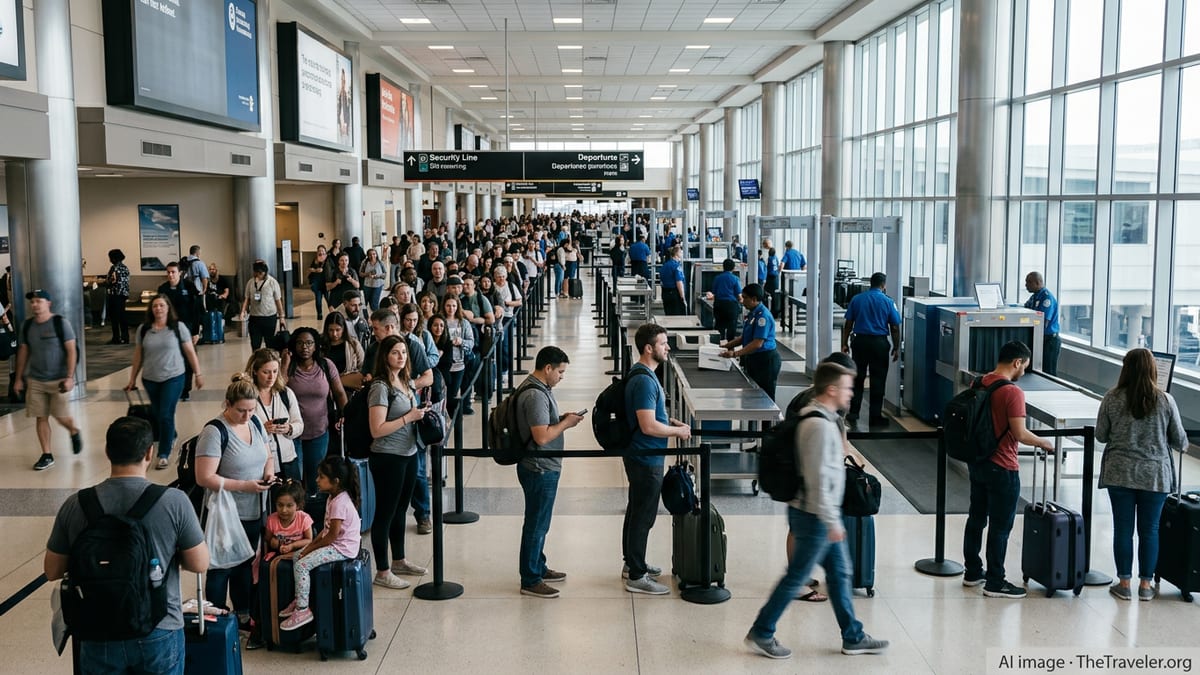
Spring Break Rush Collides With Federal Funding Standoff
The latest partial shutdown of the Department of Homeland Security, now in its third week, has left the Transportation Security Administration scrambling to staff airport checkpoints just as spring break traffic surges. While TSA operations are legally required to continue, thousands of screeners are working without pay, and sick calls and resignations are beginning to thin front-line ranks.
Airports in Houston and New Orleans have emerged as some of the hardest hit. On Sunday, estimated wait times at Houston’s William P. Hobby Airport climbed to around three hours at standard screening lanes, with social media posts showing lines spilling into terminal lobbies and toward parking structures. Louis Armstrong New Orleans International Airport issued repeated alerts urging passengers to arrive at least three hours before departure, citing a shortage of TSA officers and “longer-than-average” queues.
The Department of Homeland Security has acknowledged that travelers at some major hubs are facing waits of up to three hours or more, particularly during early-morning and late-afternoon peaks. Industry analysts warn that the convergence of a political funding battle and one of the year’s busiest leisure travel windows is creating a perfect storm for disruption.
Major Hubs Report Hours-Long Queues and Missed Flights
While conditions vary by airport and time of day, reports of expansive TSA lines have surfaced from multiple large and mid-sized airports across the country. Photographs shared by passengers show security queues stretching deep into ticketing halls at George Bush Intercontinental in Houston and looping toward parking garages in New Orleans, even outside traditional rush periods.
Airlines and airport authorities say the impact is increasingly visible in their operations. Some carriers are reporting higher rates of late check-in, missed flights and tight connections gone awry as passengers find themselves trapped in security lines far longer than anticipated. At several hubs, early-morning departure banks have been delayed as planes depart with clusters of empty seats where late-arriving travelers should have been.
In statements to travelers, airport officials have advised arriving four to five hours before departure during peak days, a recommendation that effectively extends total journey times and increases crowding in terminals already under strain. At New Orleans and Houston, passengers have described scenes of families camped on the floor repacking bags to meet security rules, and informal triage by staff trying to pull out travelers whose flights are already boarding.
Not every airport is experiencing extreme waits; several facilities report that security times remain near normal outside the busiest banks of flights. But even localized disruptions can cascade through the broader network as delayed departures and missed connections ripple into subsequent legs, complicating flight schedules nationwide.
Shutdown Deepens Long-Running TSA Staffing Strains
The current crisis is amplifying pressures that aviation and labor groups have been warning about for years. TSA checkpoints rely on a workforce that has long grappled with relatively low pay, demanding shifts and high stress. Turnover among transportation security officers typically exceeds industry averages, and training new hires can take months.
During a previous extended shutdown in 2025, the TSA’s top official told Congress that more than 1,100 officers resigned in just two months, a jump of more than 25 percent compared with the prior year. Many of those departures, officials said, were directly tied to employees working weeks without pay. Unions and airport leaders argue that the current DHS funding lapse risks a repeat, if not a worsening, of that exodus.
This time, the stakes may be even higher. The shutdown arrives on the heels of sustained growth in domestic air travel and a post-pandemic shift toward leisure-heavy demand patterns that place more pressure on peak holiday and school-break periods. With scheduling flexibility already limited, even modest staffing gaps at checkpoints can translate into dramatic swings in wait times when crowds surge.
Behind the scenes, airport and airline lobby groups are pressing lawmakers to prioritize stable funding and long-term staffing strategies for TSA. They warn that confidence in the air travel system is at risk if routine security screening becomes synonymous with multi-hour lines every time Washington’s budget disputes flare.
Airlines and Airports Race to Manage Traveler Frustration
Carriers and airport operators are attempting to contain the fallout, even though they have little direct control over federal checkpoint staffing. Some airlines are waiving same-day change fees in the most affected markets when passengers can demonstrate they were delayed in TSA queues. Others are proactively notifying customers via text and app alerts to arrive at airports far earlier than usual and to expect potential disruptions.
Airport authorities in Houston, New Orleans and other impacted cities have redeployed customer-service staff and volunteers into checkpoint areas to help manage lines, answer questions and identify travelers in danger of missing imminent departures. Public address systems now routinely broadcast reminders about security preparation, while social media feeds serve as real-time barometers of wait times and crowding.
Still, front-line employees acknowledge that there are hard limits to what they can do. With PreCheck and other trusted traveler lanes also seeing longer waits in some locations, the traditional pressure valves that helped ease congestion are less effective. Gate agents and flight crews are increasingly forced into difficult decisions about whether to hold flights for passengers stuck in security or protect on-time performance for those already on board.
The result is a palpable rise in traveler frustration. Customer-service desks at several hubs have reported higher volumes of complaints and refund requests, and travel advisors say some clients are reconsidering nonessential trips or opting for regional rail and driving alternatives on shorter routes until conditions stabilize.
What Travelers Can Expect in the Days Ahead
With no immediate resolution to the DHS funding standoff on the horizon, aviation experts say travelers should brace for continued volatility in security wait times over the coming days. Checkpoints could see some relief during off-peak periods, but sudden surges remain likely in the mornings and evenings, particularly at large hubs and popular leisure gateways.
Travel planners recommend building significantly more buffer time into itineraries, especially for families, travelers checking luggage or those without access to expedited screening programs. Monitoring airport and airline apps for updated security wait estimates can help, but recent experience has shown that conditions can deteriorate quickly when a few officers call in sick or when an unexpected wave of passengers arrives.
For now, the sight of snaking TSA lines has once again become a potent visual symbol of Washington’s budget impasse, highlighting how abstract appropriations battles can translate into very tangible headaches at the nation’s airports. Until lawmakers restore full funding for the Department of Homeland Security and stabilize the agency’s payroll, travelers are likely to keep paying the price in time, stress and disrupted plans.