

More news on this day
Airline passengers are continuing to pay a federal security fee on every ticket even as a partial government shutdown, hiring limits and missed paychecks drive hundreds of Transportation Security Administration employees to leave their jobs, raising new questions about how the agency is funded and staffed.
Get the latest news straight to your inbox!
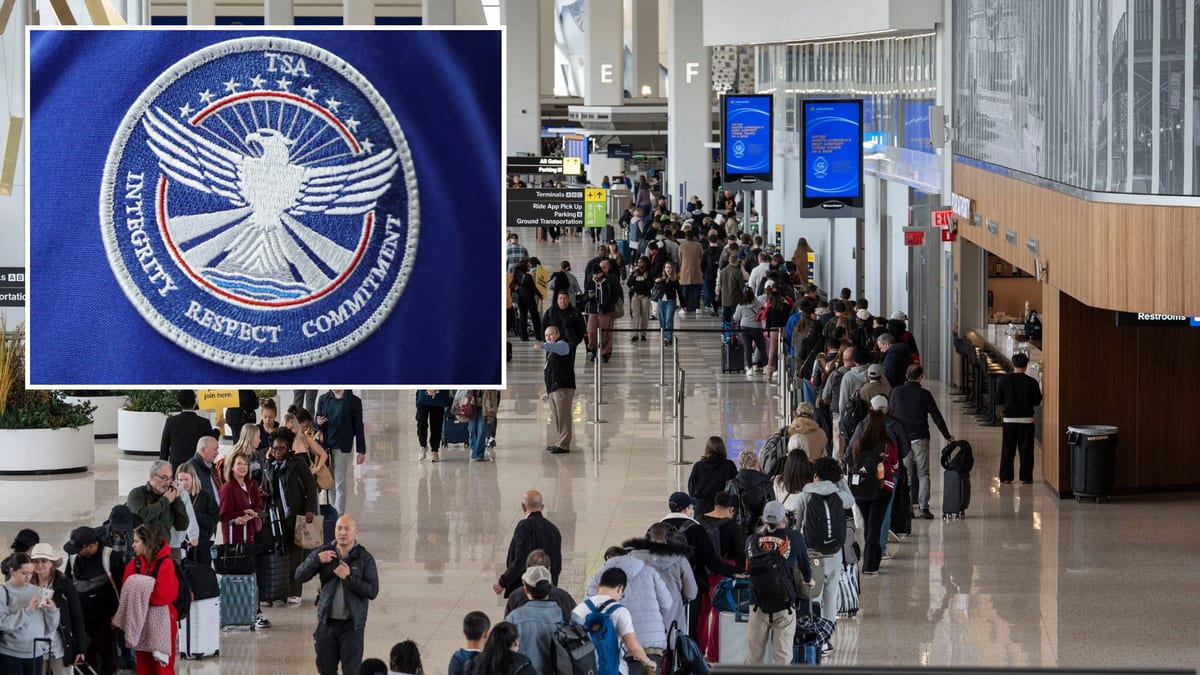
Image by Travel - news, features, tips | The US Sun
A Growing Disconnect Between Fees and Paychecks
The federal passenger security fee, often listed on tickets as the September 11 Security Fee, is added to nearly every commercial airline itinerary originating in the United States. The current charge is $5.60 per one-way trip, capped at $11.20 on a round trip, and is collected by airlines along with the base fare and taxes before being remitted to the federal government.
Publicly available budget figures indicate that these fees now generate several billion dollars each year. Government data cited in recent coverage shows passengers paid roughly $4.5 billion in security fees in 2025, up from about $4.4 billion the previous year, reflecting steady growth in post-pandemic air travel.
Despite that revenue, many Transportation Security Officers have gone without a full paycheck during the current Department of Homeland Security funding lapse. Reports indicate more than 100,000 Homeland Security workers, including TSA screeners, recently missed a full pay period, even as the security fees tied to the agency’s work continue to be collected on every ticket sold.
This disconnect is fueling frustration among workers and travelers alike, as the money travelers see itemized on their receipts does not appear to shield frontline airport staff from the effects of spending caps and shutdown politics.
Shutdown Pressures and a Wave of Resignations
The latest partial shutdown has compounded long-standing staffing challenges at the TSA. Internal statistics described in recent national reporting indicate that unscheduled absences among security officers have more than doubled at some airports since the funding lapse began, with hundreds of screeners leaving the agency rather than continue working without pay.
Coverage drawing on Department of Homeland Security figures points to at least 300 officers quitting during the current shutdown period alone. Separate accounts referencing agency data and congressional testimony suggest that, over the longer term, TSA has been contending with thousands of resignations annually as it works to keep up with rising passenger volumes.
For many officers, the combination of missed paychecks, a freeze on new spending and uncertainty over future appropriations has tipped an already stressful job into untenable territory. Union statements and worker accounts gathered by news organizations describe employees turning to food banks, falling behind on bills and considering other work, even in lower-profile security roles, that still offer reliable pay.
As resignations accumulate, airports in busy travel corridors are reporting longer lines and more frequent use of overtime, further intensifying the burden on those who remain on the job.
How Fee Revenue Is Used and Diverted
Part of the controversy centers on what actually happens to the money travelers pay. When Congress created the TSA after the September 11 attacks, lawmakers established the passenger security fee to help fund the new agency’s operations and technology. Over time, however, multiple budget deals have routed a substantial share of that revenue to other federal priorities.
Government watchdog reports and coverage by policy outlets note that several billion dollars in fee collections over the past decade have been diverted to deficit reduction or unrelated programs instead of going directly to aviation security. Recent analyses warn that this diversion has slowed investment in new checkpoint technology and limited TSA’s flexibility to respond to surging demand.
Congress has taken some steps to redirect more of the fee stream back toward airport security, including recent appropriations language that returns hundreds of millions of dollars to TSA each year. Still, hearings on the agency’s fiscal 2024 and 2025 budgets show lawmakers and industry groups arguing that restoring the full fee to TSA would provide more stable funding for staffing and modernization.
The result is a complicated picture: travelers are required to pay the security fee on every itinerary, yet the agency that screens them remains exposed to the same spending freezes and shutdown brinkmanship that affect the broader federal workforce.
Airports, Travelers and Industry Brace for Impact
For airports and airlines, the combination of a staffing squeeze and unrelenting passenger demand is an increasingly operational problem. Travel-industry associations have warned in recent weeks that extended shutdown conditions could lead to longer wait times at checkpoints, missed flights and potential bottlenecks during peak travel periods such as spring break and major sporting events.
Some hubs have already reported growing checkpoint lines and higher rates of officer absences, according to local news coverage. Airport managers describe juggling lane openings, shifting officers between terminals and leaning heavily on overtime and temporary reassignments to maintain throughput as resignations tick upward.
Passengers, meanwhile, continue to see the TSA fee itemized on their receipts regardless of the political stalemate in Washington. Consumer advocates quoted in recent analyses argue that the visibility of the fee heightens public scrutiny, because travelers can clearly see they are paying directly for a service that is increasingly strained by staffing shortages and inconsistent federal support.
While there is little indication that the fee itself will be lifted during the shutdown, the growing gap between what travelers pay and the reliability of the screening experience is likely to remain a focal point of public debate.
Policy Debates Over TSA’s Future
The tension between fee revenue and agency constraints is feeding broader policy discussions over how airport security should be organized and funded. In Congress, recent hearings on TSA’s oversight and budgets have highlighted questions about pay parity with other federal law enforcement roles, long-running morale issues and the agency’s reliance on episodic appropriations.
Some lawmakers and think-tank analysts have suggested indexing the security fee to inflation and ensuring all proceeds flow directly to TSA as a way to stabilize its finances and reduce vulnerability to across-the-board spending caps. Others have raised the possibility of expanding the use of private security contractors at airports, with the federal government retaining standards-setting and oversight, but not necessarily employing every screener on the checkpoint line.
Travel-industry groups emphasize that whatever structure emerges, reliability is paramount. Statements gathered in recent trade coverage stress that chronic shutdowns, hiring freezes and emergency stopgaps undermine both worker retention and traveler confidence, even as demand for air travel continues to grow.
For now, the practical reality for most flyers is unchanged: every ticket still carries a dedicated TSA fee, even as the agency’s workforce weathers a spending freeze, delayed paychecks and a new round of departures that intensify pressure on the system that keeps travelers moving through the nation’s airports.