

More news on this day
As hourslong security queues return to U.S. airports during the ongoing Department of Homeland Security funding standoff, some desperate travelers are turning to an unusual workaround: paying other people to stand in Transportation Security Administration lines on their behalf.
Get the latest news straight to your inbox!
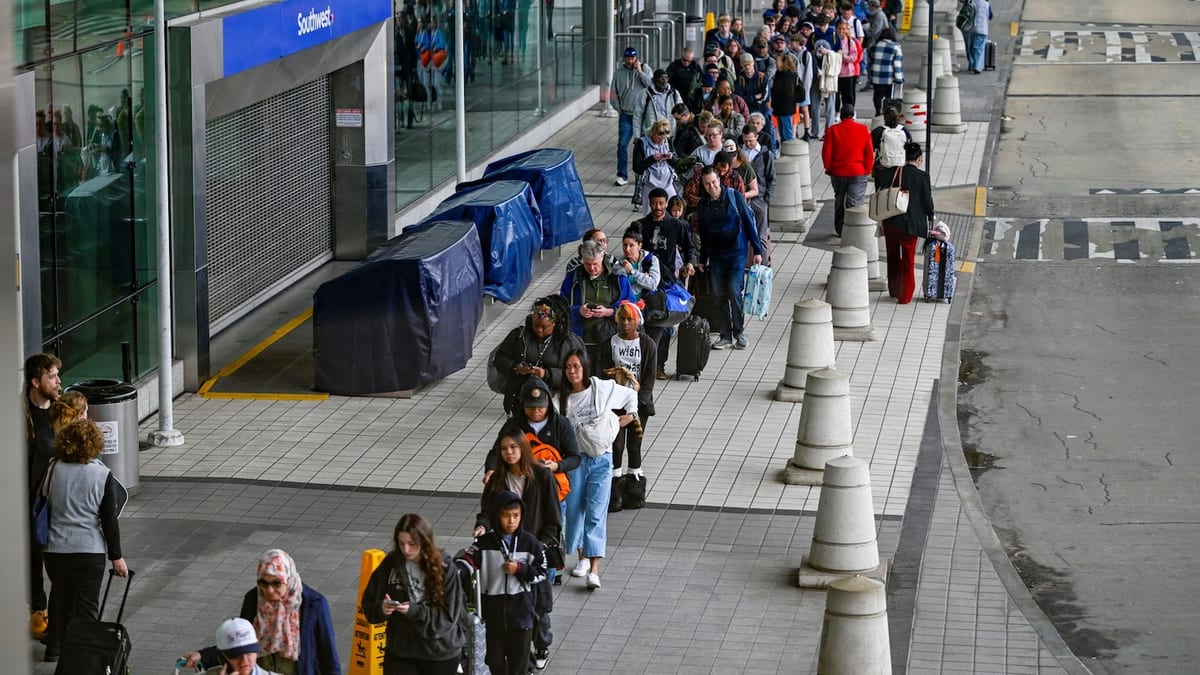
Image by The Washington Post
Security delays collide with record demand
Reports from major hubs including Houston, Atlanta and Denver in March 2026 describe security lines spilling into parking garages and terminal curb areas, with some passengers urged to arrive four to five hours before departure. Publicly available wait-time snapshots from airport social media feeds show periods where standard TSA screening stretched to three or four hours, while some expedited lanes were either closed or backed up for more than two hours.
The disruption comes at a time when domestic air travel demand remains strong. Recent travel-industry analysis indicates that a large share of Americans still plan to fly for vacations and family visits in 2026 despite higher fares and ongoing operational uncertainty. That combination of resilient demand and constrained checkpoint capacity has created intense pressure at security choke points, particularly during early-morning and evening peaks.
At the same time, TSA throughput data shows variations by airport and even by hour, with some checkpoints processing passengers quickly while others stall as staffing levels fluctuate. This volatility has made it harder for travelers to predict how much time they need, leading many to pad their schedules and search for unconventional ways to avoid the worst queues.
Travel forums and social platforms are filled with first-hand accounts of missed flights, sprinting to gates and family groups separated in the crush of lines. The latest wave of delays has renewed interest in any service that promises to buy back time, even at a premium.
Informal line-sitting moves into the airport
Line-sitting itself is not new. For years, professional stand-ins have queued for concert tickets, product launches and government hearings, charging hourly rates to hold a place until the client arrives. The current airport environment is helping push that model into a new frontier: TSA security checkpoints.
On gig platforms and neighborhood message boards, new advertisements offer “airport line-holding” or “TSA queue standby” at hourly rates that in some cases rival rideshare earnings. Descriptions typically promise that the sitter will arrive at the terminal several hours early, join the general screening line, and maintain a position until the traveler reaches the airport and merges in.
Most of these offers target standard TSA lanes rather than dedicated programs such as PreCheck or Clear, where official eligibility rules and identity verification are more tightly controlled. In practice, many arrangements appear to occur within families or friend groups, with one person heading to the airport far earlier than the others to secure a spot near the front of the queue.
Because airport security lines remain under federal control, organized commercial line-holding exists in a gray area. Publicly available policies emphasize that each passenger retains responsibility for their own screening and documentation. That has not stopped travelers from experimenting at the margins, particularly when the alternative may be missing a nonrefundable flight.
Equity and access concerns for ordinary flyers
The spread of line-sitting services at airports is sharpening debate over fairness in an already stratified system. Frequent flyer status, credit card-linked priority access, and paid programs such as PreCheck and Clear already create tiers of experience at the checkpoint, with those able to pay or who fly often receiving markedly shorter waits than occasional travelers.
Travelers who cannot or choose not to buy into premium programs may now find themselves competing not only with elite lanes but also with paid stand-ins occupying scarce space in general security queues. Consumer advocates warn that if line-sitting becomes more common at airports facing chronic staffing shortages, it could further erode the sense of equal treatment at federally operated checkpoints.
Ethicists and travel commentators have also raised questions about whether turning public security lines into another pay-to-skip service undermines their original purpose. While line-sitting does not change the screening process itself, it effectively allows those with more disposable income to outsource the most time-consuming aspect of modern air travel and shift that burden onto others.
There are also practical concerns. Queues are often organized with stanchions, signage and live adjustments by airport personnel, and inserting additional people or swapping places partway through can create confusion or confrontation, especially at peak times when tempers are already frayed.
Platforms race to monetize the wait
Entrepreneurial interest is rising quickly. In recent weeks, small startups and solo developers have begun promoting beta apps and online marketplaces that match travelers facing long TSA waits with local individuals willing to hold their place in line. Promotional materials frame the services as another on-demand convenience, comparable to hiring a rideshare driver or a grocery delivery courier.
Some proposed platforms describe rating systems for reliability, identity verification steps and real-time location sharing inside terminals so travelers can meet their line-sitter at the right moment. Others suggest subscription tiers that would allow frequent flyers to pre-book line-holders for peak travel days such as summer Fridays or holiday weekends.
Industry analysts note that any formalized line-sitting marketplace operating inside federal security zones would face significant regulatory and logistical questions. Airport leases, airline contracts and government security protocols all intersect near checkpoints, and there is little precedent for commercial services that operate within those controlled spaces purely to manage wait times.
For now, much of the activity appears ad hoc and local, with individuals advertising on general-purpose gig apps or social media rather than through specialized national brands. Whether those informal offerings consolidate into a recognizable service category may depend on how long current staffing pressures and wait-time spikes persist.
How travelers are responding to the new reality
Faced with uncertainty at the checkpoint, many travelers are adopting a layered strategy that mixes traditional tools with emerging workarounds. Travel advisors recommend monitoring official wait-time dashboards where available, building in generous buffers for early-morning departures, and considering trusted traveler programs for those who fly several times a year.
At the same time, online posts show families informally rotating through lines so that small children or older relatives spend less time standing, and friend groups designating one person to reach the airport long before the others. In a handful of cases, those early arrivers are compensated for their effort, blurring the line between personal favor and paid service.
Some passengers are also rethinking their broader travel choices. Reports from airline booking platforms point to modest shifts toward nonstop flights, off-peak departures and even alternative airports where security operations appear more stable. A minority of would-be flyers, particularly on short-haul routes, report opting for trains or driving rather than risk spending several unscheduled hours in a TSA queue.
With no clear timeline for a full resolution to staffing and funding constraints, aviation observers expect experimentation to continue. Whether paid line-sitting at TSA checkpoints remains a fringe tactic or evolves into a regular part of the airport ecosystem will likely depend on how quickly security lines return to something approaching pre-crisis norms.