

More news on this day
Security screening at Fort Lauderdale-Hollywood International Airport is showing signs of returning to more typical patterns after a bruising spring break surge that saw checkpoint lines swell and travelers urged to arrive earlier than usual.
Get the latest news straight to your inbox!
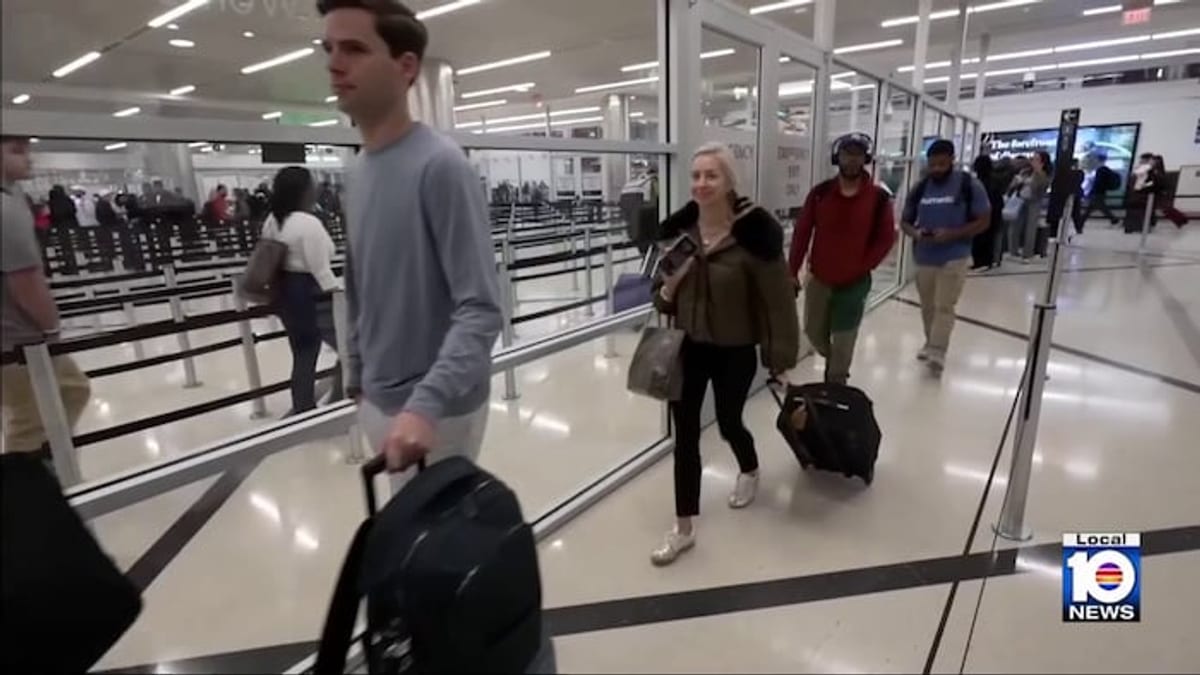
Image by local10.com
Spring break peak passes at Fort Lauderdale
As March draws to a close, travel patterns at Fort Lauderdale-Hollywood International Airport appear to be shifting out of peak spring break mode. Publicly available data and traveler reports indicate that the longest security lines, which coincided with mid-March departures and the height of college and school holidays, are beginning to subside.
Throughout the season, Fort Lauderdale’s role as a gateway to South Florida beaches and cruise terminals contributed to heavy morning and weekend crowds. Social media posts and online travel forums frequently described dense queues at Transportation Security Administration checkpoints, particularly in the early morning departure banks serving domestic leisure routes.
Recent posts from local community and travel discussion boards focused on Broward County show that while some congestion continues at busy times, conditions are no longer matching the most severe backups reported earlier in the month. One thread dedicated to airport wait times noted that as spring break and March come to an end, travelers can expect some easing, even as overall passenger volumes remain elevated compared with pre-pandemic patterns.
Nationally, trade group projections for the 2026 spring break period called for record passenger volumes through late April, with U.S. airlines expecting well over 150 million travelers. That broader backdrop helps explain why even modest improvements at individual airports like Fort Lauderdale still come against a baseline of unusually strong demand.
From marathon lines to more manageable waits
During the height of the spring break rush, Fort Lauderdale was frequently mentioned alongside other busy sunbelt airports as travelers described long lines at security checkpoints. Public commentary contrasted Fort Lauderdale’s conditions with airports such as Tampa and San Antonio, where local data showed average waits often remaining under 10 minutes even on busy days.
In South Florida, however, anecdotal accounts singled out Fort Lauderdale as a potential bottleneck compared with nearby Miami International Airport. Travelers posting in Miami-focused forums in late March referred to Fort Lauderdale as the more challenging option in terms of security wait times, underscoring how concentrated leisure schedules and limited checkpoint capacity can quickly strain operations at mid-sized hubs.
In recent days, those same online spaces have shifted tone, with more references to lines that are busy but moving, especially outside of peak morning hours. While wait-time apps and third-party trackers do not always capture the full experience on the ground, their snapshots, combined with traveler feedback, point to a gradual return toward more typical processing times as the bulge of spring break departures begins to thin out.
The improvement at Fort Lauderdale also parallels conditions at some other previously hard-hit airports where checkpoint data now show lower peaks than those recorded in early and mid-March. Reports from Houston’s Hobby Airport, for example, describe wait times that have fallen sharply from multi-hour highs to more conventional levels as the most intense weekend crowds have passed.
Fort Lauderdale’s role in a strained national system
Fort Lauderdale’s experience this spring sits within a wider national picture marked by staffing pressures and a partial federal government funding impasse that affected Transportation Security Administration operations. Travel industry coverage in March noted that several large airports, including Houston and Atlanta, saw security wait times stretch beyond 90 minutes at peak, with some checkpoints temporarily closed and officers working without pay.
Although Fort Lauderdale did not consistently register at the very top of national wait-time lists, its combination of high leisure traffic, cruise-related flows and limited checkpoint footprint made it particularly sensitive to any fluctuation in staffing or schedule timing. Even modest slowdowns in screening could cascade into long snaking lines across ticketing halls, according to descriptions shared by passengers.
The broader system strain also meant that options for rerouting or rebooking were more limited than in quieter years. With other Florida gateways such as Orlando preparing for record passenger volumes during the same period, the network had less slack to absorb disruptions originating at any single airport.
Industry analysts quoted in national coverage of spring break travel have emphasized that this year’s difficulties did not stem from a single cause. Instead, a combination of record demand, staffing shortfalls, and the policy uncertainty surrounding federal funding converged just as millions of vacationers headed for beaches and theme parks. Fort Lauderdale, as one of South Florida’s busiest leisure gateways, felt those pressures acutely at security checkpoints.
What travelers can expect heading into April
Looking ahead to early April, publicly available projections suggest that overall U.S. air travel will remain strong, but the most intense spring break departure waves for South Florida are likely to taper. For Fort Lauderdale passengers, that could translate into more predictable checkpoint conditions, even if terminals remain busy during cruise changeover days and weekend mornings.
Travel planning advice circulating among airlines, airports, and travel media continues to emphasize early arrivals at security, particularly for flights before 9 a.m. or on peak days such as Fridays and Sundays. For Fort Lauderdale, where lines have often been most challenging in those windows, building in extra time remains a prudent strategy despite the recent easing.
Digital tools that provide near real-time updates on checkpoint conditions are also gaining attention among frequent travelers. A widely shared online resource that compiles TSA wait times across major U.S. airports has been cited as a useful way to gauge conditions at Fort Lauderdale and decide when to head to the airport or which terminal entrance to use.
For now, the shift from severe congestion to more moderate, manageable lines at Fort Lauderdale suggests that the worst of the spring break surge is over. However, with national passenger counts still tracking at or near record highs, travelers using the airport over the coming weeks are likely to encounter a busy but improving security experience rather than a fully quiet one.
Broader lessons for South Florida’s peak seasons
The spring break experience at Fort Lauderdale highlights the vulnerability of seasonal leisure destinations when national aviation systems are already under strain. Heavy reliance on early morning departures, tight cruise connections and a high proportion of infrequent travelers can magnify the impact of staffing and policy challenges that originate far from Florida.
Regional comparisons within Florida also underline the diversity of airport performance. Tampa International, for instance, has reported average standard wait times measured in single-digit minutes during its own spring break period, illustrating how different infrastructure, layout and staffing levels can influence traveler experience even within the same state.
For South Florida, where Fort Lauderdale and Miami share responsibility for handling millions of visitors each year, this spring offers a reminder that small operational adjustments can have outsized effects on traveler perceptions. Public discussions in local forums already point to some passengers weighing departure airport choices based on security experiences during the 2026 rush.
As airlines and airports refine schedules and staffing plans for upcoming peak periods such as summer vacation and the 2026 holiday season, Fort Lauderdale’s recent challenges and gradual improvement at TSA checkpoints are likely to inform broader strategies aimed at keeping lines moving when demand once again reaches its highest levels.