

More news on this day
Hours-long security waits at some of America’s busiest airports are giving rise to an unusual workaround: travelers are paying others to stand in TSA lines for them, turning the age-old airport queue into a new kind of gig work and concierge upsell.
Get the latest news straight to your inbox!
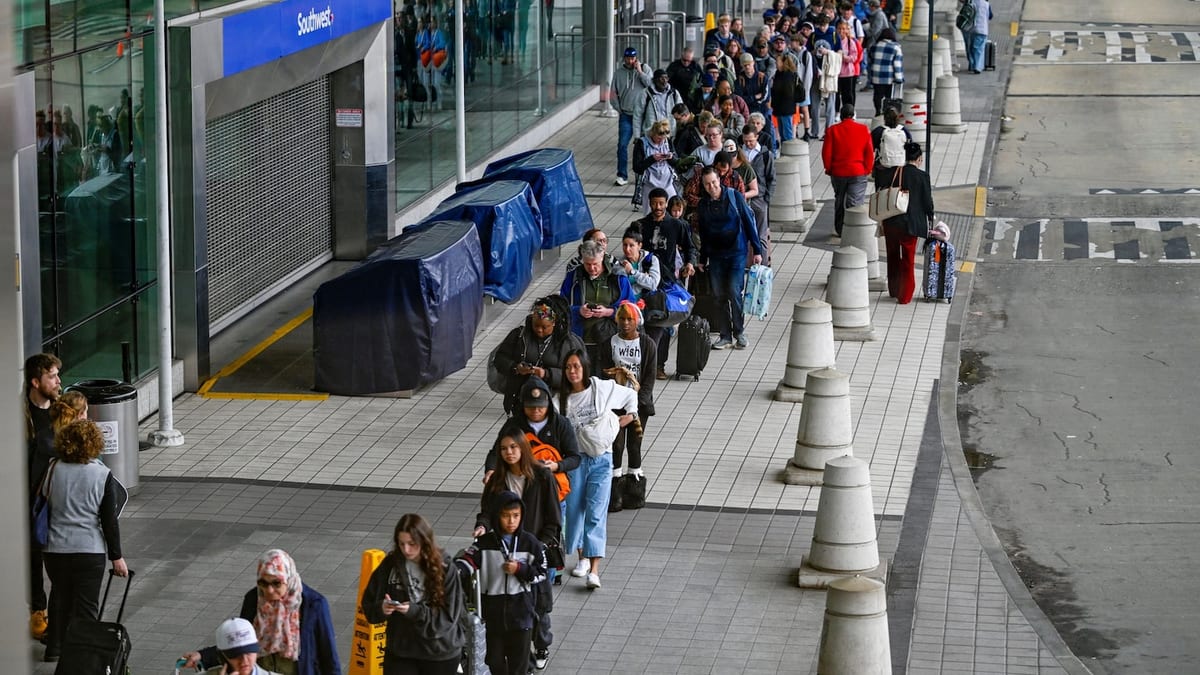
Image by washingtonpost.com
Chronic Delays Collide With Peak Travel Demand
Recent weeks have seen security bottlenecks stretch through concourses at major hubs, with social media posts and community forums filled with reports of travelers waiting an hour or more just to reach the TSA document check. At Atlanta’s Hartsfield-Jackson, one of the world’s busiest airports, user-generated reports in late March 2026 described general screening lines exceeding an hour during early morning peaks as partial federal government funding uncertainties weighed on staffing.
Federal budget documents indicate that the Transportation Security Administration has been planning for sustained passenger growth and the need for more screening officers, even as staffing has struggled to keep pace with record volumes. The agency has outlined expectations that travel demand in 2025 and 2026 will track close to or above pre-pandemic growth rates, putting structural pressure on checkpoints that were already operating near capacity during peak holiday periods.
Separate analyses from aviation and labor experts, cited in national news coverage this month, warn that persistent staffing shortages could force the redistribution of screeners from smaller regional airports to large hubs if funding issues continue. That scenario would likely lengthen lines further at already congested terminals and heighten travelers’ willingness to pay for any service that cuts their time in a TSA queue.
The result is a widening gap between published airport arrival recommendations and real-world experience. Many carriers still suggest arriving two hours before domestic flights, but during recent peak periods some passengers reported using most of that time in the security line alone, with little buffer left for delays at check-in or crowded boarding processes.
From Line-Waiting Gigs to Full-Service Airport Concierges
Into this environment has stepped a wave of paid line-sitters and airport concierge operators. Informal gig workers advertise on local forums and task platforms that they will reach the airport early, hold a place in the public queue and coordinate a handoff by phone or messaging when their client arrives. While practices vary by location and are subject to local airport rules, the concept mirrors established urban line-sitting services that people already use for concert ticket drops and limited-release products.
At the more formal end of the spectrum, airport-approved concierge companies have rapidly expanded in the past two years. Firms such as Global Airport Concierge, SkyVip, Perq Soleil and others market curb-to-gate escorts that help with bags, navigate crowds and guide travelers directly to security checkpoints. Many of those services emphasize “priority” or “streamlined” access, often by steering clients toward shorter queues, dedicated lanes or programs that the average traveler may overlook when flying only occasionally.
Large airports are also leaning into the model. Denver International Airport expanded its DEN Travel Assist program in 2025, partnering with a private concierge provider to offer meet-and-assist services for passengers who want help with check-in and security navigation. Public information from Denver’s airport shows that the program is positioned to serve both first-time flyers and frequent business travelers willing to pay for a smoother trip through the terminal.
In some cases, concierge offerings explicitly highlight shorter security waits as a selling point. Santa Barbara’s airport, for instance, promoted a VIP service in 2024 that bundles curb-to-gate escorts, baggage assistance and expedited TSA processing into a single product. These kinds of packages, while not marketed as “line-sitting” in the traditional sense, effectively allow travelers with means to outsource not just the wait, but the stress and uncertainty of encountering a packed checkpoint.
Big Brands Monetize the Desire to Skip the Line
Major identity and screening services are also moving aggressively into concierge territory. Clear, the private biometric verification company that partners with U.S. airports, announced in mid-2025 that it was expanding and rebranding its airport meet-and-greet operations as Clear Concierge. According to the company’s public materials, the service is now available at more than a dozen airports, including Denver, Detroit, Orlando and the Washington region’s two main hubs, with more locations planned.
Under the Clear Concierge model, travelers can pay for curbside meetups where an escort handles check-in, accompanies them through the Clear lane at security and, at higher price tiers, walks them all the way to the gate. Travel industry coverage indicates that fees start in the high double digits per use and climb past the hundred-dollar mark for gate-to-curb service, on top of existing Clear membership dues.
Other airports have experimented with time-reservation tools that mimic the effect of having someone “hold your spot” in line but in a more structured way. Programs such as Reserve powered by Clear, or branded checkpoint reservation schemes at Seattle-Tacoma and Phoenix, allow passengers at participating terminals to book a 15 to 20 minute window for security. These systems do not use paid line-sitters, but they redistribute demand by smoothing peaks and giving travelers a guaranteed arrival time at the front of a dedicated lane.
Airlines have joined the push as well. Several major U.S. carriers advertise their own branded concierge products that include escorting passengers through check-in and toward security, often bundled with premium cabin fares or sold as an ancillary add-on. While these programs typically stop short of promising a specific wait time, their marketing leans heavily on the themes of predictability and personal assistance in an increasingly crowded terminal environment.
Ethical and Equity Questions Around Queue Skipping
The spread of professional line-sitting and concierge services at TSA checkpoints is prompting broader questions about fairness in public spaces. Critics argue that when paid line-holders or high-priced escorts help some passengers bypass or shorten waits in security lines, the net effect is to lengthen delays for everyone else, effectively turning time savings into a commodity available primarily to higher-income travelers.
Legal and ethical norms around line-sitting in public facilities are still evolving. Many airports already regulate who can perform commercial services inside terminals, which could limit freelance line-sitters operating without formal agreements. However, most concierge and escort programs operate under contracts or certifications with airport authorities, framing themselves as passenger assistance rather than explicit queue-jumping, even when shorter lines or priority access are part of the appeal.
Advocates for expedited services counter that fee-based options can actually relieve congestion by spreading travelers across multiple lanes and encouraging those who value their time most to use separate channels such as TSA PreCheck, Clear or pre-reserved slots. They also point out that many concierge products bundle mobility or language assistance for older adults, travelers with disabilities and families who may genuinely struggle in crowded checkpoints.
Still, the optics of roped-off lanes and escorted passengers sweeping past long lines of economy travelers have become a recurring flashpoint in discussions about inequality in travel. Social media posts from busy holiday weekends frequently highlight scenes of nearly empty premium security lanes beside packed general queues, amplifying public frustration and feeding demand for workarounds like line-sitting, even among those who would not otherwise pay for such services.
What Travelers Can Do as the Market Matures
Travel experts suggest that the growth of line-sitting and concierge offerings is a symptom of deeper structural issues: uneven TSA staffing, surging demand and decades-old terminal layouts that were not designed for today’s passenger volumes. While federal proposals call for hiring more Transportation Security Officers and investing in new scanning technology, these measures will take time to relieve pressure at the checkpoint.
In the meantime, travelers face a fragmented marketplace of potential shortcuts. Some are free or low-cost, such as airport-run reservation systems and off-peak flight choices. Others, including third-party line-sitters, VIP escorts and layered subscription products, can add significant expense to a trip. Consumer advocates advise reading the fine print carefully, since none of these services can fully guarantee a specific wait time if conditions change suddenly because of weather disruptions, staffing gaps or security alerts.
For now, the presence of paid line-holders at TSA checkpoints underscores just how valuable certainty has become in modern air travel. As long as stories of multi-hour security lines continue to circulate and passenger numbers set new records, the business of waiting so others do not is likely to find willing customers at terminals across the United States.