

More news on this day
As a partial U.S. government shutdown squeezes airport staffing and spring break crowds swell, security lines at some major airports are stretching past three hours, but a handful of hubs, including San Francisco and Kansas City, are quietly emerging as rare bright spots with screening that is still moving smoothly.
Get the latest news straight to your inbox!
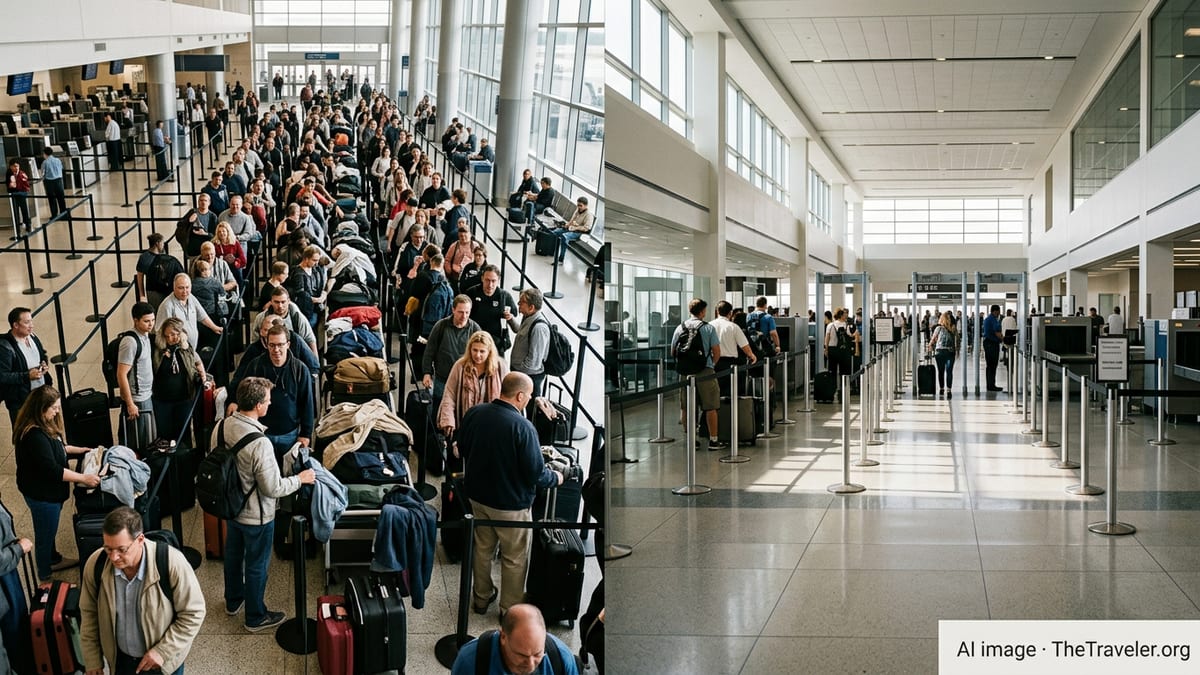
Shutdown, Spring Break and a Perfect Storm of Delays
Across the United States this week, travelers in Houston, New Orleans and Atlanta have reported marathon security queues snaking through terminals and into parking structures, a stark sign of how the Department of Homeland Security funding lapse is colliding with one of the busiest travel periods of the year. At Houston’s William P. Hobby Airport, wait times hit around three hours at peak periods, while Louis Armstrong New Orleans International urged passengers to arrive hours earlier than usual to avoid missing flights.
The Transportation Security Administration has acknowledged that more officers are missing shifts as they work without pay, even as passenger volumes surge. Industry analysts note that the shutdown, now several weeks old, is amplifying existing staffing gaps and pushing some checkpoints beyond capacity. The MyTSA app and some federal wait-time tools have also gone offline during the funding lapse, depriving travelers of a key planning resource.
Airports most affected share a common profile: heavy domestic traffic, a high share of leisure travelers and tightly scheduled morning and evening departure banks. When even a few screeners call out, lines quickly cascade. Social media has filled with images of families camped in roped-off queues, and airlines are warning that missed flights may be unavoidable in some markets unless passengers build in extraordinary buffers.
Yet even as some hubs struggle, others are reporting only modest slowdowns, suggesting that local decisions on staffing, layout and technology are playing a decisive role in how the shutdown is felt at the checkpoint.
San Francisco: Big Hub, Surprisingly Manageable Lines
San Francisco International Airport, one of the country’s largest coastal gateways, might seem a likely flashpoint for security chaos. Instead, travelers in recent days have reported wait times that, while fluctuating during the morning rush, have largely remained within conventional ranges. Afternoon and late-evening departures have in many cases seen lines clear in under half an hour even as other major hubs reported gridlock.
Airport officials and aviation experts point first to SFO’s distributed checkpoint model. With multiple terminals and several main screening zones, traffic can be shifted in real time when bottlenecks form. Airlines and the airport’s operations center have been coordinating closely to direct passengers toward less crowded checkpoints and to adjust lane allocations between standard screening and trusted traveler programs as demand ebbs and flows.
Another factor is San Francisco’s heavy mix of business and international travelers who tend to arrive earlier and travel outside the most intense spring break peaks. That reduces the concentration of passengers in narrow time windows, making it easier for TSA managers to keep queues moving even when short staffed. Local carriers have also proactively pushed alerts recommending earlier arrivals and off-peak check-in times, which appears to be smoothing demand.
Technology is helping as well. Widespread use of automated screening lanes, high-speed scanners and upgraded baggage systems in SFO’s newer terminals means each officer can process more passengers per hour. While no airport is immune to a prolonged shutdown, San Francisco’s investments and operating discipline have so far kept it from the worst of the turmoil seen elsewhere.
Kansas City’s New Terminal Design Pays Off
If San Francisco’s performance is about scale and coordination, Kansas City International’s advantage is built directly into its architecture. The airport’s new single terminal, opened in recent years to replace a notoriously fragmented layout, was designed around centralized security with wide, open queuing spaces and a flexible checkpoint that can be expanded or contracted quickly.
As the shutdown drags on, that design is being tested and, by most accounts, is passing. Passengers transiting Kansas City this week report that lines are visible but rarely overwhelming, and that once travelers reach the screening area, flows are steady. With all departing passengers funneled through a consolidated checkpoint, TSA leaders can concentrate their reduced staffing in one place rather than spreading officers thin across multiple small posts.
Airport planners say the new layout allows them to reconfigure stanchions and screening positions throughout the day. During morning and late-afternoon peaks, Kansas City can open more lanes and use the generous pre-security hall to absorb crowds without clogging ticketing or curbside areas. During lulls, some lanes are closed to conserve resources, helping avoid burnout among officers working extended hours.
Critically, the terminal was built with a view toward future surges, incorporating wider corridors, clear sightlines and intuitive wayfinding. In a moment when some aging facilities are straining to handle crisis conditions, Kansas City’s modern design is offering a textbook example of how infrastructure choices made years earlier can cushion travelers from today’s political shocks.
Why Some Airports Are Coping Better Than Others
The divergence now visible between struggling and smoother airports is not just a story of luck. Experts point to three main variables that are determining how painful security lines become under shutdown conditions: staffing resilience, physical configuration and local coordination.
On staffing, airports that invested early in cross-training and built closer relationships with TSA leadership appear better able to adapt to last-minute absences. Some hubs have created voluntary overtime pools and incentives, within the constraints of federal rules, to keep experienced screeners on key shifts. Others have partnered with airlines to stagger check-in cutoffs or adjust flight times slightly to relieve peak pressure.
Physical layout is just as important. Airports with centralized, expandable checkpoints and generous queuing space, like Kansas City, can absorb surges more gracefully than those with narrow corridors and multiple isolated lanes. Investments in modern scanners and automated trays, common at San Francisco and other large coastal hubs, have lifted throughput even when positions go unstaffed.
Finally, communication is proving critical. Where airports are pushing real-time updates through apps, text alerts, terminal signage and airline notifications, travelers are more likely to arrive at recommended times and choose less congested checkpoints. In contrast, some of the hardest-hit airports have struggled with outdated information or inconsistent guidance, leaving passengers to guess and creating sudden, overwhelming surges at certain hours.
What Travelers Can Expect in the Days Ahead
With no immediate resolution to the funding standoff in sight, aviation analysts warn that security lines could remain volatile through the heart of the spring break season. If more TSA officers are forced to seek temporary work elsewhere, even airports that have largely coped so far could see conditions deteriorate, particularly during early-morning and Sunday evening departure waves.
Still, the relatively smooth experience at airports such as San Francisco and Kansas City shows that long lines are not inevitable. Travelers passing through those hubs in recent days have largely reported wait times within an hour, and in many off-peak cases far less, even as they watched news footage of gridlock in other cities.
For now, officials across the system are offering a similar message: arrive earlier than you normally would, monitor your departure airport’s own alerts closely and be prepared for conditions to change quickly. Behind the scenes, airports are also using this crisis as a stress test of their systems, gathering data on how layout, technology and staffing interact under pressure.
Whether that leads to broader reforms will become clear only after the shutdown ends. For today’s travelers, the difference between a three-hour line and a relatively smooth stroll to the gate depends heavily on where they are flying from, and on local decisions that are suddenly in the spotlight.