

More news on this day
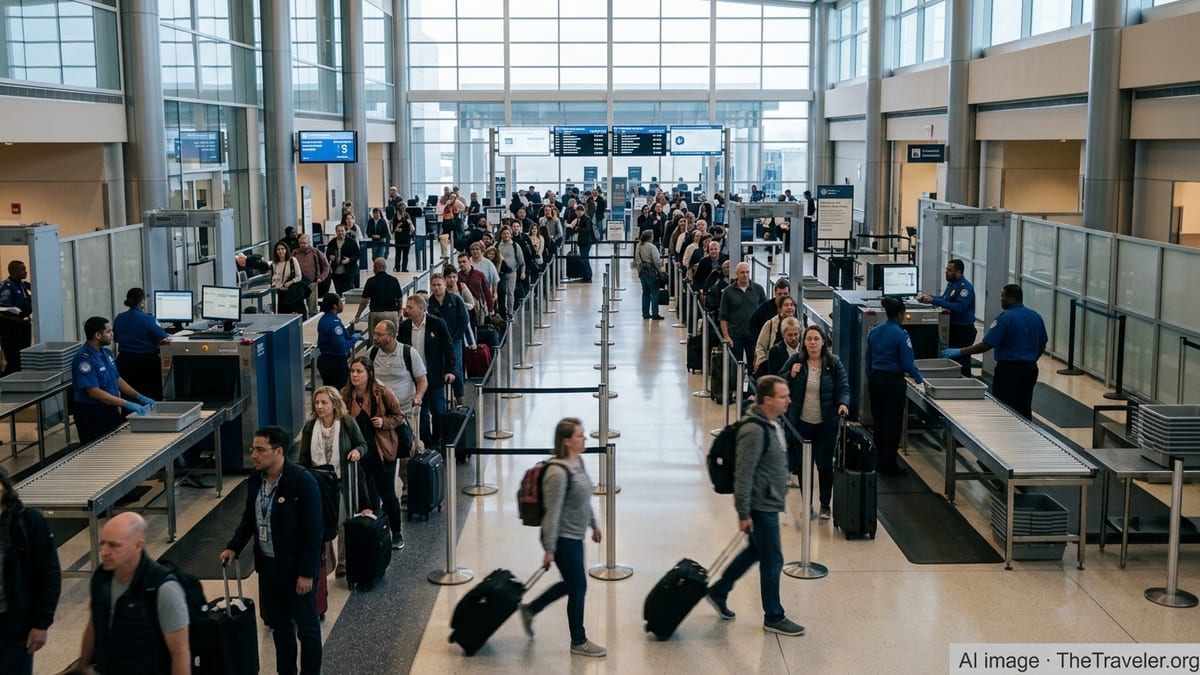
With a federal funding deal poised to restore pay for tens of thousands of Transportation Security Administration officers after weeks of working without pay, travelers facing hourslong lines at airport checkpoints are now asking a pressing question: Will security wait times finally improve?
Get the latest news straight to your inbox!
From Unpaid Shifts to Restored Paychecks
The most immediate change for the TSA workforce is simple but consequential: officers will once again receive regular pay for the shifts they work. During the partial government shutdown that began in mid-February 2026, publicly available information documented hundreds of officers resigning, others calling out to take temporary jobs, and airports temporarily closing entire checkpoints as staffing thinned. Reports from airports in Houston, New Orleans, Atlanta and Philadelphia described lines that stretched far beyond security areas and wait times that frequently exceeded 90 minutes at peak periods.
The end of the pay interruption is expected to halt the spike in attrition that has been recorded in recent weeks. Historical data from TSA and congressional briefings shows that the agency has long struggled with high turnover and relatively low morale compared with other federal employers, a problem that worsens when officers are asked to work without pay. Restoring salaries removes the most acute pressure on officers to seek income elsewhere and may stabilize daily staffing rosters that have been highly volatile during the shutdown period.
Yet the return of pay alone does not automatically rebuild a depleted workforce. Officers who resigned in recent weeks will not snap back onto the schedule, and hiring new staff requires background checks, training and on-the-job mentoring that can take months. For travelers, that means the initial impact of restored pay is likely to be less about instantly shorter lines and more about preventing further deterioration.
A Workforce Already Under Strain
The current disruption comes on top of several years in which rising passenger volumes have pushed TSA staffing close to its limits. Agency data released over the past two years shows that checkpoint volumes surpassed pre-pandemic levels, with TSA screening 3 million passengers in a single day on multiple occasions. At large hubs, peak-hour traffic regularly tests the agency’s internal goal of keeping standard security waits under 30 minutes and PreCheck waits in the low double digits.
Pay has been at the center of efforts to stabilize that workforce. In mid-2023, TSA implemented a transportation security compensation plan designed to bring officer pay closer to the federal General Schedule scale. Subsequent budget legislation funded the plan, and internal assessments published in 2024 reported improvements in hiring and retention as a result. Entry-level base pay rose into the high 30,000 to low 40,000 dollar range in many locations, with clearer progression for experienced officers.
The shutdown and resulting pay lapse disrupted that trajectory. Even with an improved underlying pay scale, going weeks without a paycheck left many officers facing overdue bills and difficult financial choices. Union statements and local media coverage during the standoff described officers visiting food banks, taking gig work after long shifts and weighing whether to quit altogether. The restoration of pay effectively resumes a still-fragile effort to make TSA jobs competitive with private-sector options and other federal agencies.
How Quickly Can Wait Times Recover?
For passengers deciding when to arrive at the airport, the key issue is timing: how fast will security lines return to something resembling normal? Recent reporting from major airports shows that wait times have been highly unpredictable during the shutdown, with conditions swinging from hourslong lines to sub-10-minute waits over the course of a single day as staffing fluctuated.
In the short term, industry analysts expect a gradual improvement rather than a sudden return to pre-shutdown norms. Once officers know they will be paid, unscheduled absences typically decline, which can help reopen lanes that have been idled for lack of staff. Airports that temporarily closed some checkpoints may bring them back online, smoothing passenger flow and reducing extreme bottlenecks seen at early-morning peaks.
However, the backlog created by weeks of inconsistent staffing will not vanish overnight. Airports that advised travelers to arrive three to five hours before departure are likely to keep that guidance in place until operations stabilize and trend data confirms that typical waits have fallen. Spring break and early summer travel demand will further complicate recovery, as higher passenger volumes hit just as TSA attempts to rebuild schedules and train any new hires brought in to replace those who quit.
Beyond Pay: Structural Limits on Security Throughput
Even with stable pay in place, several structural factors will continue to shape how quickly lines move. TSA’s own briefings to lawmakers have pointed to physical checkpoint layouts, the number of screening lanes an airport can accommodate, and the pace of deploying new screening technology as constraints that policy alone cannot immediately solve. Some large hubs are mid-renovation, limiting the space available for additional lanes, while smaller airports must balance staffing needs with lower passenger volumes.
Technology is a partial counterweight. Over the past several years, TSA has expanded use of computed tomography scanners for carry-on bags and more automated screening lanes in major airports. Publicly available information indicates that these systems can reduce the need to remove electronics and liquids and can process bins more quickly, theoretically boosting throughput per officer. Where those upgrades are already in place, a fully staffed checkpoint can move passengers faster than under legacy setups.
Still, technology cannot compensate for a sustained shortage of trained personnel. Each lane requires a minimum number of officers to operate, and specialized roles such as behavior detection, secondary screening and baggage resolution cannot simply be automated away. Pay stability may help TSA recruit and retain the specialists needed to keep the entire system functioning efficiently, but physical bottlenecks in aging terminals will remain a reality in many cities.
What Travelers Should Expect in the Months Ahead
As paychecks resume, many aviation analysts foresee a two-stage pattern for security wait times. The first stage, stretching over the next several weeks, is likely to feature continued variability, with significant differences by airport, time of day and day of week as staffing normalizes. Travelers at the most heavily affected airports may still encounter intermittent lines stretching past an hour during early-morning and late-afternoon peaks, particularly on weekends and during school holidays.
The second stage, later in the year, could bring more consistent waits closer to TSA’s long-stated benchmarks, provided the agency can maintain its improved pay structure and avoid renewed funding disruptions. If higher, reliable pay translates into lower turnover, experienced officers will make up a larger share of the workforce, typically improving both speed and consistency at checkpoints. Airlines and airports, in turn, may be able to fine-tune flight schedules, staffing and terminal operations based on more predictable screening times.
For now, restoring pay to TSA officers appears less like a switch that will instantly shorten every line and more like a critical first step toward stabilizing a stressed system. Travelers planning upcoming trips are still being advised by airports and travel organizations to arrive early, check current guidance from their departure airport and build extra buffer time into their itineraries. The true test of whether paying officers on time will meaningfully reduce wait times will come as the busy summer travel season approaches and the system is once again pushed to its limits.