

More news on this day
Major U.S. airports are experiencing some of the longest security lines in recent memory as the federal shutdown over Homeland Security funding drags into late March, with President Donald Trump’s emergency order to restore pay for Transportation Security Administration officers coming only after weeks of mounting delays, missed connections and growing fallout for American Airlines, United, Delta, JetBlue and Southwest passengers.
Get the latest news straight to your inbox!
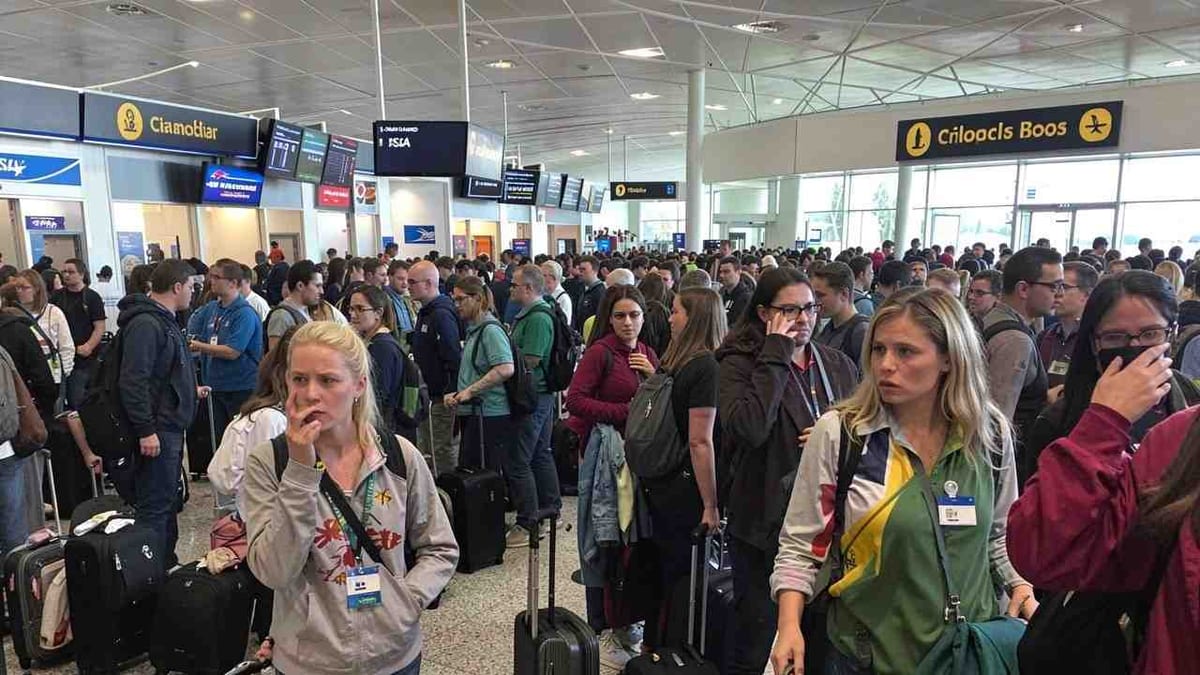
Image by Travel And Tour World
Trump’s TSA Pay Order Follows Weeks Of Disruption
Publicly available information shows that Homeland Security funding lapsed in mid February, triggering a partial shutdown that left tens of thousands of TSA officers working without regular pay. Staffing shortages and rising callouts have since rippled through some of the country’s busiest hubs, producing multi hour waits at checkpoints just as the spring travel season accelerates.
Reports indicate that TSA officer resignations have climbed during the standoff, with several hundred officers leaving since the shutdown began and more warning they cannot continue indefinitely without dependable pay. Aviation briefings and trade association materials describe contingency plans that include consolidating checkpoints and, in some cases, considering temporary closures at smaller airports so staff can be reassigned to major hubs.
On March 27, Trump signed an executive order authorizing TSA officers to be paid using other available Department of Homeland Security funds after a congressional deal to restore normal appropriations collapsed. The move is framed in public documents as an emergency measure aimed at easing what the White House itself has acknowledged is an air travel system approaching a breaking point.
Industry analysts caution that the order, while welcomed by airlines and airport operators, will not immediately clear the backlog. Payroll processing timelines, continued staffing gaps and lingering uncertainty over longer term funding are expected to keep pressure on checkpoint operations into early April at least.
Historic Airport Delays Hit Major U.S. Carriers
American Airlines, United Airlines, Delta Air Lines, JetBlue Airways and Southwest Airlines have all been swept up in the turbulence as passengers miss flights or arrive hours late due to security bottlenecks. Flight tracking data and airline advisories reviewed by travel industry observers show rolling delays and day of travel disruptions clustered around key hubs where TSA staffing is thinnest.
At airports such as Atlanta, Houston, New York and Washington, local and national coverage describes travelers arriving three hours early and still facing lines that snake through terminals, with some checkpoints periodically closing to allow screeners to catch up. Airlines have urged customers to arrive earlier than usual and to monitor their apps for gate and departure time changes.
The operational strain is uneven, with some airports still reporting relatively normal conditions while others cycle through “ground stop” periods when flights are held to prevent further congestion. Analysts point out that even when individual airlines manage their schedules conservatively, they remain vulnerable to shared chokepoints in security and air traffic control that are beyond their direct control.
Carrier performance metrics compiled during previous shutdown related disruptions suggest that extended security delays can translate into millions of dollars in additional costs for U.S. airlines, from crew repositioning to passenger rebooking and compensation. Travel economists warn that if the current pattern persists into the peak summer season, the industry will likely revise its earnings outlooks and capacity plans.
International Travelers Rethink U.S. Trips
The turmoil is reverberating beyond U.S. borders, particularly among visitors from key long haul markets such as Canada, Brazil and the United Kingdom. Online booking platforms and travel forums show a noticeable uptick in itinerary changes and cancellations linked directly to concerns over chaotic airport scenes and the politicization of airport security funding.
Travel consultants monitoring cross border demand say some Canadian travelers are redirecting city break trips from U.S. destinations to domestic or European alternatives to avoid the possibility of being stranded in long lines on relatively short holidays. For Brazilian and British visitors planning once a year or once in a lifetime trips, reports of hours long waits on arrival and departure are prompting reappraisals of whether to commit thousands of dollars to U.S. itineraries right now.
Tour operators report that travelers are increasingly asking detailed questions about connection times at major hubs, with particular concern about minimum layovers that previously would have been considered safe. Some are stretching layovers or avoiding U.S. connections altogether when flying between other regions, opting instead for routings through Europe or the Middle East to reduce exposure to U.S. screening delays.
Industry groups representing airports and airlines have recently highlighted the risk that prolonged uncertainty over TSA staffing and pay could erode the United States’ reputation as a reliable gateway for international visitors. They argue in public letters that repeat travelers are especially sensitive to negative airport experiences and may shift long term loyalty toward other transit hubs.
Marriott And Hilton Face Cancellation Wave
The shift in traveler sentiment is beginning to show up in the hotel sector, particularly for global chains such as Marriott International and Hilton. Market commentary and distribution data indicate that as international visitors from Canada, Brazil and the UK postpone or cancel U.S. trips, associated reservations at major U.S. city and resort properties are being scrapped as well.
Online travel agency statistics compiled by travel technology firms already point to elevated cancellation rates from certain outbound markets, with Brazil standing out as one of the countries generating a higher volume of last minute changes. While not all of these cancellations are directly tied to airport disruption, analysts note that the timing aligns with the worsening TSA situation and accompanying headlines.
Large hotel groups rely heavily on cross border travel demand, particularly for gateway city properties that serve as first and last stops on North American itineraries. When visitors decide that entering or transiting the United States is too unpredictable, cancellations can cascade across multiple reservations tied to the same trip, from airport hotels to downtown conference properties.
Corporate travel managers in Canada and the UK are also reassessing near term meeting and incentive trips to the United States, according to trade press coverage. Some organizations are moving events to Mexico, the Caribbean or Europe, depriving U.S. Marriott and Hilton properties of high yielding group business that can fill hundreds of room nights at once.
Travel Industry Presses For Lasting TSA Fix
Across the travel ecosystem, there is growing concern that the emergency pay order for TSA officers is a short term patch rather than a structural solution. Aviation and tourism associations have circulated joint letters urging Congress and the administration to provide stable, competitive compensation for security screeners to prevent future shutdown related crises.
Studies prepared for the travel industry following previous shutdowns estimated that prolonged airport disruption can wipe billions of dollars from the U.S. economy through lost visitor spending, reduced airline capacity and diminished competitiveness for American destinations. Observers warn that the current episode risks repeating that pattern at a moment when global tourism demand is otherwise strengthening.
In the near term, passengers booked on American, United, Delta, JetBlue and Southwest are being advised by airlines and airports to build in extra time, monitor flight status closely and be prepared for abrupt changes in checkpoint operations. For hotels, particularly Marriott and Hilton properties that depend on international guests, revenue managers are watching cancellation patterns closely and adjusting expectations for the coming quarter.
Longer term, travel experts say the episode underscores how central TSA staffing and funding stability have become to the broader tourism economy. As Canada, Brazil and UK travelers reconsider their U.S. plans and shift reservations abroad, the pressure on policymakers to stabilize airport security operations is expected to intensify well beyond the current shutdown’s end date.