

More news on this day
New funding measures have begun to stabilize pay for Transportation Security Administration personnel after weeks of disruption, but an entrenched fight over immigration enforcement is keeping broader Department of Homeland Security funding in limbo and clouding the outlook for U.S. air travel.
Get the latest news straight to your inbox!
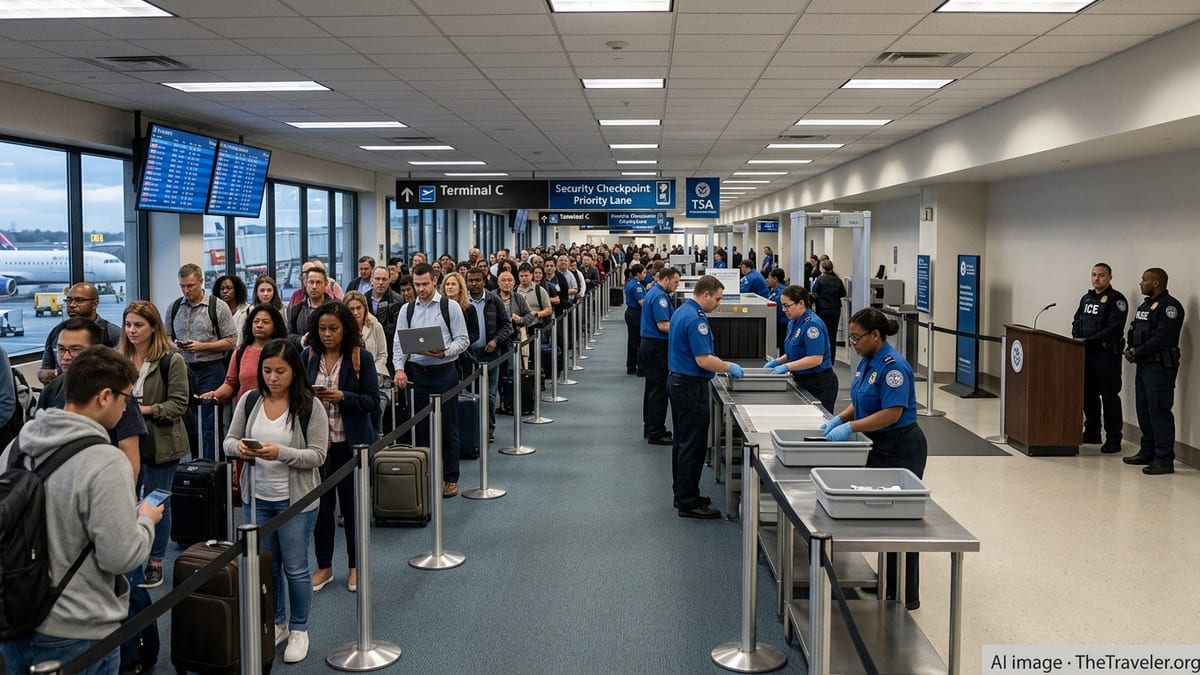
TSA Pay Secured Amid Prolonged DHS Shutdown
In recent days, federal action has ensured that Transportation Security Administration officers will resume receiving pay, even as much of the Department of Homeland Security remains mired in a funding lapse that began in mid-February. Publicly available information shows that the Senate approved a plan to reopen most DHS components, including TSA, while a separate executive move authorized payments to screeners despite the ongoing shutdown.
The intervention follows weeks in which TSA agents were required to work without pay, contributing to high levels of sick calls, staff departures and cascading delays at security checkpoints during the spring travel season. Coverage from multiple outlets indicates that some major airports recorded hourslong wait times, with travelers missing flights and carriers warning of further operational strain if staffing issues persisted.
Although the immediate financial pressure on TSA employees is beginning to ease, the agency is still operating in a fragile environment. The stopgap support for pay does not resolve the underlying political stalemate over how, and under what conditions, DHS should be funded for the rest of the fiscal year. That uncertainty is leaving airport operators and airlines wary about planning for the busy late spring and summer periods.
Travelers, meanwhile, face a patchwork picture. Some airports are reporting modest improvements in wait times as paychecks restart and call-outs stabilize, while others still warn of potential surges during peak hours, particularly around school holidays and major events.
Immigration Enforcement at the Center of the Standoff
The funding impasse is rooted in a broader confrontation over immigration enforcement policy, particularly the future role and resourcing of Immigration and Customs Enforcement and Customs and Border Protection. According to recent congressional reporting, Senate Democrats have refused to back full DHS funding without significant changes to how those agencies conduct arrests, detention and deportation operations.
Republican leaders, backed by the White House, have insisted that new border and interior enforcement provisions remain nonnegotiable, tying them to a wider election and immigration agenda. One high-profile elections bill and proposals linked to past border legislation have been repeatedly mentioned in connection with DHS appropriations, underscoring how immigration has become tightly bound to routine funding debates.
In response to the Senate’s move to fund most of DHS while carving out certain immigration enforcement functions, House conservatives have pushed an alternative approach. Reports from Capitol Hill describe a House strategy built around a short-term continuing resolution that would keep the entire department funded only briefly, including ICE and CBP, while negotiations over stricter immigration and voting provisions continue.
This clash of strategies has created a narrow path for any compromise. While there is bipartisan support for keeping TSA, the Coast Guard, the Federal Emergency Management Agency and other security and disaster-response units fully operational, disagreements over how far to rein in or reinforce immigration enforcement continue to block a long-term deal.
ICE Agents at Checkpoints Raise Tensions and Questions
As the staffing crisis at airports intensified in March, the administration turned to a controversial measure: sending Immigration and Customs Enforcement officers to assist TSA at selected checkpoints. Publicly available reports indicate that ICE personnel have been deployed to more than a dozen airports, tasked with handling non-specialized duties in an attempt to relieve pressure on unpaid TSA staff.
The move has sparked concern among civil liberties groups, labor unions and some lawmakers. Critics argue that the presence of immigration officers, who are associated in the public mind with arrests and removals, could heighten anxiety among travelers and blur the line between transportation security screening and immigration enforcement. Unions representing TSA workers have also questioned whether ICE officers have the specialized training required for aviation security tasks, even if they are formally limited to peripheral roles.
Administration officials have described the deployments as a practical response to a staffing emergency and maintained that ICE agents will focus on functions that do not require TSA certification. Nevertheless, the optics of immigration agents stationed near security lanes during a politically charged funding dispute have added a new layer of controversy to an already fraught travel environment.
For airports and airlines, the operational impact of the ICE deployments remains mixed. In some locations, additional personnel appear to have reduced bottlenecks at specific choke points, while in others the benefits have been harder to measure against the backdrop of ongoing sick-outs and attrition among TSA screeners.
Travelers Confront Uncertain Spring and Summer Schedules
With TSA pay more secure but the larger funding and policy fight unresolved, the stability of U.S. air travel heading into the peak vacation months remains in question. Industry groups monitoring the situation warn that staffing levels could again become precarious if the shutdown drags on or if additional political brinkmanship threatens specialized programs and overtime budgets that keep checkpoints running smoothly during high-demand periods.
Airport authorities around the country are publicly encouraging travelers to arrive earlier than usual, particularly at hubs that have already seen extended lines during the current shutdown. Some have adjusted staffing plans, shifting local resources and working with airlines to spread out departures where possible, but those measures can only partially offset federal uncertainty.
A persistent risk is that further breakdowns in negotiations could undercut confidence among front-line security staff. After weeks of working without pay, many TSA employees reported financial strain and burnout, and some left for other jobs. Even with pay restored, it may take time for morale and staffing levels to recover, especially if the debate over DHS funding and immigration policy continues to generate headlines and fuel speculation about future disruptions.
For now, travelers are advised by airlines and airport operators to build extra time into itineraries, monitor airport conditions and be prepared for sudden changes in wait times. While the immediate threat of an uncontrolled TSA shutdown has receded, the unresolved immigration dispute at the heart of the DHS funding fight means that the country’s aviation security system is likely to remain on edge in the weeks ahead.
Political Calculus Keeps Long-Term Solution Out of Reach
Behind the policy details lies a stark political calculation for both parties. Republicans in Congress and the White House view the funding confrontation as leverage to secure far-reaching changes on immigration and elections that could energize core supporters ahead of the next campaign cycle. Democrats, buoyed by public concerns over recent enforcement controversies, see resistance to additional ICE and CBP resources as a test of their commitment to civil rights and due process.
Analysts following the negotiations note that this dynamic makes incremental compromise difficult. Proposals from some senators to separate immigration enforcement funding from the rest of DHS, or to place temporary guardrails on how certain funds are used, have so far failed to win broad acceptance in both chambers. Short-term fixes that protect TSA pay and keep some operations running reduce immediate pressure, but they may also prolong the stalemate by removing the most visible pain points.
Until lawmakers find a way to decouple routine transportation security and disaster-response funding from the most contentious immigration battles, observers expect further cycles of brinkmanship that spill over into airports and other critical services. For millions of travelers planning trips in 2026, that means the question is no longer only whether TSA officers are being paid, but whether the broader political struggle over immigration will continue to cast uncertainty over the reliability of the nation’s air travel system.